 Photo Wikimedia Commons
Contents
History & cultureBY TELLBY7 sections · numbered as on the map01 Orientation
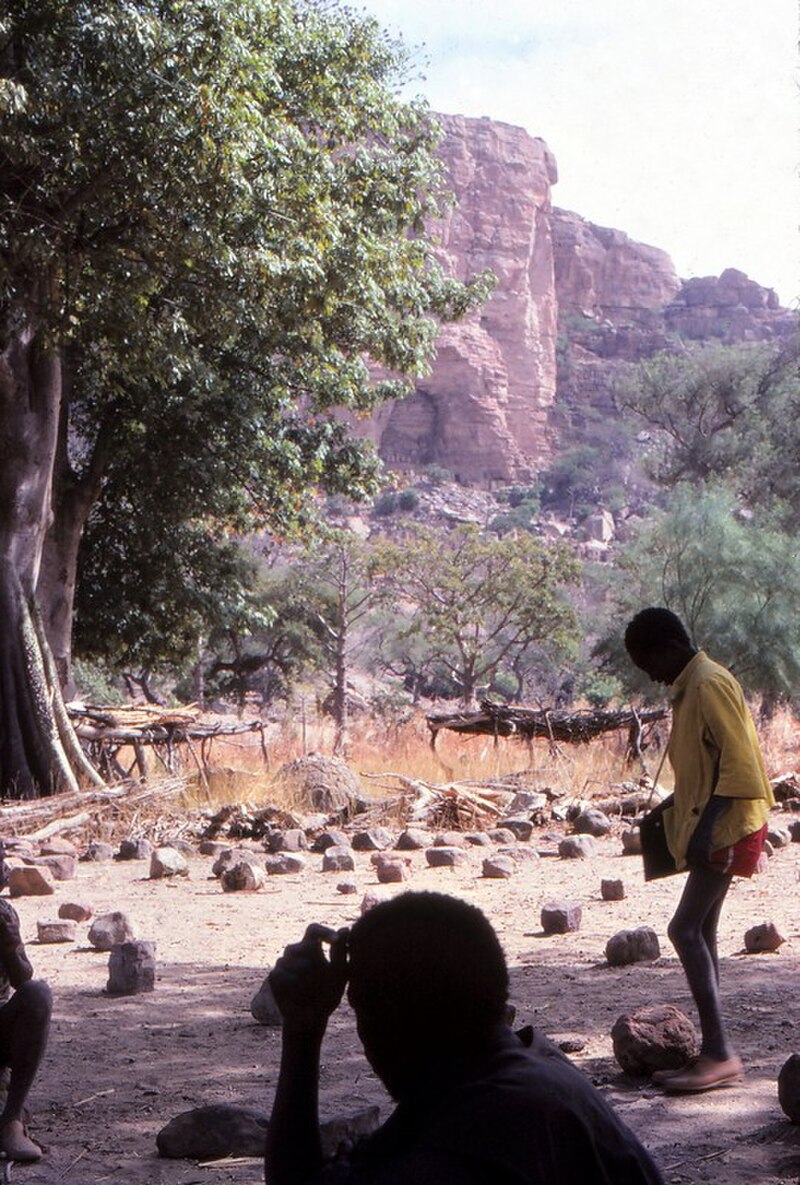
Welcome to the majestic red sandstone cliffs and the ancient Land of the Dogons in Mali, West Africa. Standing at this orientation spot, you are beholding a vast geomorphological marvel that stretches for approximately two hundred kilometers across the arid plains of Seno-Gondo. Rising up to five hundred meters in height, this immense natural rock escarpment served for centuries not only as a sanctuary for human life but also as an impregnable fortress shielding its inhabitants against hostile invaders. Yet, the Bandiagara Escarpment is far more than an extraordinary geological formation. It represents a thriving, living cultural landscape where human ingenuity, architectural innovation, and deep ancestral spirituality exist in complete harmony with a challenging environment. In 1989, UNESCO recognized the site's exceptional natural beauty and outstanding ethnological value by inscribing it on the World Heritage List. Within this expansive territory, the physical legacies of successive civilizations coexist side by side. Long before the Dogon people settled here, the region was inhabited by the ancient Toloy and Tellem cultures, who built high-altitude shelters and tombs inside the sheer rock faces. Today, more than two hundred eighty villages are scattered across the sandstone plateau, the precipitous cliff walls, and the sandy plains below. Rather than altering or destroying this formidable landscape, the Dogon people adapted to its constraints with remarkable intelligence. Utilizing locally sourced banco clay, timber poles, and stone, they constructed villages that reflect their complex worldview and philosophy of life and death. The iconic square grain stores capped with conical thatched roofs, the multi-story Gin'na family dwellings, and the low-ceilinged Togu-na shelters designed for community councils all stand as enduring testaments to human adaptability. Furthermore, sacred mask dances, elaborate ancestor worship rituals, and shrines dedicated to the snake deity Lebe continue to sustain the community's spiritual core. As we walk along the trails today, we will explore hidden rock passages, discover elevated cave granaries, tour multi-generational mud homes, and witness the resilient restoration of traditional architecture led by local craftspeople following recent conflicts. Listen closely to the desert breeze echoing against the ancient stone wall, and step forward into this extraordinary realm of living heritage.
02 Kani Bonzon Entry Trail and Hidden Rock Tunnels
Our first walking stop brings us to the historic entryway of Kani Bonzon village, the legendary site where the Dogon people first established their settlement in the 14th century. Standing here at the base of the mountain, you can uncover a truly surprising secret regarding how the Dogon managed to protect their cultural identity and survive through centuries of regional turmoil. …
03 Elevated Tellem Cave Storehouses and Tombs
Positioned high along the vertical sandstone walls, this location preserves the extraordinary cave granaries and ancient burial vaults of the enigmatic Tellem people. A truly astonishing fact about this site is that long before the arrival of the Dogon in the 14th century, the Tellem constructed their homes, crop storehouses, and ancestral tombs directly inside cliff caverns suspended tens of meters above the ground. …
04 Dogon Gin'na Family Dwelling and Clay Granaries
Here at this vibrant village center, we stand before the Gin'na, the traditional Dogon large family residence, framed by a picturesque cluster of mud-built crop granaries. A truly fascinating secret regarding the Gin'na is that its solid, windowless banco clay facade serves as a literal living family tree and genealogical record for the extended clan. …
05 Togu-na Meeting Shelter and the Hogon Shrine
We have arrived at our fourth stop, the iconic Togu-na meeting shelter, standing directly adjacent to the sacred sanctuary of the Hogon. A truly fascinating piece of architectural wisdom embedded within the Togu-na is its remarkably low roof height, which measures barely one meter from the ground. This structural restriction was intentionally chosen so that if any elder becomes angry during a heated debate and attempts to leap up in frustration, he will instantly bump his head against the heavy…
06 Banco Mud Restoration Site and Artisanal Heritage Transmission
We are now standing at the banco mud restoration site, where Dogon homes, granaries, and public structures damaged during recent regional conflicts are being faithfully rebuilt using centuries-old traditional techniques. An inspiring fact about this undertaking is that through an international partnership between UNESCO, the International Alliance for the Protection of Heritage in Conflict Areas known as ALIPH, and Malian authorities, three hundred forty-five houses and granaries along with…
07 Closing
Our audio journey through the Bandiagara Escarpment and the Land of the Dogons has now come to a gentle close. Standing atop this high overlook, gazing down at the vast Seno-Gondo plain and the towering red sandstone cliffs, one cannot help but feel a profound sense of reverence for the human wisdom that flourished in complete harmony with this dramatic landscape. …