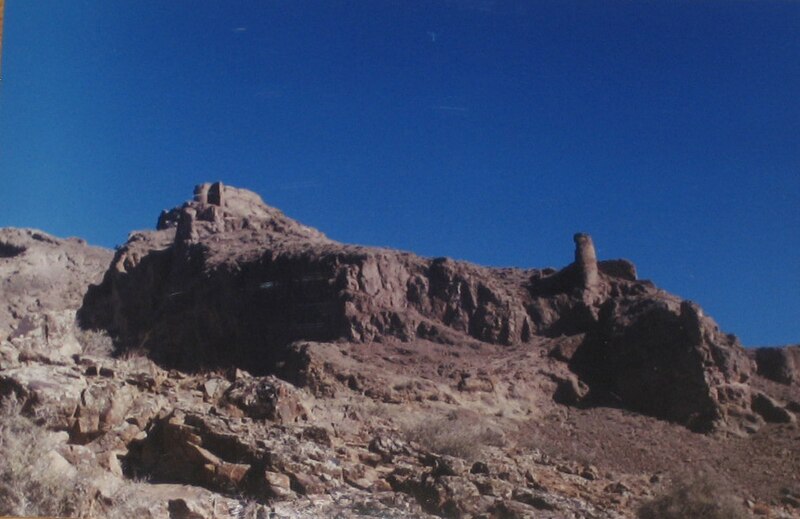
 Photo Wikimedia Commons
Contents
History & cultureBY TELLBY7 sections · numbered as on the map01 Orientation
Welcome to Lambsar Castle, a colossal mountain fortress perched dramatically atop the rugged cliffs of the Alborz Mountains in northern Iran. Situated in Qazvin Province, south of the Caspian Sea and approximately one hundred and twenty kilometers from Tehran, this extraordinary site stands as the largest and most heavily fortified stronghold of the Nezari Ismaili state. Inscribed as a UNESCO World Heritage Site alongside Alamut Castle and six other associated fortifications—Navizarshah, Shams Kelayeh, Qostinlar, Shirkuh, and Ilan—Lambsar serves as an exceptional testament to a unique cultural tradition that harmoniously integrated military defense, administrative governance, intellectual scholarship, and community life. Built within a formidable natural environment defined by extraordinarily deep river gorges—the Nineh Rud valley to the east and the Lameh valley to the west—Lambsar was far more than a mere military garrison. It was a thriving, self-sustaining sanctuary where scientific ingenuity, water engineering, and intellectual pursuits flourished even amidst the turbulence of medieval conflicts. Our guided audio journey today will lead you through the main architectural and historical highlights of this vast complex, following a continuous walking path that begins at the southern approach. We will first explore the impregnable South Gate and its monumental ten-meter-high stone parapets, discovering how the ruler Kiya Buzurg Ummid mobilized regional labor to transform this site into an unassailable stronghold. Next, we will move toward the southeast section to examine the astonishing rock-cut water reservoirs and subterranean grain granaries, which enabled the castle's population to endure prolonged blockades through gravitational water collection. From there, our route proceeds to the Western Tower, the exact location where archaeologists led by Kambiz Kabiri recently uncovered turquoise and cobalt astrolabe tile fragments that demonstrate the advanced scientific culture and literary traditions cultivated by Ismaili scholars. We will then ascend toward the North Main Building, where elevated stone quarters housed the governor's administrative headquarters and missionary network. Finally, we will reach the highest northern citadel, the tragic site of the final siege where defenders held out valiantly against the Mongol forces of Hulaku Khan until a devastating cholera outbreak in twelve fifty-seven brought an end to their resistance. As you walk along the wind-swept ridges of the Alborz Mountains, take a moment to listen closely to the echoes of history embedded within these ancient stone walls. Look out across the deep chasms that encircle the ridge, and reflect upon how this mountain bastion served as both a physical refuge and a beacon of resilience. Please watch your step on the rocky terrain as we begin our tour. When you are ready, kindly proceed to our first official spot at the South Gate and Parapets.
02 The Impregnable South Gate and Parapets
Flanked on its eastern side by the precipitous Nineh Rud valley and on its western side by the equally formidable Lameh valley, Lambsar Castle was engineered by nature and human skill to be a virtually unassailable mountain fortress, accessible only through two highly fortified gateways at its northern and southern edges. …
03 Water Reservoirs and Grain Granaries
Even when hostile armies completely severed all external water channels and supply lines during multi-year blockades, Lambsar Castle sustained its entire garrison and civilian population through an extraordinary internal network of rock-cut water reservoirs and grain storage granaries. Please cast your eyes downward toward the southeastern sector of the grounds directly below you, where you can trace the incredible remains of channels carved directly into the mountain bedrock alongside deep…
04 Western Tower and Astrolabe Tile Finds
Amidst a mountain fortress engineered for military survival, archaeologists made an astonishing discovery: exquisite turquoise and cobalt tile fragments belonging to an astrolabe—a highly complex scientific instrument used to model the universe—proving the sophisticated intellectual culture that flourished within these walls. Please direct your attention toward the western round tower and look closely at the adobe brick wall built upon a stone foundation situated directly behind it. …
05 North Main Building and Governor's Quarters
Constructed with massive cut stone walls measuring an astounding one point two meters in thickness, the North Main Building served as the unyielding administrative headquarters from which the governors of Lambsar Castle commanded the entire mountain complex. Please raise your eyes toward the elevated northern crest of the fortress and observe the structural outline of this grand main building, along with its four smaller architectural extensions that directly face the eastern valley. …
06 Northern Stronghold and the Final Siege
Defying even their supreme leader's direct order to surrender and holding out for over a year against Hulaku Khan's ten-thousand-strong Mongol army, the defenders of Lambsar Castle were finally overcome not by enemy weapons, but by a catastrophic cholera epidemic in January twelve fifty-seven. Please stand at the northern edge of the cliff and gaze down at the sheer abyssal drop and the undulating ridges of the Alborz Mountains stretching infinitely below. …
07 Closing
Our journey through Lambsar Castle, the colossal mountain stronghold of the Nezari Ismaili state perched high above the cliffs of the Alborz Mountains, has now come to its conclusion. Today, we have walked together through a remarkable landscape of history and engineering, beginning at the monumental ten-meter-high South Gate and its massive parapets, moving through the ingenious rock-cut water reservoirs and grain storage granaries, exploring the Western Tower where turquoise astrolabe tile…