Contents
History & cultureBY TELLBY7 sections · numbered as on the map01 Orientation
Welcome to the Paphos Archaeological Site, a captivating coastal sanctuary where ancient mythology, regal history, and the brilliant turquoise horizon of the Mediterranean Sea converge on the southwestern coast of Cyprus. Before we set off together on this extraordinary historical journey, please allow me to offer several practical recommendations to ensure that your time in this sprawling archaeological park is as comfortable, safe, and inspiring as possible. The park encompasses an expansive area of over thirty-two hectares of rocky terrain, featuring natural limestone surfaces, unpaved pathways, and historic bedrock steps. For this reason, wearing sturdy, supportive walking shoes or athletic footwear is essential for navigating the site with ease. Because the Mediterranean sun shines brightly across this open coastal landscape throughout the year, we strongly encourage you to wear a wide-brimmed hat, apply sun protection, and carry a generous supply of fresh drinking water to stay thoroughly hydrated during your visit. In nineteen eighty, Paphos was officially designated a UNESCO World Heritage Site in recognition of its outstanding universal value to humanity. This global distinction reflects the site's world-renowned collection of Roman floor mosaics, its foundational connection to the ancient cult origins of Aphrodite, the goddess of love and beauty, and its remarkably intact Hellenistic and Roman urban infrastructure. Today, our tour will take you through the luxurious residential villas of Nea Paphos, across the sweeping hillside seating of the ancient theater, and onward to the dramatic underground peristyle tombs carved into the northern sea cliffs. In order to protect these invaluable treasures against modern urban expansion, archaeologists and local authorities actively deploy advanced non-destructive remote sensing, satellite imaging, and environmental monitoring to safeguard both visible ruins and undiscovered subsoil heritage. Every stone beneath your feet has witnessed the rise and fall of ancient empires, from Hellenistic rulers and Roman governors to early Christian pilgrims. As you step forward onto these ancient stones, allow yourself to slow down and prepare to experience the timeless splendor of a legendary Mediterranean capital.
02 Section 1
It is truly extraordinary that these splendid floor mosaics have preserved their vibrant colors, intricate details, and compelling narrative art across thousands of years, surviving both the relentless passage of time and the catastrophic ancient earthquakes that once reduced the surrounding Roman city of Nea Paphos to rubble. …
03 Section 2
It is a captivating historical fact that before major archaeological excavations brought this ancient performance space back to light, aerial photography and subtle surface soil marks detected the precise semicircular boundary of this theater hidden beneath the earth. What appeared from the ground as a natural coastal hill revealed its subterranean secret from the sky, as subtle variations in vegetation patterns and soil density clearly outlined the contours of the ancient theater, astonishing…
04 Section 3
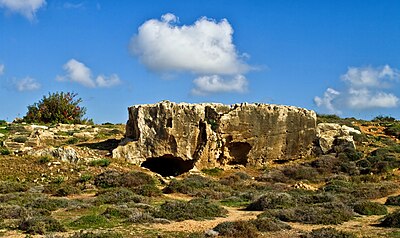
A remarkable paradox of this famous coastal necropolis is that despite its regal designation, the Tombs of the Kings, no actual royalty was ever buried within these subterranean chambers. Instead, these majestic rock-cut monuments served as the final resting places for the wealthy Paphian aristocracy, high-ranking civil servants, diplomats, and merchant elites who governed Cyprus during the Hellenistic and Roman eras. …
05 Section 4
It often astonishes modern visitors to learn that these subterranean rock chambers were not always monochrome gray stone spaces, but were originally vibrant with colorful painted frescoes, polished plaster moldings, and rich decorative finishes. Today, we view these tombs through the lens of weathered limestone, yet during antiquity, they were conceived as luminous, fully decorated sanctuaries intended to honor the departed. …
06 Section 5
An incredible archaeological breakthrough associated with Tomb 8 centers on the discovery of stamped handles from Rhodian wine storage amphorae, which acted as precise ancient date stamps for modern researchers. In the ancient Mediterranean world, Rhodian wine manufacturers stamped the handles of their terracotta jars during production with the official name of the ruling magistrate and the year of manufacture. …
07 Closing
We have now concluded our walking tour through the incomparable Paphos Archaeological Site, where ancient mythology, regal history, and the timeless beauty of the Mediterranean shoreline meet. From the extraordinarily preserved floor mosaics of the House of Dionysus to the sweeping hillside curves of the ancient theater built under King Nicocles, and onward to the majestic subterranean peristyle courtyards of the Tombs of the Kings, every step of our journey has offered a profound window into…