Contents
History & cultureBY TELLBY7 sections · numbered as on the map01 Orientation
Welcome to the Castillo de los Tres Reyes del Morro, famously known across the globe as Morro Castle. Standing resolutely on a steep, rugged rocky promontory directly across the narrow entrance channel from Old Havana, this monumental stone fortress has guarded the vital mouth of Havana Harbor for over four centuries. As you look out toward the vast expanse of the Atlantic Ocean, you are standing at one of the most historically significant military strongholds in the entire Western Hemisphere. In 1982, this magnificent structure was officially inscribed as a UNESCO World Heritage Site as an integral part of Old Havana and its Fortification System, honoring its supreme historical role during the European conquest, trade expansion, and defense of the New World.
During the sixteenth century, colonial Cuba emerged as an indispensable crossroads for Spanish treasure fleets carrying gold, silver, and agricultural goods from the Americas back to Europe. Consequently, Havana Harbor became a prime target for continuous raids by armed privateers, buccaneers, and hostile corsairs seeking to disrupt Spanish maritime dominance. Recognizing the urgent necessity of securing this critical harbor, the Spanish Crown commanded the construction of an impenetrable, permanent stone fortress atop this strategic ocean cliff. The ambitious plan was designed by the celebrated Italian military engineer Battista Antonelli, who conceived an irregular polygonal fortress tailored to match the natural contours of the steep rock promontory. Construction began in 1589 under the direct supervision of field commander Juan de Texeda, who collaborated closely with Antonelli to turn the rugged living rock into a fortified masterpiece.
Morro Castle stands as an exceptional showcase of Renaissance military architecture adapted to tropical coastal terrain. Its design masterfully harmonizes low, thick load-bearing masonry walls with slope-shaped curtain walls and broad defensive terraces that merge seamlessly into the rough natural cliffside. In Spanish maritime terminology, the word morro designates a prominent, steep rock visible from the ocean that serves as an unmistakable navigational landmark for approaching ships. For generations, this castle served as the primary bastion defending Havana, extending a heavy iron boom defense chain across the harbor entrance to Fort La Punta on the opposite shore to physically block enemy vessels from entering the bay. Today, as you step onto these historic stone ramparts, you enter a vast defensive landscape shaped by fierce sieges, engineering ingenuity, and dramatic history.
02 Main Gate and Dry Moat
Standing before the formidable main portal of Morro Castle, one is immediately struck by an extraordinary engineering achievement: this entire monumental military fortress was sculpted directly out of rough, steep coastal rock cliffs that rise towering high above the Atlantic waves. The sheer vertical bedrock was integrated by master Spanish stonemasons into an impenetrable perimeter of solid load-bearing masonry, making any direct assault from either the landward approach or the seaward cliffs…
03 Central Barracks and Quarters
Stepping into the interior courtyard of the fortress, it is inspiring to consider how this massive stone compound was engineered as a self-sustaining citadel to house garrisoned troops and ammunition stores through prolonged military blockades. Designed to function under severe wartime conditions, these thick masonry structures provided complete operational shelter, storage, and logistical support for the forces entrusted with guarding the vital entrance to Spain's West Indian empire. …
04 Northeast Bastion and Siege Memorial
On July 30, 1762, a single massive land mine explosion detonated directly beneath this solid masonry structure, blasting a gaping breach through the right bastion and deciding the ultimate fate of Havana. The deafening blast shattered centuries of perceived military invincibility, blowing tons of stone and earth into the dry moat and marking the violent climax of the siege conducted by the British expedition under Lord Albemarle. …
05 Morro Castle Lighthouse
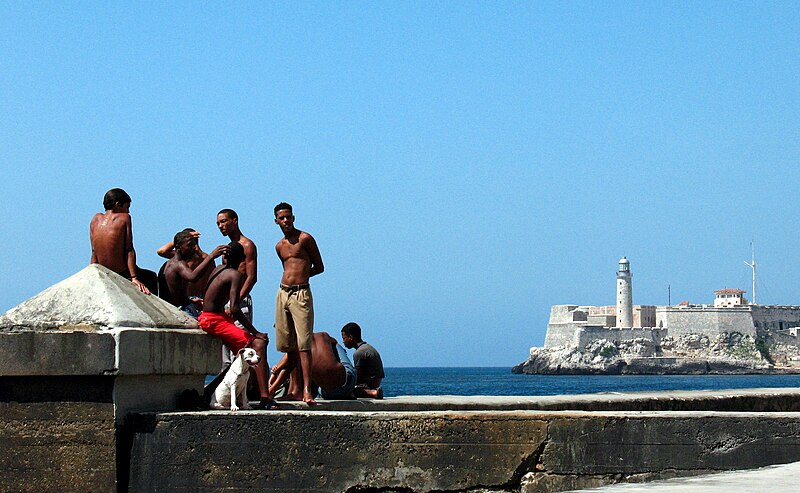
Standing on the sharp promontory where Morro Castle projects dramatically into the Atlantic Ocean, one is immediately captivated by the towering lighthouse; yet while this stone tower serves as the castle's most iconic symbol today, the original watchtower that once occupied this exact spot was completely blown up during the British siege of 1762. The destruction of that early watchtower left the harbor entrance dark, symbolizing the temporary disruption of Spanish rule over western Cuba. …
06 Waterfront Batteries and Sea Lookout
Arriving at the lower waterfront platforms of Morro Castle, one encounters a supreme feat of colonial naval defense engineering: from these low-lying water batteries, a massive iron boom defense chain was once stretched straight across the sea to Fort La Punta on the opposite shore, creating an impassable barrier designed to trap invading ships in a deadly crossfire. …
07 Closing
As our audio tour of Castillo de los Tres Reyes del Morro comes to a close, we hope you have enjoyed discovering the extraordinary history and architectural magnificence of Havana's premier colonial fortress. From its sixteenth-century origins as an impenetrable military compound designed by Battista Antonelli to its dramatic role during historic sieges, this grand stone monument has stood as an enduring guardian over the entrance to Havana Harbor for well over four centuries. …