 Photo Wikimedia Commons
Contents
History & cultureBY TELLBY7 sections · numbered as on the map01 Orientation
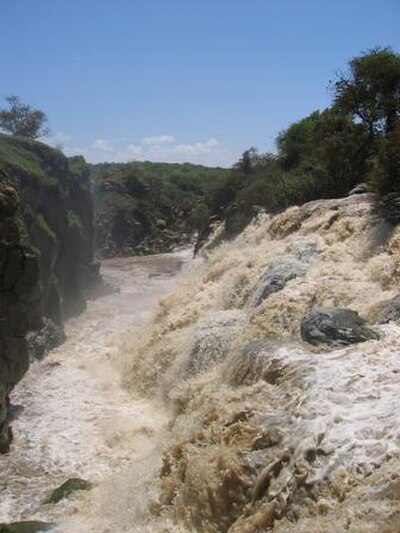
Welcome to the Lower Valley of the Awash, a world-famous paleoanthropological sanctuary situated in the Afar Region of northeastern Ethiopia, near the border with Djibouti. You are standing at the threshold of one of the most remarkable natural archives on Earth, officially inscribed as a UNESCO World Heritage site in 1980. Situated along the northeastern rim of the Great Rift Valley, roughly three hundred kilometers northeast of the capital city of Addis Ababa, this vast and rugged landscape spans approximately one hundred and fifty square kilometers. The history of modern scientific exploration here began in 1970 when French geologist Maurice Taieb first recognized the immense paleontological potential of these badlands. Recognizing the crucial importance of these exposed rift sediments, Taieb formed the International Afar Research Expedition and brought together prominent international scholars, including American paleoanthropologist Donald Johanson, French researcher Yves Coppens, and British archaeologist Mary Leakey. Beneath these sunbaked grounds lies the richest concentration of early hominid fossils ever uncovered, preserving an extraordinary chronicle of human evolution that stretches back more than four million years into deep time. Take a moment to look across the expansive horizon that unfolds before you. The landscape is defined by stark semi-arid river valleys, deeply eroded badlands, and sparse vegetation clinging to the dry earth. Threading through this arid terrain is the Awash River, a unique endorheic water system that does not flow into any ocean, but instead drains into a chain of inland lakes within the Afar Depression. Over millions of years, the delicate interplay of river currents, active rift volcanism, and fine silt deposits created ideal conditions for rapidly encasing ancient biological remains. As seasonal rains and desert winds gradually carved away the upper sediment strata, the buried remnants of prehistoric life were slowly brought back to the surface, revealing ancestral species ranging from four point four million year old Ardipithecus to three point two million year old Australopithecus afarensis and early modern humans. As you walk along this entry trail, allow yourself to absorb the atmospheric quiet and intense desert heat of this remote badland environment. The ambient silence, punctuated only by the whistle of the dry wind and the crunch of gravel underfoot, mirrors the pristine wilderness that our earliest ancestors experienced when they took their first upright steps across these very plains. This audio guide is designed to accompany you on an unforgettable journey through the deep memory of our species. We invite you to pace your walk, observe the subtle layering of the exposed sandstone cliffs, and imagine the vibrant prehistoric ecosystem that once flourished along these ancient riverbanks. Your exploration into the origins of humanity begins right here.
02 Hadar Locality 162 Gully — The Discovery Spot of Lucy
It is a astonishing fact that a small, dusty gully that had been walked past and completely overlooked twice before by surveying teams suddenly yielded forty percent of an ancient human ancestor skeleton in one of the greatest scientific breakthroughs of the twentieth century. Look down at the dry, dusty slope of the wash right before you. On the morning of November 24, 1974, this quiet and unassuming terrain transformed into an iconic landmark of global paleoanthropology. …
03 Hadar Knee Joint Knoll — Evidence of Upright Walking
It is a remarkable scientific revelation that a single tiny knee joint discovered a year before Lucy proved conclusively that our ancient human ancestors walked upright long before their brains began to enlarge. Look toward the raised ridge of rock protruding from the sediment to your left. This unassuming rocky outcrop standing among the golden silt deposits is one of the most intellectually consequential spots in the entire history of paleoanthropology. …
04 Awash River Layered Strata Viewpoint
Startling as it may sound, thin layers of microscopic volcanic ash trapped between ancient river mud act like an infallible atomic clock, pinning down the exact ages of prehistoric hominid fossils with staggering precision. Gaze at the exposed, striped cliff walls stretching along the riverbed ahead. As you look across the river corridor, observe the distinct horizontal bands of reddish sediment and gray rock layers stacking atop one another like giant pages in a book. …
05 Aduma Ardu Hillock — Middle Stone Age Human Sanctuary
It is an astonishing truth that fully modern humans were crafting sophisticated stone tools in this very valley around eighty thousand years ago, long before Neanderthals in Europe disappeared. Look down at the dark gravel lag surface scattered around these small eroding hillocks. You are standing in the historic Aduma region, a Middle Stone Age sanctuary where anatomically modern humans lived and flourished during the Upper Pleistocene. …
06 Afar Community Trail & Conservation Boundary
It is a remarkable reality that the traditional lifestyle of local Afar pastoralists has kept millions of years of human evolutionary history safe without the presence of formal chain-link fences or modern security barriers. Look toward the winding footpath cut through the acacia shrubs on the right. This narrow dirt trail has been navigated for generations by Afar herders driving their livestock through the arid lowlands. …
07 Closing
Welcome to the Awash Valley sunset lookout located at the elevated cliff edge. As the warm evening sun casts golden light across the eroded badlands and the winding path of the Awash River, take a quiet moment to contemplate the profound journey across deep time that we have shared today. From four point four million year old Ardipithecus and three point two million year old Australopithecus afarensis walking upright along prehistoric riverbanks, to the early modern humans crafting Middle Stone…