Contents
History & cultureBY TELLBY7 sections · numbered as on the map01 Orientation
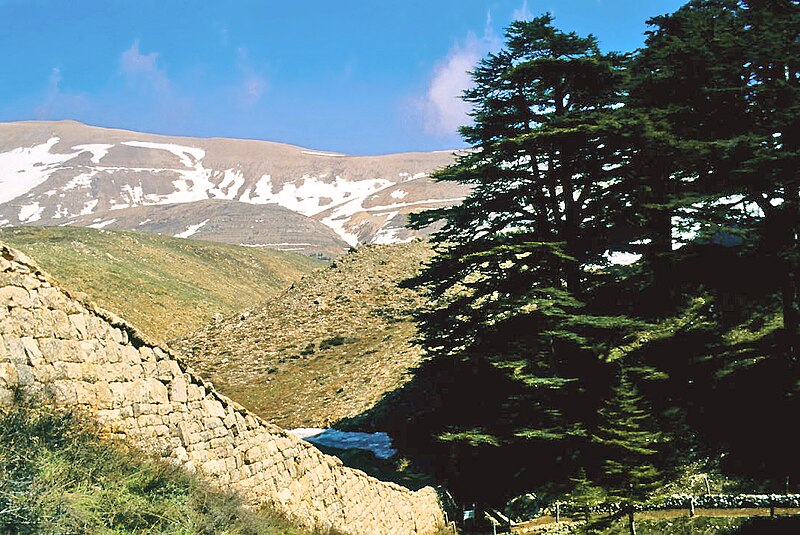
Welcome to the sacred grove where thousands of years of human history and natural wonder remain deeply intertwined. Standing at an elevation exceeding two thousand meters along the majestic slopes of Mount Makmel, you are entering the Forest of the Cedars of God, known locally in Arabic as Arz el-Rab. This holy sanctuary represents the ultimate living vestige of the vast ancient cedar forests that once shaded the mountain ranges of Lebanon in antiquity. It is a place enshrined in humanity's earliest literature, most notably in Tablets four through six of the Epic of Gilgamesh, and sought after by the greatest empires of the ancient world for its extraordinarily prized timber. Over countless centuries, persistent logging, naval expansion, and imperial construction drastically reduced the once endless green canopy that spanned over five hundred thousand hectares across these highlands to just two thousand hectares today. Yet this protected sanctuary resting above the dramatic precipices of the Kadisha Valley in the Bsharri region stands as a designated UNESCO World Heritage Site, preserving the solemn dignity of a landscape that shaped the rise of human civilizations. As you pause at the entrance, take a slow breath of the crisp high-altitude air and absorb the overwhelming sense of quiet grandeur that permeates the atmosphere. The resinous wood from these very slopes supplied the seafaring Phoenicians who built the merchant fleets that established the first global maritime trade network, furnished the grand palaces and mummification materials of Egyptian pharaohs, and formed the structural framing of King Solomon's Temple in Jerusalem. Succeeding rulers from Assyria, Babylon, Persia, Rome, and the Ottoman Empire continuously harvested these slopes, yet Maronite Christian monks residing in the nearby cliffside monasteries guarded these remaining giant trees as sacred symbols of divine endurance and spiritual refuge. As we begin our journey together, step onto the gentle walking trail that winds into the heart of the forest. Listen to the soft whisper of the mountain breeze moving through the horizontal evergreen boughs and feel the profound stillness that has enveloped travelers and pilgrims for millennia. Let us walk together into the shade of these ancient boughs and explore the extraordinary heritage of a forest that has outlasted empires.
02 The Century-Old Stone Wall That Saved Young Saplings
The reason we are able to stand today beneath the serene canopy of these ancient giants is rooted in a dramatic and surprising turning point that unfolded during the late nineteenth century. By that era, centuries of relentless timber extraction had already reduced the vast wilderness to a small remnant, but an even more insidious threat was actively preventing any possibility of natural forest recovery. …
03 Massive Trunks Standing Through Millennia
Standing in this central grove surrounded by these monumental trunks, you begin to grasp the truly awe-inspiring scale and structural surprise of the ancient Lebanon cedar. While most coniferous trees grow strictly in a narrow vertical cone, a mature cedar transforms over centuries into a horizontal cathedral of timber, where a single specimen can create a shaded canopy broad enough to shelter an entire grove. …
04 Holy Altars Nestled Beneath Ancient Boughs
When we imagine sacred places of worship, our minds usually picture grand stone cathedrals, ornate temples, or elaborate religious edifices constructed by human hands. Yet in this holy grove, you encounter a remarkable and surprising tradition where believers chose not to erect artificial stone walls, but instead utilized the living trunks and vast boughs of giant cedar trees as the walls and roofs of their open-air sanctuaries. …
05 Young Cedars Thriving Through Community Hands
Stepping into this vibrant sector filled with densely growing young cedars, you are witnessing the living future of one of the world's most ancient tree species. The Lebanon cedar possesses a remarkably slow rate of development, growing with extreme patience on these high mountain slopes. Remarkably, a cedar tree requires a lengthy span of forty years from the moment it sprouts before it can produce its very first fertile seeds. …
06 Overlooking Kadisha Valley and the Realm of Epic Legends
Standing on this elevated summit lookout at the highest point of the forest trail, you are looking out across a landscape steeped in the earliest mythic memories of human civilization. The dramatic gorge opening before you is the ancient setting featured in Tablets four through six of the Epic of Gilgamesh, humanity's oldest surviving literary work. …
07 Closing
As we walk along the exit path leaving this sacred forest behind, thousands of years of living history gently recede into the mountain mist behind us. The Forest of the Cedars of God is far more than a collection of rare, ancient trees; it is a living monument that has witnessed the birth, rise, and fall of human civilizations across millennia. …