Contents
History & cultureBY TELLBY7 sections · numbered as on the map01 Orientation
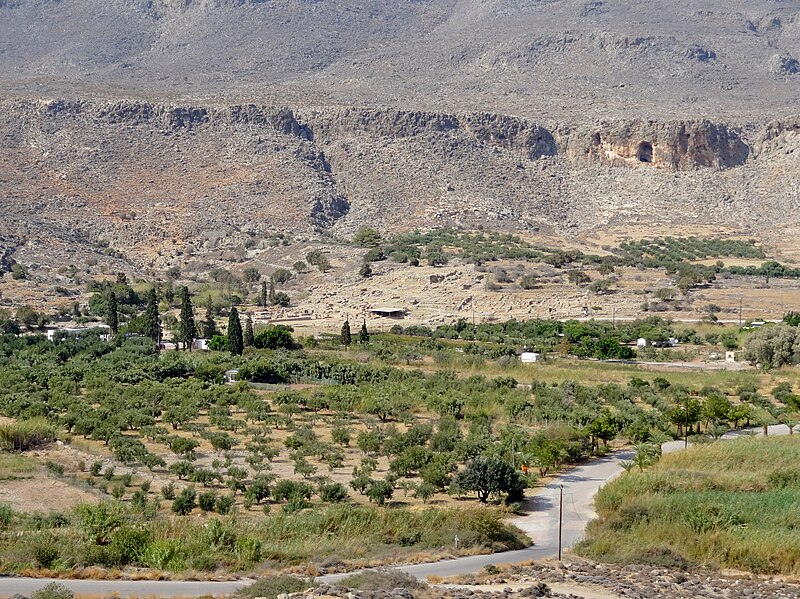
Welcome to the ancient Minoan Palace of Zakros, an extraordinary historical jewel nestled on the far eastern coast of the island of Crete. Located within the Lasithi region and framed by dramatic mountain slopes that open toward a serene and sheltered natural bay, Kato Zakros served as a vital maritime gateway connecting Minoan civilization directly to eastern Mediterranean trade networks. In 2025, this magnificent site received international acclaim when UNESCO officially inscribed the Minoan Palatial Centres on the prestigious World Heritage list, recognizing its profound cultural legacy and exceptional preservation. Standing proudly as the fourth largest Minoan palatial center on the island after Knossos, Phaistos, and Malia, Zakros originally arose around 1900 BC during the First Palace period, underwent a grand reconstruction following a major seismic disturbance around 1600 BC, and ultimately met a tragic, catastrophic destruction around 1450 BC alongside the other great palatial seats across Crete. Spanning an expansive area of roughly eight thousand square meters and housing approximately one hundred and fifty interconnected chambers, the palace complex preserves an extraordinarily detailed architectural blueprint featuring grand open courtyards, ceremonial spaces, storage magazines, and advanced water engineering facilities. As you walk through these weathered stone foundations today, you are stepping directly into the administrative and economic heartland where royal officials, international traders, scribes, and master artisans once orchestrated long-distance commerce involving precious commodities from Egypt and the Middle East. This self-guided audio experience has been meticulously designed to lead you step-by-step through five key architectural stops across the site, helping you visualize the vibrant daily operations, spiritual rituals, and impressive industrial craftsmanship that once animated these historic grounds. Please follow the designated walking path sequentially to ensure a smooth and engaging journey. Now, take a moment to absorb the maritime breeze and peaceful landscape surrounding you, and let us prepare to begin our exploration by advancing toward the grand ancient entry road at the northeast gate.
02 Northeast Gate and Paved Road
Along this three-meter-wide stone avenue that once carried thousands of international merchants, royal officials, and heavy trade goods into the heart of the palace, there is not a single mark left by cart wheels. Constructed using massive, carefully dressed stone flagstones during the Protopalatial period, this grand thoroughfare connected the bustling coastal harbor of Kato Zakros directly to the palace's northeast gate. …
03 The Central Court
Standing here at the center of this broad open space, consider an extraordinary archaeological wonder: this thirty-by-twelve-meter central courtyard formed the heart of a vast, one-hundred-and-fifty-room palace administrative complex that remained completely unlooted until modern excavations. Unlike other famous Minoan palatial sites across Crete, such as Knossos or Phaistos, which suffered extensive looting in antiquity or later centuries, the New Palace of Zakros was suddenly destroyed and…
04 The Circular Cistern and Lustral Basin
As you step into this interior section of the palace, you are standing before one of the most remarkable hydraulic engineering marvels in the ancient Aegean world: Zakros is the only Minoan palace ever discovered that features a massive, circular stone water cistern measuring fully five meters in diameter built directly into its architectural floor plan. …
05 Storage Magazines and Pithoi
Welcome to the royal storage magazines, the primary treasury and economic engine of the Palace of Zakros. Within these long, stone-walled storerooms, archaeologists uncovered an astonishing concentration of more than five hundred massive ceramic storage vessels known as pithoi, alongside Linear A clay tablets recording precise volumetric units of agricultural commodities such as olive oil and wine. …
06 Metallurgy Furnace and Artisan Quarter
As you ascend the slope just northeast of the main palace complex, you are entering the vibrant ancient town and artisan quarter of Zakros. In this industrial sector, archaeologists unearthed a truly extraordinary industrial discovery: a highly sophisticated ancient metallurgy furnace equipped with four distinct exhaust ducts. …
07 Closing
As we stand at this breathtaking coastal vantage point where the dramatic mountains meet the deep blue waters of the Aegean Sea, our journey through the Minoan Palace of Zakros comes to a reflective close. The vibrant palatial center we explored today met a sudden, tragic catastrophe around 1450 BC, destroyed by severe seismic activity and widespread fires that swept across Crete. …