Contents
History & cultureBY TELLBY1 sections · numbered as on the map01 Biltmore Estate: Gilded Wealth and a Running Runner
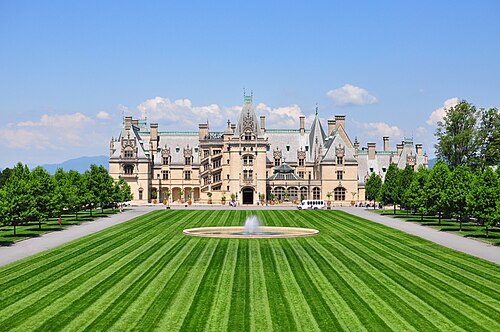
Feast your eyes on 250 rooms of French Renaissance grandeur—the closest thing America has to a royal palace. You are standing at the Biltmore Estate in Asheville, North Carolina, built by George Washington Vanderbilt II between 1889 and 1895. Spanning 175,000 square feet, this Gilded Age masterpiece was designed by Richard Morris Hunt with sweeping grounds laid out by legendary landscape architect Frederick Law Olmsted. Rich men spent fortunes building stone towers and manicured gardens to immortalize their names. Yet during Forrest's three-year cross-country run, he jogged right down this massive paved approach without giving the Vanderbilt fortune a second glance. That is the ultimate irony of America. A Vanderbilt spends millions building a European castle to capture eternal legacy, while a simple man from Alabama captures the heart of an entire nation just by running down the driveway in worn-out sneakers. Look up at those stone gargoyles and slate roofs. Wealth can buy you 250 rooms and formal gardens, but true purpose is something money can never touch. Sometimes a simple man running free is richer than any king living inside a stone fortress.