Contents
History & cultureBY TELLBY7 sections · numbered as on the map01 Orientation
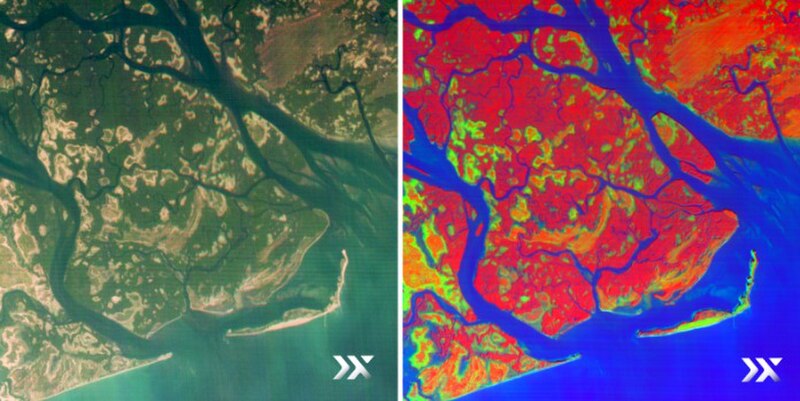
Welcome to the Saloum Delta, an extraordinary cultural landscape located on the Atlantic coast of Senegal in West Africa where human civilization and dynamic coastal nature have interacted in complete harmony over thousands of years. Spanning an expansive area of five thousand square kilometers where the seasonal Sine and Saloum rivers empty into the North Atlantic Ocean, this vast deltaic territory represents one of the most remarkable records of long-term human adaptation and ecosystem co-evolution along the entire West African coastline. Designated as a UNESCO Biosphere Reserve in nineteen eighty, a Ramsar Wetland of International Importance in nineteen eighty-four, and a UNESCO World Heritage site in twenty eleven, the Saloum Delta is recognized globally because over two millennia of continuous shellfish gathering by local communities directly constructed the physical terrain of the region, creating stable man-made islands and shaping the very flow of the surrounding marine channels. The landscape itself is a rich mosaic comprised of brackish tidal channels, more than two hundred islands and islets, dense mangrove forests, coastal marine environments, and dry woodland vegetation. For countless generations, the estuarine ecosystem provided an abundant supply of marine life and mollusks, enabling local populations to establish sustainable gathering practices, traditional preservation techniques, and extensive maritime trading networks that connected inland communities with coastal settlements. This audio guide invites you on an immersive walking journey through an irreplaceable ecological and historical sanctuary where every natural feature tells a story of human endurance and environmental balance. As you stand in this central West African wetland, you are surrounded by an intricate labyrinth of tidal waterways, ancient shell mounds, and sacred burial monuments nestled beneath majestic trees. From the earliest ancient gatherers who harvested mollusks along these tidal shores to the thriving bird colonies that nest across the sandy islets today, the delta stands as a living testament to how human culture and natural habitats can nurture one another across centuries. Wherever you cast your view, from the glistening white shell fragments underfoot to the lush green mangroves stretching toward the horizon, you are witnessing an invaluable archive of human memory and coastal dynamic science. Let us now step forward together into this ancient landscape to discover the remarkable heritage, ecological wonders, and profound cultural traditions preserved within the waterways of the Saloum Delta.
02 The Giant Shell Mounds
The massive artificial island floating beneath your feet was not formed by natural geological forces, but was painstakingly engineered out of billions of harvested mollusk shells accumulated over more than two thousand years of continuous human habitation. While appearing to a casual observer as an ordinary estuarine landform anchored amidst the saltwater channels, this location is Diorom Boumak, the most monumentally impressive and historically significant among two hundred and eighteen…
03 The Ancient Tumulus Graves
Among the hundreds of shell deposits constructed across this coastal landscape, exactly twenty-eight mounds were created not as simple domestic refuse piles, but as elevated sacred burial monuments known as tumuli, strategically positioned beneath the sweeping shade of ancient baobab trees. These funerary earthworks represent a remarkably sophisticated form of sacred architecture designed by ancient West African societies to honor high-ranking leaders and express complex spiritual beliefs…
04 The Tidal Bolongs and Mangrove Rhizosphere
The Saloum Delta operates as a highly rare inverse estuary where powerful ocean currents from the North Atlantic flow far deeper and faster inland than freshwater can drain seaward, creating hyper-saline conditions throughout its extensive aquatic network. Because natural freshwater runoff is extremely limited across this drought-prone Sahelian environment, the salinity levels within these tidal channels often surpass that of the open ocean, forging a unique and demanding ecosystem. …
05 The Flat Tann Salt Crusts and Soil Dynamics
More than eighty-five percent of the total land surface across the Saloum Delta is classified under the Very High risk category on the Soil Salinization Risk Index due to its near-zero elevation and intense atmospheric evaporation. Because the deltaic plain features slopes of less than one percent and rests upon highly permeable Quaternary sedimentary layers, the ground functions as a permanent hydrogeological salt trap. …
06 The Marine Refuge and Bird Island
The tiny, uninhabited sandbar known as Bird Island, located at the outer maritime edge of the Saloum Delta, hosts fully one quarter of the entire global breeding population of royal terns every single winter. Completely isolated from the mainland and protected from human disturbance, this fragile sandy islet serves as the world's primary wintering and nesting sanctuary for this species, making it an internationally vital biological refuge of immeasurable conservation value. …
07 Closing
As our audio journey through the timeless waterways and historical landscapes of the Saloum Delta comes to its respectful conclusion, we are left with a profound appreciation for one of the world's most exceptional cultural and ecological treasures. The monumental shell mounds of Diorom Boumak, the sacred baobab-shaded burial tumuli, the intricate mangrove bolongs, the sun-bleached tann salt flats, and the teeming bird sanctuaries of the Atlantic coast together form a living archive where human…