Contents
History & cultureBY TELLBY7 sections · numbered as on the map01 Orientation
Welcome to the majestic heart of the Baja California peninsula in Mexico, where rugged mountain ranges meet the vast expanse of the desert in the Sierra de San Francisco. As you stand in this ancient landscape, feel the dry canyon winds whispering through the ravines and observe the harsh glare of the desert sun casting dramatic shadows across the rough basalt cliffs. Designated as a prestigious UNESCO World Heritage site, this monumental open air rock art gallery preserves an extraordinary artistic legacy created by prehistoric hunter gatherer communities over thousands of years. Thanks to the extreme geographic isolation of the peninsular environment, these priceless expressions of human creativity have remained remarkably undisturbed by modern development. Long before written records were kept, the ancient inhabitants captured their surrounding ecosystem, the sacred fauna of the desert, and their profound spiritual cosmology upon the sheer rock shelters. Nestled strategically between the Pacific Ocean and the Gulf of California, these high volcanic tablelands demonstrate human resilience, adaptability, and cultural brilliance in the face of hyper arid conditions and scarce water resources. Thousands of years ago, the mobile bands roaming these ravines spoke dialects belonging to the Cochimí linguistic family, maintaining deep ancestral ties with the Yuman language groups further to the north. Speaking the Ignacieño dialect of Northern Cochimí, these hunter gatherers organized their seasonal movements around vital natural rock basins known as tinajas, where precious rainwater accumulated for months after rare storms. These natural reservoirs and towering rock overhangs provided not only essential physical sustenance but also served as sacred sanctuaries for ancestral veneration, inter clan diplomacy, and mythic chanting. Today, you are invited to follow the ancient footpaths through these dramatic gorges and experience the tangible legacy of the Cochimí spirit etched permanently into the stone. From colossal bicolored murals perched high on canyon ceilings to delicate petroglyphs carved near quiet water holes, our audio tour will unveil the rich symbolic worldview of a lost world. As you step forward, absorb the timeless energy of this sacred desert landscape.
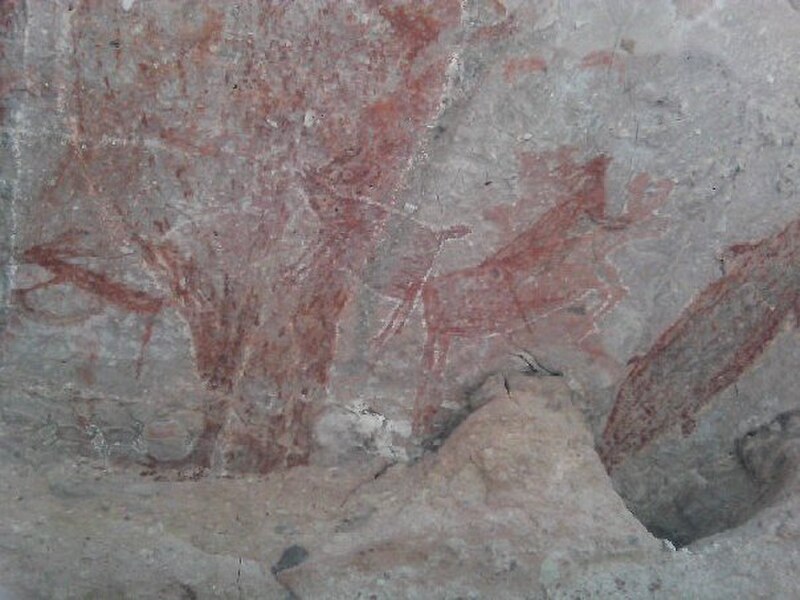
02 Spot One Cueva Pintada - Grandeur of the Great Murals and Bicolored Figures
Over five thousand years ago, prehistoric hunter gatherers constructed elaborate wooden scaffolding and raised heavy timber ladders against sheer vertical cliffs reaching over ten meters high, using giant brushes crafted from animal hair and agave fiber to paint colossal human figures twice the size of a living person. Take a moment to raise your eyes and look directly up at the cavernous rock ceiling expanding before you. …
03 Spot Two Tinajas and Petroglyphs - Water of Life and Sacred Mirrors
In a hyper arid desert mountain range where liquid moisture was the ultimate currency of survival, natural rock basins known as tinajas were far more than utilitarian water holes. They served as the most sacred ritual centers, acting as liquid mirrors that connected human communities with the cosmos. Direct your gaze directly at the dark basalt wall standing immediately adjacent to the quiet pool of water. …
04 Spot Three Cuesta Palmarito - The Ceremonial Tabla and Ritual Traces
For the pre literate Cochimí society, wooden ritual boards known as tablas functioned as sacred books, utilized by spiritual leaders to diagnose physical ailments, forecast seasonal climate shifts, and recite complex ancestral mythologies without the aid of written script. Direct your gaze directly to the flat basalt wall sheltered beneath the protective rock overhang in front of you. …
05 Spot Four Ceremonial Batons and Male Symbols - Lineage and Identity
Motifs that were erroneously identified as octopuses in early historic records are actually representations of ceremonial batons decorated with tied feather clusters, functioning as sacred emblems of authority and male lineage identity. Direct your eyes to the rock surface positioned immediately to the right of the male human figure. You can discern a striking petroglyph featuring a central staff topped with a fan like cluster of lines radiating downward, resembling feathered ceremonial rods. …
06 Spot Five Los Corralitos and Seasonal Paths - Bridging Mountain and Sea
Mountain dwelling hunter gatherers routinely journeyed over fifteen kilometers across rugged desert terrain to the Gulf of California coast to harvest marine shellfish, ingeniously carrying precious drinking water in organic canteens fashioned from dried turtle shells and animal stomachs. Direct your gaze toward the ridge running along the canyon margin. You can see circular stone alignments constructed from stacked basalt cobbles, known as corralitos. …
07 Closing
Today we have journeyed through the magnificent canyons of the Sierra de San Francisco, encountering the vibrant spirit and enduring legacy of the prehistoric people who inhabited this land thousands of years ago. Although their spoken language and oral mythologies have faded into the distant past, the colossal bicolored murals painted with red ochre and black manganese, along with the finely pecked petroglyphs, continue to speak to us across the centuries. …