 Photo Wikimedia Commons
Contents
History & cultureBY TELLBY7 sections · numbered as on the map01 Orientation
Welcome, esteemed travelers, to the Ani Cultural Landscape, a sacred repository of medieval memory where the solemn whisper of centuries echoes across a dramatic and solitary borderland. You are standing at the easternmost edge of Anatolia, forty-two kilometers from the city of Kars, perched atop a breathtaking triangular plateau encircled by sheer volcanic ravines. Below us flows the Arpacay River, which forms today's geopolitical boundary between Turkey and Armenia. Yet in the Middle Ages, this river was not a line of division but a vital artery of the Silk Road, bringing together merchants, pilgrims, and scholars from across Asia and Europe. Ani is recognized as a UNESCO World Heritage site because it represents a supreme crossroads of human history, a golden threshold where Armenian, Georgian, Byzantine, and Seljuk civilizations met, intermingled, and forged an unprecedented, cosmopolitan architectural synthesis found nowhere else on earth.
The plateau itself possesses a fascinating geological foundation that dictated the development of the human settlement. Below the surface level lies a solid, basaltic rock formation thirty meters thick at the river line, overlaid by a dense stratum of volcanic red tufa stone. Because this soft tufa stone could be easily quarried and sculpted yet possessed remarkable durability when exposed to air, medieval builders were able to craft both magnificent ashlar surface monuments and an extensive underground network of rock-cut dwellings, monastic cells, and pigeon houses along the canyon cliffs. Spanning eighty-five hectares, this settlement was naturally protected on three sides by the steep gorges formed by the Arpacay River, the Bostanlar Creek, and the Migmig Creek, providing an impregnable refuge for human civilization for over twenty-five hundred years.
From its early Iron Age origins around twelve hundred BC through its medieval climax, Ani evolved into a brilliant urban center. The city reached the pinnacle of its wealth during the tenth and eleventh centuries under the Bagratid Armenian Kingdom, particularly after the historic seat of the Katholikos was transferred here in the year 992. Elevated as the capital of faith and commerce, Ani earned the poetic moniker of the City of One Thousand and One Churches. As you begin your walking tour today, stepping past the massive fortifications into the silent streets, let the cool mountain air carry your imagination back to an era when this plateau vibrated with cosmopolitan life. Prepare to discover pioneering cathedrals, ornate Seljuk portals, and Anatolia's earliest Turkic mosque as we embark on this unforgettable journey through time.
02 The Impregnable Shield: Smbat II City Walls and Lion Gate
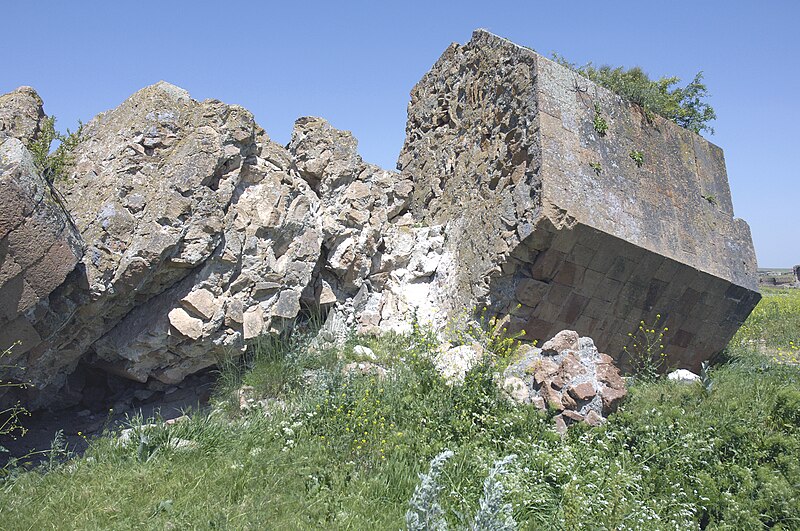
As one of the most formidable multi-layered defensive systems ever engineered in the medieval world, these magnificent ramparts served not merely as stone walls, but as an advanced military matrix combining deep moat systems with strategic grain reserves to counter long sieges. Stand at the northern threshold of the city and direct your gaze toward the towering curtain walls and the proud lion relief sculpted from vibrant red volcanic tufa stone above the central entrance. …
03 Harmonious Union of Cultures: Apostles Church and Its Caravanserai Gavit
Distinguished by a soaring central dome flanked by four smaller corner chapel domes that rise in perfect geometric balance toward the heavens, this sanctuary represents an extraordinarily rare five-domed pyramidal plan in medieval Eastern Christian architecture. Stand before the south entrance of the monument and admire the classical elegance of the original eleventh-century church portal alongside the magnificent Seljuk-style gavit narthex added directly against its southern facade over a…
04 Masterpiece of Architect Trdat: Cathedral of Ani
Decades before Gothic architecture blossomed across Western Europe, this monumental cathedral had already perfected pointed arches, clustered stone piers, and a soaring vertical spatial expression into an extraordinary masterpiece of medieval structural engineering. Walk slowly along the massive red tufa stone exterior of the monument, looking up at the delicate double-column blind arcades framing the high walls and the sculpted reliefs gracing the royal south portal. …
05 Anatolia's First Mosque: Ebu'l Manuçehr Mosque
Holding the distinguished title of the very first Turkic Islamic mosque constructed in Anatolia, this monument represents a supreme triumph of medieval civil engineering that overcame a precipitous cliffside topography by erecting a multi-story substructure embedded into the gorge. Step inside the serene prayer hall to gaze up at the incredible stone ceiling vaults, and look northwest toward the lofty octagonal minaret rising dramatically against the canyon sky. …
06 Gallery of Vibrant Frescoes: Tigran Honents Church
Resisting centuries of exposure to severe earthquakes and harsh mountain elements, this sanctuary stands as an absolute miracle of Eastern Christian art, its interior walls, vaulted ceilings, and inner dome completely covered in vivid polychromatic frescoes depicting biblical narratives and saintly lives. …
07 Closing
Dear travelers, as we stand on this sweeping height looking out across the dramatic Arpacay gorge and the silent plateau of Ani, our journey through this ancient Silk Road metropolis comes to a thoughtful close. Spread across this vast landscape, the reddish silhouette of the Cathedral, the solitary octagonal minaret overlooking the ravine, and the weathered ramparts built by King Smbat II all bear quiet witness to a legendary era when this plateau pulsed with the vibrant energy of merchants,…