 Photo Wikimedia Commons
Contents
History & cultureBY TELLBY7 sections · numbered as on the map01 Orientation
Welcome to the Khajuraho Group of Monuments, a world-renowned UNESCO World Heritage Site that stands as an extraordinary monument to the architectural genius and artistic brilliance of the Chandela dynasty. Between the tenth and twelfth centuries, the visionary rulers of the Chandela dynasty commissioned a magnificent ensemble of stone temples across this region, transforming heavy sandstone blocks into transcendent expressions of divine devotion, mythic iconography, and refined human passion. Celebrated globally for their harmonious proportions, intricate relief sculptures, and sophisticated spatial organization, the temples of Khajuraho represent one of the absolute zeniths of medieval Indian sacred architecture.
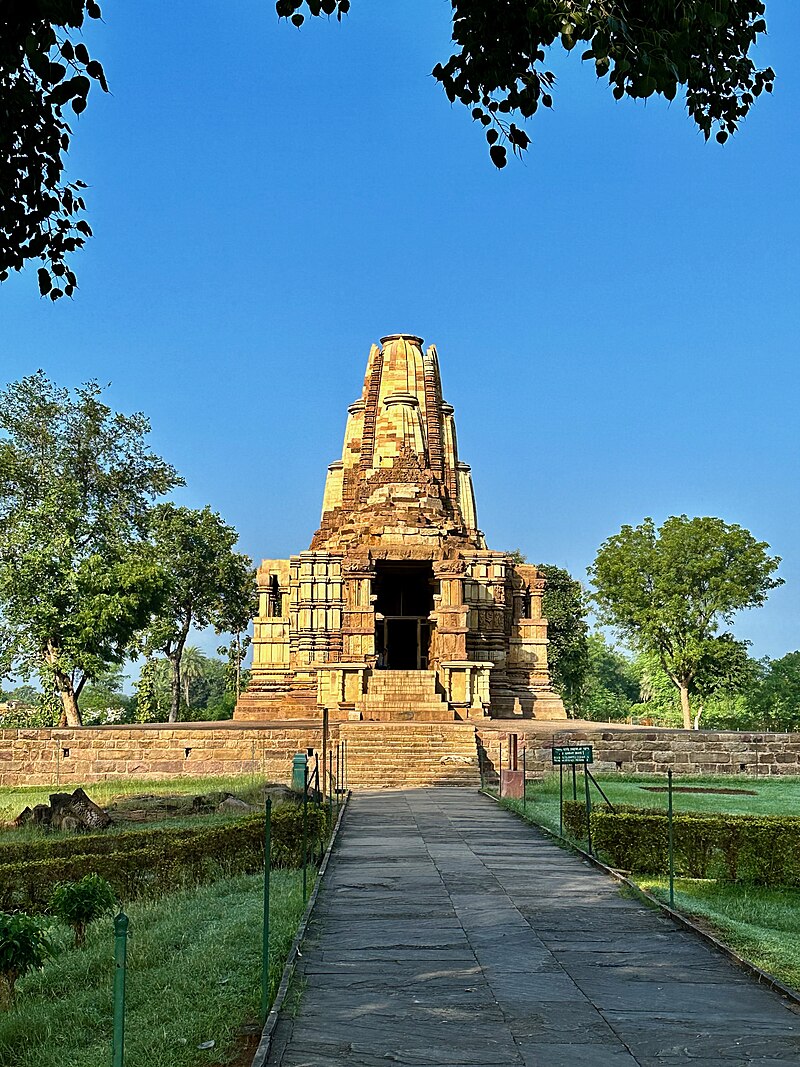
As you stand before this serene archaeological site, you are looking at the historic Duladeo Temple, a prominent sanctuary within Khajuraho's Southern Group of Temples, beautifully situated near the tranquil banks of the Khudar River. Locally referred to also by the name Kunwar Math, this revered shrine was consecrated to Lord Shiva under the endearing regional title of Dulhadev, which translates to the Holy Bridegroom. Architectural historians and archaeologists date the construction of Duladeo Temple to the period between 1000 and 1150 AD. This historical positioning is of immense significance, as it marks Duladeo as the very last temple constructed during the legendary Chandela era, serving as the grand finale to Khajuraho's centuries-long temple-building epoch.
Because it represents the ultimate phase of Chandela architectural and artistic development, Duladeo Temple occupies a pivotal position in Indian art history. While faithfully preserving the core design principles and structural aesthetics of earlier Khajuraho masterworks, this sanctuary introduces a fascinating stylistic evolution. It masterfully synthesizes the established regional art heritage with creative influences and sculptural techniques entering from the medieval temple traditions of the Deccan region and Western India. Although its exterior sculptural embellishments appear somewhat more restrained when compared to older monumental giants such as the Kandariya Mahadev Temple, Duladeo radiates an undeniable quality of structural balance, poise, and timeless elegance. Furthermore, historical evidence indicates that this sacred sanctuary accommodated both Hindu worshippers and Jain devotees, offering a glowing historical testimony to the rich culture of religious tolerance and spiritual harmony that characterized medieval Khajuraho. Take a moment to absorb the peaceful natural surroundings along the Khudar River as we prepare to begin our detailed walkthrough of this final masterpiece of Chandela heritage.
02 High Base Platform and Outer Wall Carvings
As we begin our detailed spatial and architectural walkthrough of Duladeo Temple, take a moment to step back and appreciate the magnificent foundation upon which this entire sacred sanctuary is elevated. The temple is constructed atop an imposing stone platform known as a Jagati, which rises approximately five feet above the surrounding terrain and encompasses overall ground dimensions measuring sixty-nine feet in length by forty feet in width. …
03 Entrance Porch and Guardian Figures
As you step off the platform stairs, you enter the mukha-mandapa, or entrance porch, which serves as the primary ceremonial portal into Duladeo Temple. The moment you cross into this covered portico, you will encounter a surprising and delightful architectural feature that immediately engages the observer. …
04 The Octagonal Hall and Celestial Dancers
Leaving the entrance porch behind, you now step into the spacious central hall of Duladeo Temple, known as the maha-mandapa. This grand hall features an octagonal floor plan that immediately distinguishes it from the square or rectangular halls found in most other Khajuraho temples. As you stand in the center of this remarkable hall, you are witnessing an extraordinary artistic achievement. …
05 Vestibule Doorway and the Sculptor Vasala
As you approach the threshold leading from the main hall into the inner sanctum vestibule, known as the antarala, you are standing before one of the most historically significant spots in all of Khajuraho. Throughout the expansive Khajuraho Group of Monuments, almost every grand temple was constructed by anonymous guilds of stonecutters and sculptors whose individual identities have been lost to history. However, Duladeo Temple stands out as a remarkable exception to this rule. …
06 The Inner Sanctum and the Thousand Shiva Lingas
Passing through the vestibule, you now cross into the garbhagriha, the innermost holy sanctum of Duladeo Temple. The atmosphere here is intentionally dark, cool, and intimate, creating a solemn space designed for deep contemplation and direct communion with the divine. Within this sacred inner chamber resides the central deity of the temple, a remarkable Shiva Lingam mounted upon a grand sculpted pedestal known as a yoni-vedika. …
07 Closing
As we step back out into the open courtyard surrounding Duladeo Temple, our guided audio exploration comes to a peaceful conclusion. Standing here along the quiet banks of the Khudar River, we can reflect upon the unique historical and artistic achievement represented by this final monument of the Chandela dynasty. Built between the years 1000 and 1150 AD, Duladeo Temple serves as the grand finale of Khajuraho's celebrated golden age of temple construction. …