 Photo Wikimedia Commons
Contents
History & cultureBY TELLBY7 sections · numbered as on the map01 Orientation
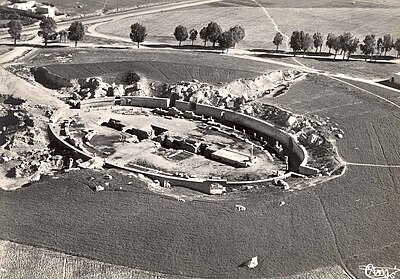
Welcome to the Archaeological Site of Carthage in Tunisia, a magnificent place where the ancient breath of human history resonates across the azure waters of the Gulf of Tunis. Positioned at the strategic pivot point separating the eastern and western basins of the Mediterranean Sea, this promontory served as a decisive crossroads of world history. According to legendary tradition, the city was founded by Queen Elissa Dido, who escaped from Tyre and ingeniously acquired land by encompassing this headland with the strips of a single oxhide. Established in the ninth century Before Christ by Phoenician settlers, Carthage rapidly expanded into a dominant commercial empire whose fleets commanded trade across the Mediterranean. As the glowing metropolis of Phoenico-Punic civilization, Carthage flourished for centuries through maritime mastery and agricultural wealth. However, its inevitable geopolitical rivalry with Rome precipitated the epic Punic Wars. This century-long struggle culminated in the tragic siege and total destruction of the Punic city in the year one hundred forty-six Before Christ. Yet the story of Carthage did not end in ashes. Rebuilt under the decrees of Julius Caesar and Emperor Augustus, Roman Carthage rose above the Punic ruins to become the monumental capital of the proconsular province of Africa and the third largest metropolis of the ancient Western world. Layered with Punic foundations, grand Roman urban planning, and early Christian theological heritage, this layered archaeological complex was inscribed as a UNESCO World Heritage site in nineteen seventy-nine. The preservation of these precious remains is owed to an unprecedented international safeguarding campaign launched by UNESCO and spearheaded by distinguished Tunisian archaeologist Abdelmajid Ennabli alongside international teams. Today, our audio tour invites you to follow a carefully curated itinerary. We will begin atop Byrsa Hill, which formed the citadel heart of ancient Carthage, and descend toward the sacred votive grounds of the Tophet of Salammbo. We will then examine the circular Punic Ports that once sheltered a formidable navy, marvel at the colossal ruins of the Baths of Antoninus along the shoreline, and conclude among the opulent hillside estates of the Roman Villas district. Every carved marble fragment, subterranean cistern, and stone column scattered across this landscape tells a story of civilizational triumph, destruction, and enduring memory. As you step forward into the coastal breeze, prepare to immerse yourself in the saga of an empire that has captivated the human imagination for millennia.
02 Byrsa Hill and the Resilient Punic Quarter
When the Roman legions systematically destroyed Carthage and burned it to the ground, they buried this entire hillside beneath a massive earth embankment to construct a flat platform for their own monumental forum, ironically preserving this authentic Punic residential quarter intact for two thousand years. As you look down at your feet, observe the remarkable red mortar pavement studded with small, carefully set fragments of white marble. …
03 Tophet of Salammbo: Sacred Grounds of Votive Stelae
Long sensationalized as a site of horrific child sacrifice in hostile Roman propaganda and nineteenth-century romantic literature such as Gustave Flaubert's novel Salammbo, the Tophet of Salammbo was in reality a deeply sacred sanctuary where ancient Carthaginians commemorated deceased infants and placed devout votive offerings. …
04 The Ancient Punic Ports and Admiralty Islet
Completely concealed from the open sea so that foreign vessels could never discern its internal layout, this secret circular military port was engineered to launch more than one hundred warships into battle at a moment's notice. What today appears as a serene, reflective lagoon was once the heavily fortified naval heart of the Punic Empire. Look toward the center of the circular basin, where you can see the raised landmass known as Admiralty Islet. …
05 Antonine Baths: Monumental Legacy of Roman Carthage
Standing as the largest thermal bath complex built outside the Italian peninsula in the entire Roman world, this monumental structure featured central vaulted ceilings that soared to a height of nearly thirty meters, equivalent to a modern multi-story building. Constructed directly along the coastline of the Gulf of Tunis, this marble complex greeted arriving ships with a breathtaking display of imperial Roman wealth, architectural mastery, and civic splendor. …
06 Roman Villas and the Aviary Mosaic
Perched high upon the slope of Odeon Hill with panoramic views sweeping across the Gulf of Tunis, these luxury hillside residences were the private sanctuaries of the wealthiest Roman aristocrats and high officials. Designed to capture refreshing sea breezes while showcasing exquisite marble architecture, this exclusive district represented the pinnacle of opulent residential living in Roman Africa. …
07 Closing
As our journey through the Archaeological Site of Carthage comes to a gentle close, we stand at a scenic vantage point overlooking the timeless expanse of the Gulf of Tunis. Across three millennia, this extraordinary promontory has witnessed the rise, destruction, and rebirth of civilizations that shaped the course of human history. …