 Photo Wikimedia Commons
Contents
History & cultureBY TELLBY8 sections · numbered as on the map01 Orientation
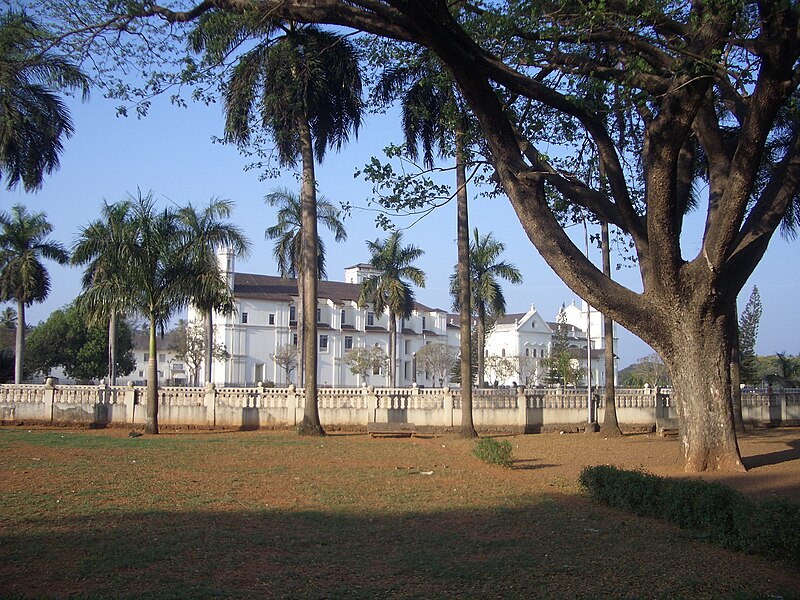
Welcome to Old Goa and the magnificent Church of St. Francis of Assisi, one of the most historically significant monuments in the Portuguese Viceroyalty of India. Situated near the Mandovi River plain, this sanctuary stands at a historic crossroads where European artistic traditions met the cultural landscape of the Indian subcontinent. Recognized internationally for its profound architectural and historical importance, this monument forms an integral part of the UNESCO World Heritage site known as the Churches and Convents of Goa.
The story of this sacred location began in 1517, when eight Portuguese Franciscan friars landed in Goa with the mission of establishing their religious presence. The land upon which this church stands was originally the site of the principal mosque of the Adil Shahi kingdom, the rulers of the region prior to Portuguese arrival. Following the conquest and the demolition of the Adil Shahi mosque, the Franciscan friars constructed their initial church and convent on these grounds. As the Franciscan mission expanded over the following century, the original structure was replaced, culminating in the grand church complex completed in 1661 that you behold today.
It is important to distinguish between the life of Saint Francis of Assisi and the construction of this Goan landmark. Saint Francis was born in Assisi, Italy, in 1182 and passed away in 1226. He founded the Franciscan Order, devoted to radical poverty, humility, peace, and love for all creation. Centuries later, Portuguese friars brought his spiritual tradition across the oceans to India, erecting this monument in his honor.
As you stand before this sanctuary, take a moment to reflect upon the dramatic historical transformation of this ground, evolving from an Adil Shahi religious center into a major Franciscan complex. Throughout this audio guide tour, we will explore the remarkable visual and structural features of the site. We will examine the three-tier facade flanked by octagonal side towers, step inside to view the barrel-vaulted central nave, observe the rib-vaulted crossing supporting the choir gallery, and admire the detailed painted life panels along with the high altar ensemble. Please move closer to the front entrance now as we begin our detailed examination of the exterior facade.
02 Main Entrance & Three-Tier Facade
Please position yourself directly in front of the main exterior facade of the church. The main entrance facade of the Church of St. Francis of Assisi presents one of the most striking architectural compositions in Old Goa, reflecting a sophisticated synthesis of European layout and local craftsmanship. …
03 Barrel-Vaulted Central Nave & Buttress Walls
Please step gently inside the church and pause near the entrance of the central nave. As you transition from the bright tropical sunlight outside into the interior hall, you are immediately enveloped by a cool, solemn atmosphere that invites quiet contemplation. Look upward toward the ceiling to admire the soaring barrel-vaulted central nave. …
04 Rib-Vaulted Crossing & Choir Gallery
Please advance further down the central aisle and stop directly beneath the architectural crossing, where the nave intersects the transverse transept section. Standing at this central junction, you are positioned at a point of remarkable structural transition within the church layout. If you look directly above your head, you will observe a striking change in ceiling architecture. …
05 Side Chapels & Life Panels of St. Francis
Please step away from the central aisle and walk toward the side chapels located along the perimeter walls of the nave. Arranged neatly between the heavy internal buttress piers, these side chapels provide dedicated spaces for private devotion, memorial prayer, and veneration of various saints. As you inspect the adjoining walls of the nave surrounding these chapels, direct your attention to the impressive series of painted panels mounted along the nave walls. …
06 Main Altar & Tabernacle Ensemble
Please approach the sanctuary at the head of the church and stand directly before the main altar ensemble. Before you stands the magnificent high altar and tabernacle ensemble, which represents the theological climax and artistic focus of the Church of St. Francis of Assisi. Rendered with extraordinary scale and covered in gleaming gold leaf, this grand altarpiece fills the entire height of the sanctuary wall, displaying the devotional intensity of Portuguese colonial church art. …
07 Convent Annex & Franciscan Legacy
Please step toward the adjoining convent annex structure located directly adjacent to the main church building. This convent annex, together with the Church of St. Francis of Assisi, forms an integrated monastic complex that served as the administrative, educational, and spiritual headquarters for the Franciscan Order in Portuguese India. …
08 Closing
As our audio guide tour comes to a conclusion, take a final moment to reflect upon the remarkable journey we have shared through the Church and Convent of Saint Francis of Assisi. From the historic arrival of the eight Portuguese Franciscan friars in 1517 to the completion of this grand structure in 1661 over the site of the former Adil Shahi mosque, this sanctuary stands as a living witness to the complex history, artistic genius, and spiritual heritage of Old Goa. …