Contents
History & cultureBY TELLBY8 sections · numbered as on the map01 Orientation
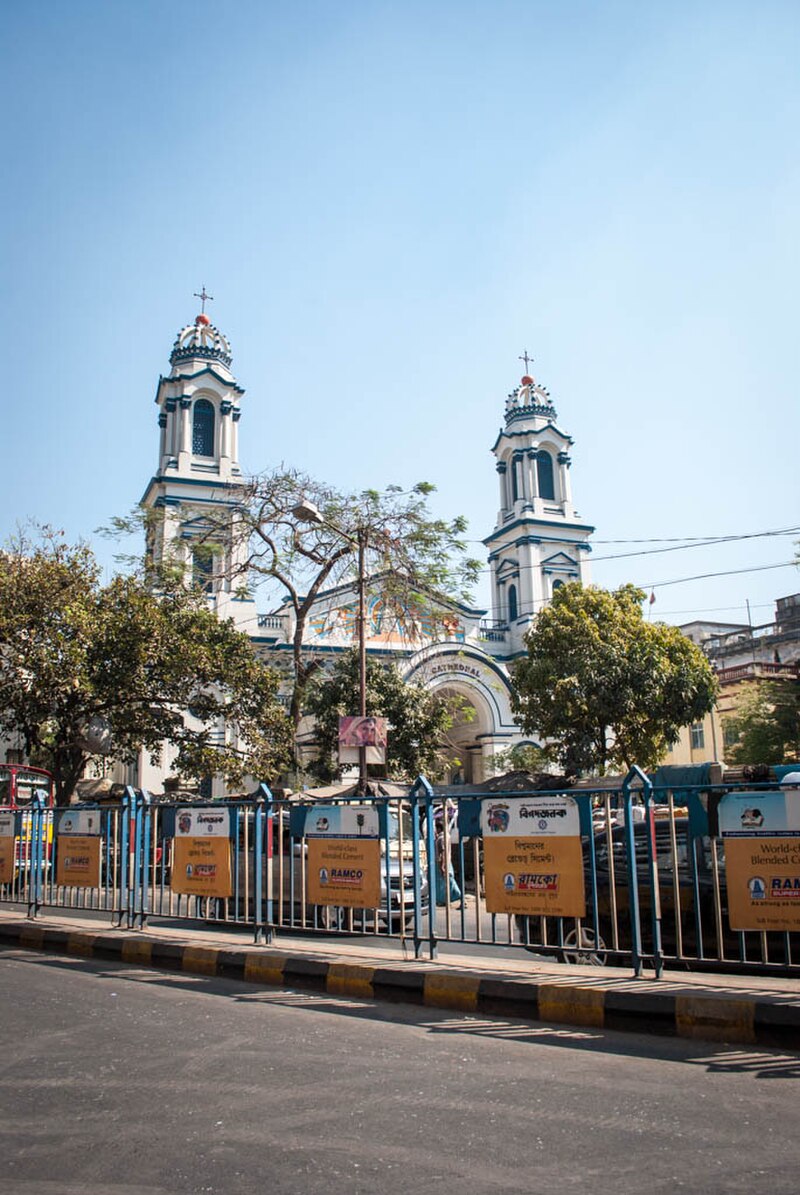
Welcome to the historic neighborhood of Burrabazar in Kolkata. Today we are embarking on a memorable journey through the Cathedral of the Most Holy Rosary, the single remaining architectural monument from Kolkatas lesser known Portuguese colonial legacy. To the locals of this vibrant metropolis, this historic sacred sanctuary is often affectionately known as the Portuguese Church or the Murgighata Church.
To truly comprehend the deep origins of this grand cathedral, we must travel back in time to the fifteen thirties. The Portuguese were the very first European traders to arrive in the region of Bengal, establishing an early commercial trading post in Bandel, which is today a historic town in the Hooghly district of West Bengal. In the decades that followed, Dutch traders arrived next in Bengal, followed closely by the French, while the British were actually the last of the major European powers to settle in this part of India. However, towards the close of the seventeenth century, when Kolkata was founded as a major British settlement under Job Charnock in sixteen ninety, many Eurasian descendants of the early Portuguese merchants began migrating from Bandel to Kolkata. By the middle of the eighteenth century, the Portuguese population residing in the expanding city had grown to a very substantial number.
As Kolkata developed into a diverse metropolitan center, specific urban districts were set aside for different racial and merchant communities. The Portuguese settlers were uniquely distinguished in the city because they were the only group who raised domestic fowl and poultry within their residential quarter. Consequently, their local neighborhood came to be designated in the Bengali language as Murgihatta, or Murgighata. In Bengali, the word murgi translates to chicken, and murgihatta loosely means the poultry quarter. Over time, the magnificent church constructed within this distinct neighborhood naturally inherited the colloquial title of the Murgighata Church.
Initially, the Portuguese residents constructed a modest chapel on this site to serve the spiritual needs of Augustinian friars. As their community expanded and prospered, the settlers decided to replace the modest chapel with a grander house of worship. A wealthy Portuguese trader and philanthropist named Joseph Barretto came forward to provide indispensable financial assistance for the construction project. Supported by his generous patronage, the old chapel was replaced, and construction began on a magnificent cathedral. This endeavor culminated in late seventeen ninety nine, and on November twenty seventh, seventeen ninety nine, the church was consecrated and dedicated to Our Blessed Lady of the Rosary.
Situated on Portuguese Church Street among a dense warren of bustling market shops and commercial buildings, this cathedral remains an extraordinary monument to the highly cosmopolitan past of Kolkata. Let us now pause for a moment before the main entrance as we begin our guided tour of this historic sanctuary.
02 Section 1: The Extended Portico and Arched Entrance
As you stand before the main approach to the cathedral after walking along Portuguese Church Street, the very first architectural feature that immediately captures your attention is the vivid contrast of bright blue and pristine white paint. Set amidst a labyrinthine warren of bustling commercial shops, high-density trade stalls, and historic urban structures in Burrabazar, this vibrant color combination endows the entire front facade with an extraordinary visual presence. …
03 Section 2: Twin Domed Towers and Decorative Pediment
Lifting your eyes above the extended portico towards the upper reaches of the cathedral, you are met with one of the most remarkable architectural spectacles in Kolkata. Flanking the front facade on either side are two lofty domed towers that rise majestically against the sky. Each of these twin towers is topped with an exquisitely fashioned crown-shaped cupola. These crown-shaped cupolas give the cathedral a regal and triumphant upper silhouette, reminiscent of royal crests. …
04 Section 3: The Colonnaded Nave and Wooden Pews
Stepping through the arched doorway and crossing the threshold into the interior nave of the cathedral, the bustling clamor of the outer city instantly dissolves into a profound and tranquil calm. The interior of the church is defined by a magnificent colonnaded nave that stretches gracefully from the entrance toward the far end of the sanctuary. …
05 Section 4: The 14 Stations of the Cross in Bas-Relief
As you stroll along the side aisles of the nave, your attention is drawn to one of the most remarkable artistic and spiritual treasures housed within the cathedral. Positioned at regular intervals along the interior walls are fourteen exquisite wooden panels sculpted in bas-relief. These carved panels depict the fourteen Stations of the Cross, capturing key sequential moments of prayer and reflection. …
06 Section 5: The Resplendent Main Altar and Stained Glass
Reaching the far end of the central nave, you arrive before the absolute spiritual and visual focal point of the cathedral, the magnificent main altar. The massive altarpiece that forms the centerpiece of the sanctuary is painted in a brilliant coat of pure white, exquisitely accented with gleaming gold highlights. The sharp contrast between the spotless white background and the rich gold detailing confers an immediate sense of majesty and sacred refinement upon the entire sanctuary. …
07 Section 6: The Sanctuary and Tomb of the First Archbishop
Looking closely at the area beneath the main altar, you are standing above a place of supreme ecclesiastical importance and historical reverence. Located directly below the main altar are the sacred remains of the very first Archbishop of Calcutta. The presence of the first Archbishops tomb beneath the sanctuary endows this cathedral with an irreplaceable historic dignity. …
08 Closing
As we bring our audio tour to a conclusion, let us step back out into the open courtyard of the cathedral. Looking back one last time at the radiant blue and white facade rising above the courtyard, we gain a renewed appreciation for Kolkatas rich multicultural history. From a modest eighteenth-century chapel built for Augustinian friars to the magnificent cathedral we see today, this sacred landmark stands as the ultimate living monument to the citys enduring Portuguese legacy and colonial…