 Photo Wikimedia Commons
Contents
History & cultureBY TELLBY7 sections · numbered as on the map01 Orientation
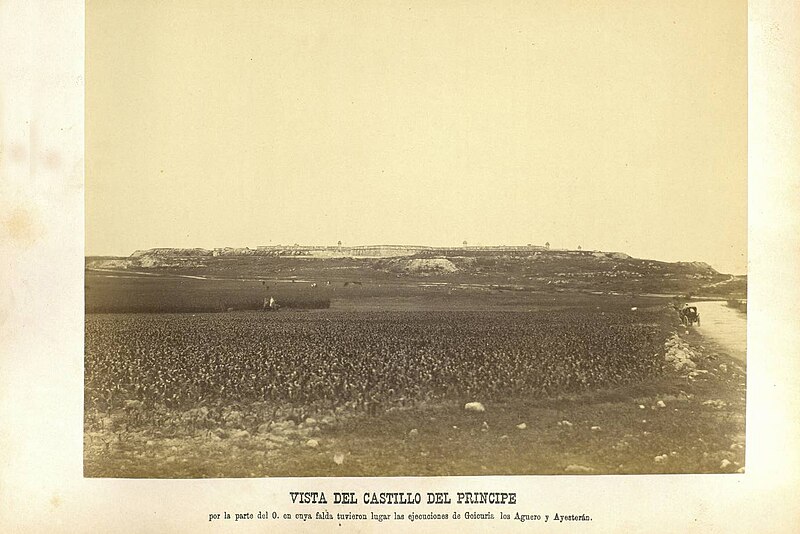
Welcome to Havana, Cuba, a pivotal strategic stronghold in the Caribbean and a central bastion of the Spanish Empire in the New World. Today, our audio journey takes us to Castillo del Principe, a grand military fortress standing proudly atop the commanding heights of Arostegui Hill overlooking the expansive cityscape of Havana. Named in honor of Prince Charles of Bourbon, the Prince of Asturias and future King Charles the Fourth, son of King Charles the Third of Spain, this fortification represents a vital component of the formidable stone defense network constructed by the Spanish Crown to secure its territorial conquests and shield the crucial harbor of Havana. Recognized for its extraordinary military architecture, structural integrity, and historic legacy, the fort was inscribed as an essential part of Old Havana and its Fortification System on the UNESCO World Heritage List in 1982. Following the catastrophic British capture of Havana in the eighteenth century, Spanish authorities realized the vulnerability of their colonial prize and undertook an unprecedented campaign to transform Havana into the most heavily fortified city across the American continent. Positioned on high ground to prevent enemy forces from mounting landward artillery sieges, Castillo del Principe formed an indispensable shield along the inland perimeter. During our guided promenade today, we will traverse five key architectural stations to unravel the multifaceted history and structural ingenuity of this remarkable monument. First, at the Main Colonial Entrance and Pentagonal Ramparts, we will admire the massive limestone facades and examine the master engineering designed to withstand prolonged bombardment. Second, at the Dry Moat and V shaped Redan Defense, we will explore the deep subterranean trenches and sharp angular bastions built to eliminate defensive blind spots. Third, at the Underground Red Brick Communication Tunnels, we will venture into the hidden labyrinth of vaulted brick passageways connecting remote listening posts and ammunition stores. Fourth, at the Historic Prison Quarters, we will trace how this military castle transitioned into the premier national prison, holding courageous patriots and political dissidents. Fifth, at the Lookout Deck Overlooking Avenue Carlos the Third, we will stand at the highest battery tier, enjoying a breathtaking panoramic view that extends straight toward Quinta de los Molinos. Please stroll slowly along these elevated stone pathways, letting the cool breeze and timeless atmosphere transport you back through centuries of Caribbean history. Let us now move forward together toward our first official stop at the main entrance portal.
02 Main Colonial Entrance and Pentagonal Ramparts
In the year 1762, a devastating military crisis struck the Spanish Empire when British naval forces captured Havana and occupied the prized colonial capital for nearly a full year. This humiliating defeat exposed the fatal vulnerabilities of the landward defenses protecting the settlement long celebrated as the Key of the New World. …
03 The Dry Moat and V-shaped Redan Defense
Unlike traditional medieval castles in Europe that relied on water filled moats, this vast dry moat was engineered as a sophisticated killing zone, intentionally left dry so that enemy soldiers dropping into the trench would find no cover and remain exposed to lethal crossfire from all angles. Please look down into the deep rock cut trench beneath your feet and point toward the sharp V shaped stone structure extending outward from the main wall, known in military architecture as a redan. …
04 Underground Red-Brick Communication Tunnels
Completely invisible from the surface, an extraordinary subterranean network of brick vaulted communication tunnels gridirons the earth beneath this fortress, allowing a garrison of up to 1000 soldiers to transport ammunition and move securely between remote outposts even during intense artillery bombardments. …
05 The Prison Quarters and Revolutionary Detainees
Although originally conceived and constructed purely as an impregnable military fortress, Castillo del Principe underwent a dramatic historic transformation, serving as the Presidio Nacional and Havana primary prison from colonial times through the revolutionary era. Please direct your attention directly toward the thick stone masonry walls containing narrow barred cell windows and heavy iron door frames set into the inner courtyard quarters. …
06 Lookout Deck Overlooking Avenue Carlos III
Standing here at the highest elevated deck of the fortress, the supreme strategic dominance of Castillo del Principe becomes immediately apparent, as its battery of 60 heavy cannons once swept a vast panoramic radius stretching from Campo de Marte all the way to Quinta de los Molinos. Please gesture with your hand toward the grand thoroughfare stretching straight below us, officially named Avenue Salvador Allende and historically known throughout the colonial era as Avenue Carlos the Third. …
07 Closing
Our audio guide journey through Castillo del Principe, the silent stone citadel named after Prince Charles of Bourbon, now comes to its graceful conclusion. Constructed between 1767 and 1779 atop the strategic heights of Arostegui Hill, this irregular pentagonal fortress stands as a supreme masterpiece of eighteenth century Spanish military engineering that safeguarded the vital Caribbean port of Havana for centuries. …