Contents
History & cultureBY TELLBY7 sections · numbered as on the map01 Orientation
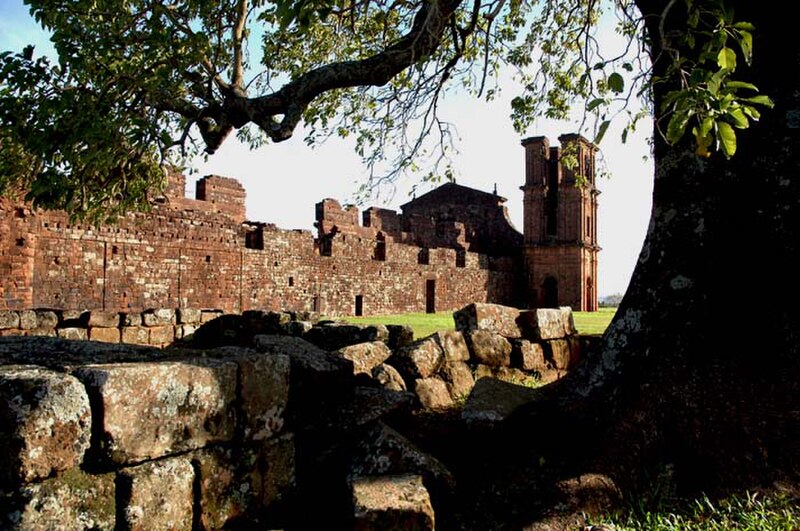
Welcome to the breathtaking archaeological sanctuary of Sao Miguel das Missoes, an esteemed UNESCO World Heritage site situated in the lush interior of Rio Grande do Sul in southern Brazil. This holy ground stands as a remarkable historical testament to the extraordinary cultural synthesis forged between European Catholic missionaries of the Society of Jesus and the indigenous Guarani people in the seventeenth century. These mission settlements, historically known as reductions, were far more than simple centers for religious conversion, functioning instead as sophisticated autonomous community towns where administrative governance, agricultural production, civic organization, and artistic creation merged into a singular societal model. Among the thirty Jesuit reductions established across the Uruguay River basin and its tributaries, the reduction of Sao Miguel Arcanjo represented the most populous, prosperous, and architecturally complete settlement in the entire region. The physical remains preserved across this landscape demonstrate a profound spiritual dialogue and material exchange where European Baroque principles and indigenous craftsmanship coalesced into an unprecedented historical reality. Today, the enduring red sandstone walls of the monumental main church, the solid bell tower, the priest cloister, the artisan workshop foundations, and the expansive central plaza together convey the grandeur of a vibrant civilization. Although fire, regional conflicts, and political upheavals reduced the once flourishing town to romantic stone ruins, its global significance was permanently recognized in nineteen eighty three with its inscription onto the UNESCO World Heritage list. Furthermore, this sacred ground has re-emerged as a vital focal point of indigenous identity for the contemporary Mbya-Guarani people, who cherish the stone structures as Tava Miri, the Sacred Stone Village of their ancestors. Preserved under the dedicated care of the National Institute of Historic and Artistic Heritage within the Missoes National Historical Park, this site continues to foster a dynamic connection between ancestral memory and living culture. As you embark on this guided walking tour through the preserved stone ruins, you will trace the footsteps of ancient inhabitants and discover a compelling story of faith, artistic mastery, human endurance, and cultural renewal that resonates across centuries. Please take a moment to absorb the majestic panorama of sandstone structures and rolling green lawns before we begin our walk together toward the expansive central plaza.
02 Central Plaza & Town Layout / 중앙 광장과 환상적인 도시 계획
Designed in sixteen eighty seven during the comprehensive reestablishment of the mission at its present geographic site, this monumental rectangular central plaza was meticulously planned as an ideal urban square capable of holding up to seven thousand indigenous inhabitants in perfectly symmetrical harmony and rigorous civic order. …
03 Church Façade & Galilee Portico / 성당 전면부와 화랑 포르티코
Constructed from locally quarried red sandstone, this monumental Baroque church façade represents one of the most brilliant architectural achievements ever erected by European master builders and indigenous artisans in the South American continent. Elevated upon a massive stone stylobate featuring six wide sandstone steps, the magnificent composition reflects a harmonious fusion between European classical erudition and local material expressiveness, creating an enduring symbol of intercultural…
04 Main Church Interior & High Altar Ruins / 성당 내부 중앙 네이브와 대제단
When the church was devastated by fire following the Guarani War in seventeen fifty six and struck again by lightning in subsequent years, its massive vaulted wooden roof burned away, leaving only the open sky as its eternal ceiling. The temple interior was originally divided into three majestic naves separated by towering stone arches, featuring eleven richly gilded altars, polychrome wooden statues, and a central timber dome that once crowned the transept crossing. …
05 Priest Cloister & Artisan Workshops Courtyard / 사제관 회랑과 공방 마당
This cloister courtyard and artisan workshop complex served as an extraordinary center of artistic production where highly skilled Guarani craftspeople mastered European stonecarving, wood sculpture, organ building, and metallurgy to supply holy objects across thirty regional reductions. Within these bustling stone rooms, native sculptors and painters synthesized European Baroque iconographic models with their own artistic sensibilities, creating polychrome statues, gilded altarpieces, and…
06 Missions Museum & Sacred Spring Fountain / 미쇠스 박물관과 신성한 샘터
Established in nineteen thirty eight, the Missions Museum houses the largest, most valuable, and historically significant collection of Jesuit-Guarani wooden sacred statues and missionary artifacts in all of Brazil. Inside its exhibition halls, visitors can contemplate masterworks carved from local hardwoods by Guarani sculptors, including monumental statues of Saint Michael the Archangel, intricate altar reliefs, baptismal fonts, and one of the massive original bronze church bells. …
07 Closing
Our guided walking tour across the sacred grounds of Sao Miguel das Missoes now comes to its completion. The expansive central plaza, the monumental sandstone portico, the silent nave, the artisan cloister, and the rich museum collection you have experienced today represent far more than silent stone ruins. They stand as a profound living bridge connecting past and present, memory and identity across centuries. …