 Photo Wikimedia Commons
Contents
History & cultureBY TELLBY7 sections · numbered as on the map01 Orientation
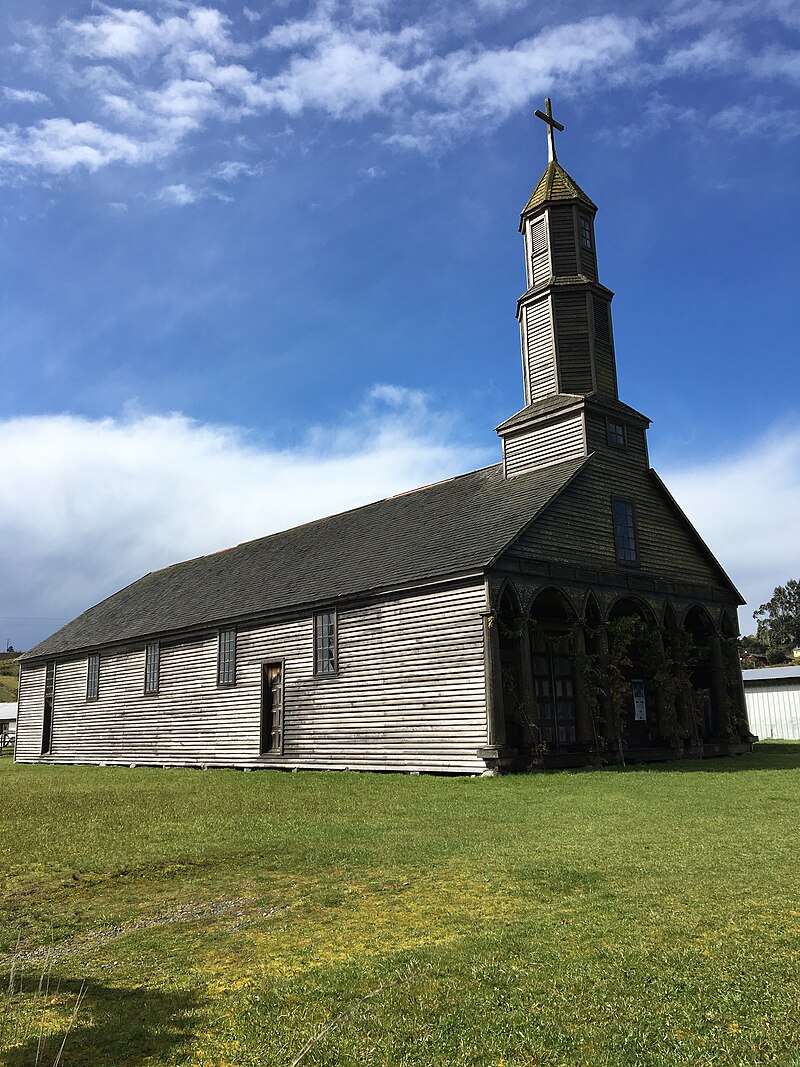
Welcome to the quiet coastal village of Aldachildo, situated gracefully on the northern shoreline of Lemuy Island within Chile's remote Chiloé Archipelago. As you stand in this open seaside square, you are placed at a deeply captivating intersection where the vast ocean meets a centuries-old tradition of wooden heritage architecture. Behind you, the cool waters of the inland sea lap softly against the pebble beach and stone landing ramp, while directly ahead stands the Church of Aldachildo, dedicated to Jesus of Nazareth. Recognized as a UNESCO World Heritage Site in the year two thousand as one of sixteen iconic timber sanctuaries across the archipelago, this structure represents an extraordinary synthesis of human cultures. It embodies the historical encounter between European Catholic missionary traditions and the profound woodworking mastery of the indigenous Chono and Huilliche peoples, whose ancestors navigated these misty channels in sewn-plank canoes called dalcas for generations. Documentary records from Jesuit traveling missions note the presence of a chapel in Aldachildo as early as seventeen thirty-four, after which Franciscan friars assumed spiritual care of the islanders. Isolated from mainland South America by formidable geographic barriers and turbulent ocean currents, the community constructed this sanctuary using local rainforest timbers without relying on imported European building materials or stone masonry. Notice how the long wooden nave is positioned parallel to the coastline. This intentional alignment allowed the prominent bell tower to serve as a vital nautical beacon for sailors traversing foggy marine passages between neighboring islands. In twenty twenty-two, thirty-eight hectares of the surrounding coastal shoreline, pastures, and hillside potato patches were designated a Zone Típica national monument, preserving the intimate harmony between marine foraging, traditional agriculture, and sacred timber architecture. The surrounding hillsides are carpeted with lush ferns and native trees, creating a serene green backdrop that frame the weathered wooden sanctuary against the vast Pacific horizon. As the ocean breeze touches your face, take a quiet moment to absorb the peaceful atmosphere of this historic square before we walk closer together to examine the remarkable details of the timber façade.
02 The Tower and Shingled Façade Built Without Nails
The most breathtaking secret of this massive timber sanctuary is that it was constructed near the turn of the twentieth century around nineteen hundred and five without using a single iron nail or metal fastener. In an isolated island economy where iron hardware was extremely scarce, costly, and prone to rapid rust from the salty ocean breeze, local builders relied entirely on centuries-old maritime woodworking traditions. …
03 The Vaulted Ceiling Shaped Like an Inverted Ship Hull
Stepping inside the quiet sanctuary, you are immediately embraced by the warm scent of aged timber and the sweeping curve of the vaulted ceiling overhead. The extraordinary secret of this arching ceiling is that it was designed and built by local shipwrights who applied coastal shipjoinery—known as carpintería de ribera—directly to sacred interior architecture. …
04 The Secret of the Painted False Marble Columns
At first glance, the grand interior columns supporting the central nave and separating it from the side aisles appear to be sculpted from expensive, polished European marble. However, the delightful surprise of these pillars is that they are crafted entirely from solid local rainforest tree trunks hand-painted with extraordinary faux-marble veining. Step directly over to the column on your left and examine the painted surface closely under the ambient light. …
05 The Altar of Patron Saint Jesus of Nazareth
Positioned at the head of the sanctuary, this high altar serves as the spiritual heart and emotional core of the Aldachildo community. Every year on August thirtieth, and again on the third Sunday of January, thousands of island pilgrims travel across choppy ocean channels in traditional wooden boats to assemble before this altar. …
06 The Shoreline Promenade and Island Life
Stepping out onto the seaside promenade, you are greeted by an expansive view of the calm inland sea and refreshing coastal breezes. The church was intentionally constructed parallel to the coastline so that its towering bell tower could function as an unmistakable nautical beacon visible from miles away to traditional wooden vessels navigating the foggy sea channels. …
07 Closing
Our journey around the historic Church of Jesus of Nazareth in Aldachildo brings us to a thoughtful and inspiring close. This remarkable sanctuary is far more than an ancient wooden building. It represents a living cultural synthesis where the raw timber of coastal rainforests, the engineering ingenuity of maritime shipwrights, the collective solidarity of community minga work, and enduring spiritual devotion unite into a single harmonious creation. …