 Photo Wikimedia Commons
Contents
History & cultureBY TELLBY7 sections · numbered as on the map01 Orientation
Welcome to the central Plaza de Armas in the village of Rilán, located in the picturesque Chiloé Archipelago of southern Chile. Standing before you is the magnificent Church of Rilán, a historic wooden sanctuary that serves as a vital center of faith and community life within the Diocese of Ancud. The Chiloé Archipelago possesses a truly distinct cultural heritage shaped by its geographical isolation, where European ecclesiastical traditions harmoniously blended with indigenous craftsmanship and island folklore. This extraordinary architectural synthesis led to the inscription of the Churches of Chiloé as a UNESCO World Heritage site, recognizing their outstanding universal value and remarkable construction techniques. As you look at the elegant silhouette of the church from across the plaza, you can observe how European Neogothic architectural styles were reinterpreted through local materials and traditional knowledge. Historically, the islanders were master boatbuilders who possessed intimate knowledge of working with dense native timber to build resilient vessels capable of navigating turbulent ocean waters. When constructing their places of worship, these local carpenters applied their sophisticated boatbuilding skills to timber architecture, creating complex wooden joinery systems and curved frames that could withstand heavy rains, coastal winds, and high humidity without relying on metal fasteners. This remarkable building tradition is celebrated today as the Chilota School of Wooden Architecture. Originating with the Jesuit Circular Mission in the seventeenth and eighteenth centuries and continued by the Franciscans through the nineteenth century, this heritage continues to thrive today. The Church of Rilán stands as an exceptional testament to this living tradition, reflecting both the technical ingenuity and the profound spiritual devotion of the local community. Throughout this guided audio tour, we will explore the intricate exterior portico, the soaring interior nave with its wooden rib vault, the venerated sacred imagery created with traditional optical illusion techniques, the secret pre-fabrication assembly marks, and the inspiring history of community effort that brought this sacred structure to life. Take a moment to absorb the tranquil atmosphere of the plaza, appreciating how the timber building integrates seamlessly into the surrounding natural landscape. When you are ready, please walk toward the front entrance of the church to begin our detailed exploration of its remarkable facade and portico.
02 Façade & Portico
Although the exterior façade of the Church of Rilán is enveloped in protective galvanized iron sheeting and traditional wood shingles, its entire structural skeleton within is composed of pure native timber crafted through extraordinary carpentry skills. From the outside, the metal cladding gives the building a distinct protective layer, yet this metallic shield was specifically installed to safeguard the precious internal timber framing hidden underneath from the relentless marine moisture and…
03 Central Nave & Rib Vault
The central ceiling structure overhead represents a breathtaking architectural feat, translating the complex rib vault system of European stone Gothic cathedrals entirely into pure native timber without using a single block of masonry. When visitors step into stone basilicas in Europe, the weight of the groin vaults is borne by massive stone pillars and flying buttresses, but here in Chiloé, master builders achieved that same soaring aesthetic purely through lightweight wood frame construction. …
04 Altar & Sacred Statues
What appears at first glance to be luxurious polished marble adorning the main altar structure is actually native wood expertly shaped and painted using a traditional Chilote trompe-l'œil illusion technique. When European missionary traditions were established in the archipelago, local communities wished to furnish their sanctuaries with the architectural splendor of continental cathedrals. …
05 Bell Tower & Timber Joints
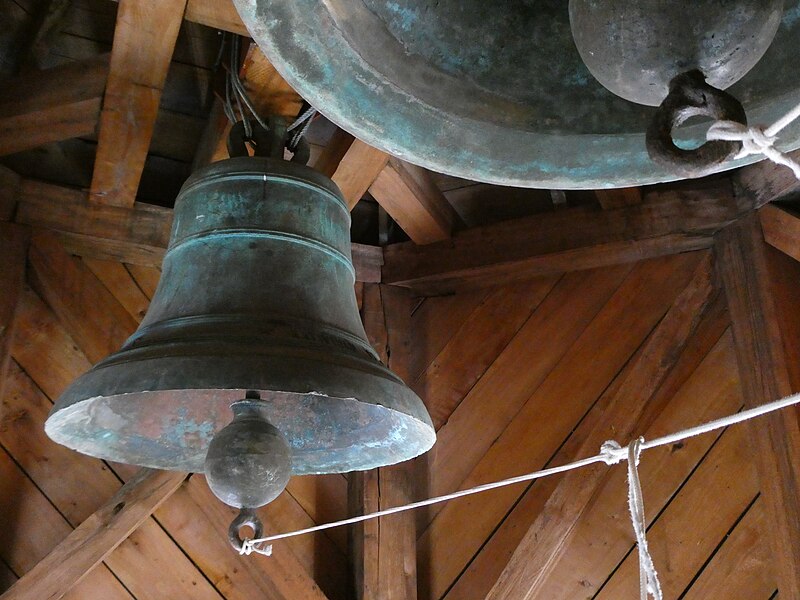
The massive wooden tower structure before you was constructed almost entirely without iron nails, using Roman numerals carved directly into structural timber joints to pre-fabricate every component offsite before final assembly on site. In an era when industrial fasteners were scarce and costly in the remote archipelago, Chilote carpenters relied on traditional mortise-and-tenon joinery and wooden pegs to lock structural timbers together. …
06 Community & Timber Transport
The massive quantities of heavy structural timber required to build this monumental church were transported from Dalcahue not by ox-drawn carts over land, but across open sea waters on wooden rafts propelled solely by the muscle power of hand rowing. When construction plans were drawn up for the church building project between 1908 and 1920, gathering high-density native hardwoods presented a staggering logistical hurdle. …
07 Closing
Standing in the center of the plaza, looking at the complete view of the Church of Rilán, one feels a profound appreciation for over a century of endurance and the enduring values of the Chilote people. Through decades of relentless marine winds and rain, this wooden sanctuary has stood firm, relying on the natural flexibility of native timber and the ancestral wisdom of island carpenters. …