 Photo Wikimedia Commons
Contents
History & cultureBY TELLBY7 sections · numbered as on the map01 Orientation
Welcome to the Church of Our Lady of Sorrows in Dalcahue, situated on the picturesque Chiloé Island in southern Chile. Standing here in the bustling main square of this coastal town, you are looking at one of the most remarkable wooden architectural treasures in South America. Recognized globally for its profound historical, architectural, and spiritual significance, this sacred sanctuary was designated as a National Monument of Chile in 1971 and was later inscribed as a UNESCO World Heritage Site in the year 2000. It forms an essential part of the famous sixteen wooden churches of Chiloé that showcase a unique cultural fusion between European tradition and indigenous craftsmanship. As you prepare to explore this extraordinary site, take a moment to absorb the harmonious integration of the building with its surrounding maritime landscape and the gentle waters of the archipelago. The spiritual origins of this historic site trace back to the era of the peripatetic missions, when European missionaries, beginning with the Jesuits in the seventeenth and eighteenth centuries, traveled through the island network to establish vibrant Christian communities. These enduring religious traditions were later carried forward and enriched by the Franciscans during the nineteenth century. However, the true architectural marvel of this church lies in the skilled hands of the local Chiloé carpenters. These master craftsmen adapted European Christian architectural traditions using indigenous woodworking techniques that had been refined through generations of shipwright craftsmanship. Instead of relying on metallic fasteners or imported nails, they constructed this massive sanctuary almost entirely out of native timber using complex wooden joinery and sturdy wooden pegs. Today, the church remains an active spiritual sanctuary and serves as the primary temple for one of the twenty-four parishes forming the Diocese of Ancud. As you begin your guided tour, please walk carefully along the historic wooden walkways and respect the ongoing religious activities of the local community. Our route will take us from the welcoming front portico through the impressive central nave, past the sacred articulated sculptures, toward the high bell tower, and finally out to the lively central square. Let us now step forward together and begin our exploration of this living wooden legacy.
02 The Church Portico and External Fence
It is truly astonishing that this imposing wooden front facade has stood firm against the relentless Pacific Ocean winds and damp maritime weather without utilizing a single metal nail in its main structural frame. Every interlocking beam, every octagonal column, and every supporting timber you see before you was engineered using native hardwoods assembled with precise wooden pegs and centuries-old joinery techniques. …
03 Central Ensemble and Wooden Structure
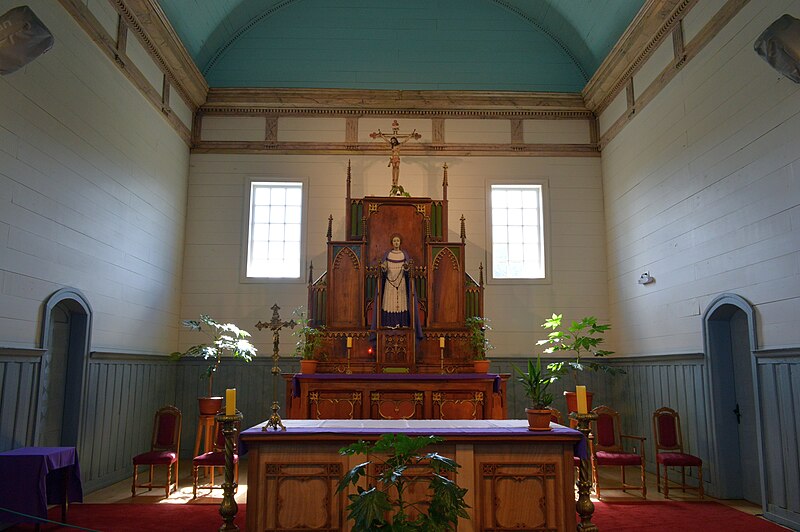
As you step deep into the sanctuary, marvel at the extraordinary fact that this vast interior space, measuring over thirty-eight meters in length and seventeen meters in width, was constructed entirely out of native cypress and ulmo timber without a single structural steel beam or iron fastener. Creating a hall of such immense proportions using only the natural gifts of the southern rainforests represents an unparalleled triumph of traditional timber engineering. …
04 The Articulated Statue of Jesus Christ
Among the many sacred artistic treasures preserved inside this historic sanctuary, the painted wooden statue of Jesus Christ features a truly astonishing engineering detail: its shoulder joints are fully articulated using genuine leather hinges. This remarkable construction allowed the figure's arms to be moved and folded into different postures for specific sacred rituals throughout the liturgical year. …
05 The 26.5-Meter Bell Tower and Modern Restoration
It is truly remarkable to learn that the towering twenty-six and a half meter bell tower soaring above us was saved from imminent structural collapse in 2013 when restoration engineers completely replaced its rotted timber foundation with invisible reinforced concrete bases. This delicate modern engineering intervention preserved the historic integrity of the timber frame while ensuring that the massive tower could continue to withstand seismic shocks and heavy coastal rainstorms. …
06 Plaza de Armas and the Local Community
It is fascinating to learn that this modest coastal parish church, leading one of the twenty-four ecclesiastical divisions of the Diocese of Ancud, captured the hearts of an entire nation in 1999 when it served as the principal filming location for the legendary television drama La Fiera. This major cultural phenomenon brought national attention to the rich living traditions and picturesque wooden architecture of Dalcahue. …
07 Closing
Thank you for exploring the Church of Our Lady of Sorrows in Dalcahue through this immersive audio guide. As you bring your visit to a close, take a final moment to stand beside the sea and absorb the majestic wooden silhouette of this sacred sanctuary resting against the coastal landscape. This extraordinary building stands not merely as a marvel of traditional engineering constructed without iron nails, but as a living testament to the faith, unity, and resilience of the Chiloé community…