 Photo Wikimedia Commons
Contents
History & cultureBY TELLBY7 sections · numbered as on the map01 Orientation
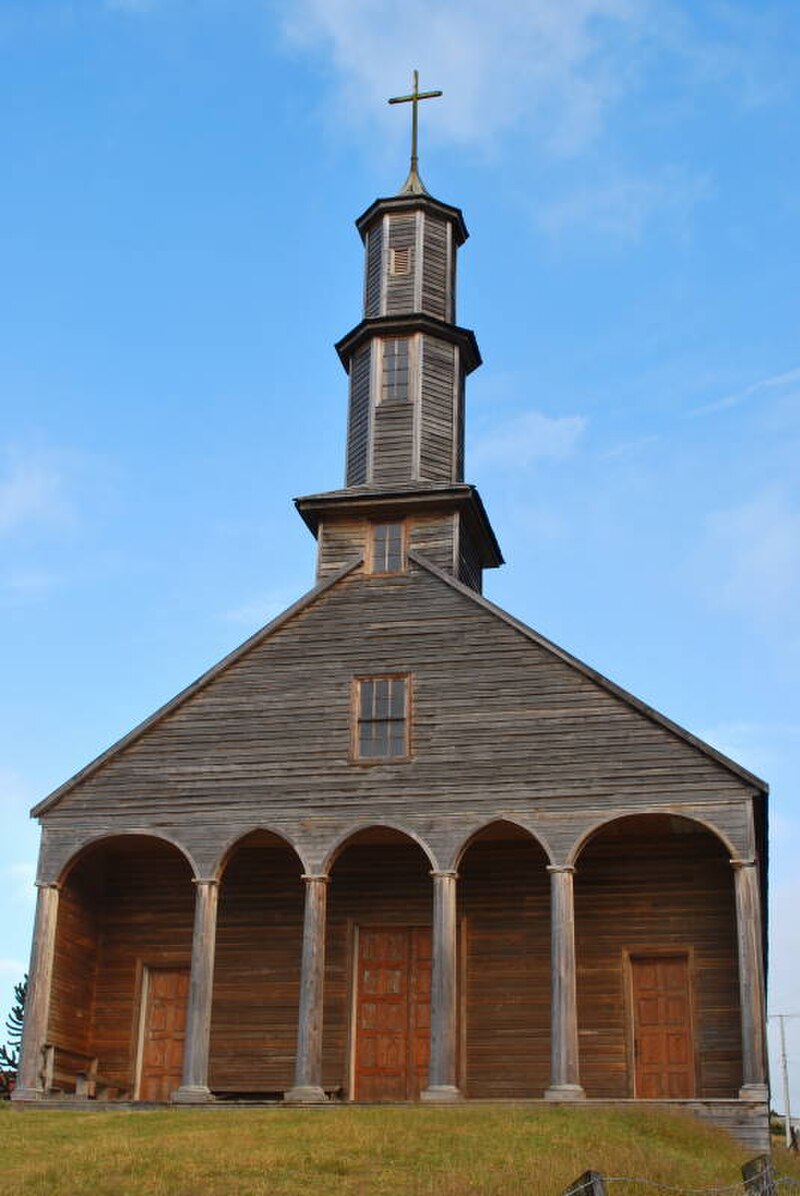
Welcome to the Church of Vilupulli, beautifully situated on a gentle, rolling hill in the Chonchi area of Chiloé Island. Positioned right where the vibrant green promontory meets the deep blue sea, this sacred site holds a truly unique atmosphere and spiritual reverence within the Chiloé archipelago. The name Vilupulli originates from the native indigenous Mapuche and Huilliche language, literally translating to the hill of the grass snake. It was given this evocative name because the crest of the elevated ridge overlooking the picturesque bay of Chonchi resembles the smooth, undulating curve of a snake winding through the landscape. This modest yet elegant wooden sanctuary is recognized as a UNESCO World Heritage site, standing as an extraordinary representative of the wooden church ensemble influenced by Bavarian architectural traditions and constructed through the close, harmonious collaboration between European Jesuit missionaries and local indigenous craftsmen. Without resorting to complex academic criteria or dry UNESCO reference numbers, the true World Heritage value of this site becomes immediately clear the moment you gaze upon it. Unlike the monumental stone cathedrals of continental Europe, this structure was built entirely of native timber harvested from the island's dense, humid rainforests to withstand the fierce oceanic winds, driving rain, and seismic shocks, serving as an enduring spiritual home for generation after generation of islanders, farmers, and mariners. The Church of Vilupulli does not seek to overwhelm visitors with lavish gilded ornamentation or gargantuan proportions. Instead, it offers a sense of profound human warmth, humility, and absolute harmony with the surrounding seascape and pastoral meadows. Furthermore, this site holds a rare historical distinction as one of the few chapels specifically visited and documented by the legendary naturalist Charles Darwin during his exploration of Chiloé Island in the early nineteenth century. For centuries, the soaring bell tower rising above this serene hill provided both a vital physical navigation landmark for fishermen navigating perilous coastal currents and an indispensable emotional anchor for the local rural community. As we walk together through this sacred precinct, we will discover the hidden stories carved into its hand-hewn timber and carried upon the coastal breeze. When you are ready, let us walk slowly along the grassy path toward our first stop on this guided tour.
02 Approach & Promontory View
Did you know that this humble wooden church is one of the very few religious sanctuaries that the great naturalist Charles Darwin personally visited and documented during his famous exploration of Chiloé Island in eighteen thirty five? Take a moment to pause and look at the gentle, lush green hill stretching beneath your feet, and gaze toward the serene blue sea expanding into the distant horizon. …
03 Four-Column Portico & Exterior Facade
Did you know that this massive wooden church was engineered to withstand the most violent ocean storms and earthquake tremors without relying on iron nails, utilizing almost exclusively hand-carved wooden pegs and intricate timber joinery? Now, take a moment to observe the four solid wooden columns standing proudly before you and the balanced triangular roof pediment resting gracefully above them. …
04 The Tower & Navigation Lighthouse
Incredibly, this soaring central bell tower served not only as a sacred architectural symbol reaching toward heaven but also acted as a vital navigational lighthouse for fishermen and mariners navigating the treacherous surrounding waters. Now, raise your eyes to look at the remarkable two-tiered wooden tower and bell chamber standing resolute against the sweeping ocean winds. …
05 Interior Nave, Wooden Arches & Altar
Although this sanctuary lacks the opulent gilding and ornate scale seen in the famous Achao Church, its humble simplicity represents one of the purest strongholds of community faith preserved by local villagers over centuries. Now step into the quiet hall and observe the sturdy wooden pillars lined along the left and right sides of the nave, as well as the vaulted wooden ceiling framing the space above. …
06 Southern View & Corcovado Volcano Lookout
Did you know that the portico and front facade of this church face directly south, strategically designed to shield the building from harsh northern storm winds while aligning perfectly with the majestic, snow-capped Corcovado volcano across the gulf? Now gaze across the blue waters toward the distant horizon, where the snow-shrouded peak and dramatic ridges of Corcovado volcano rise grandly against the sky. …
07 Closing
As our tour comes to an end on this serene hill in Vilupulli, we hope that the peaceful atmosphere and rich history of this sanctuary leave a lasting impression on your heart. Today, where the rolling green pastures meet the vast expanse of the sea, we traced historic footsteps and admired the extraordinary architectural wisdom born from the close collaboration between Jesuit friars and indigenous craftsmen. …