Contents
History & cultureBY TELLBY7 sections · numbered as on the map01 Orientation
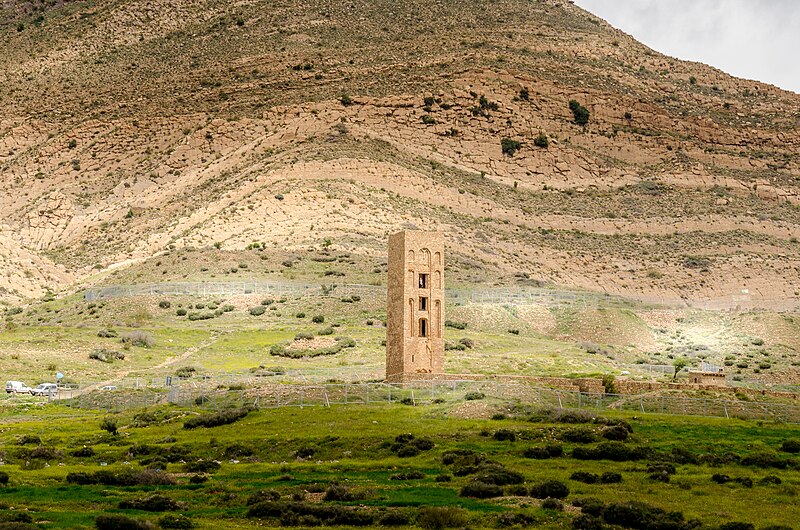
Welcome to Qal'at Bani Hammad, one of the most remarkable and authentically preserved fortified medieval Islamic capitals in North Africa. Nestled high in the rugged Hodna Mountains at an elevation of one thousand meters on the southern flank of Djebel Maadid near the town of Maadid and the province of M'Sila in Algeria, this extraordinary site stands as a breathtaking monument to eleventh-century architecture. Designated as a UNESCO World Heritage site, it presents an exceptionally preserved picture of a fortified palatine city that flourished during the golden age of Islamic civilization. The story of this mountain stronghold began in the year one thousand seven, when Hammad ibn Buluggin, the son of the founder of Algiers, Buluggin ibn Ziri, established this site as the original capital of the Hammadid dynasty. Hammad chose this formidable high-altitude domain to assert his independence and secure a powerful military stronghold. Under his vision, the city quickly grew into a bustling metropolis, attracting scholars, theologians, poets, and merchant caravans from across Iraq, Syria, Egypt, the Hejaz, and the wider Maghreb. However, its glorious reign as the imperial seat was relatively brief. Threatened by the incoming Hilalian invasions, the royal court abandoned the city in the year one thousand ninety. Decades later, in the year one thousand one hundred fifty-two, the site was dismantled and partially destroyed by the Almohads, leaving behind the romantic and atmospheric ruins that stand before us today. As we begin our journey through this vast historical site, you will be guided along a carefully selected walking route that explores five key architectural locations preserved within the city's impressive seven-kilometer fortified perimeter. You will discover the grand defenses that once protected the empire, stand beneath the oldest surviving minaret in Algeria at the Great Mosque, marvel at the vast artificial lake of Dar al-Bahr, inspect the massive ashlar keep of Qasr al-Manar, and stroll near the delicate residential pavilions and terraced gardens of Qasr al-Salam. Please take a moment to admire the majestic mountain peaks surrounding you as we step back in time to explore the grandeur, artistry, and resilience of the Hammadid civilization.
02 The Mountain Fortress Walls and Gates
It is truly astonishing to reflect upon the fact that over a thousand years ago, medieval engineers successfully constructed a massive seven-kilometer line of fortified stone walls along the crest of a rugged mountain ridge situated a full thousand meters above sea level to protect an entire imperial capital. …
03 The Great Mosque and Majestic Minaret
It is truly remarkable to consider that the prayer hall of this ancient mosque was once among the largest in all of North Africa, featuring an expansive interior layout of thirteen naves divided by eight structural bays, second only to the great mosque of Mansourah. Furthermore, the impressive stone tower standing before you is celebrated by architectural historians as the oldest surviving minaret in Algeria after that of Sidi Boumerouane, serving as an irreplaceable masterpiece of early…
04 Dar al-Bahr: Palace of the Sea
It is truly astonishing to discover that high up in these arid mountain peaks at an elevation of one thousand meters, the Hammadid emirs engineered a colossal artificial lake measuring over sixty meters in length inside their private royal palace complex. Known as Dar al-Bahr, or the Palace of the Sea, this extravagant architectural marvel demonstrated the incredible wealth and hydraulic mastery of the empire, bringing a vast body of water to the top of a rugged mountain stronghold. …
05 Qasr al-Manar: Castle of the Beacon
It is fascinating to learn that the monolithic stone keep of Qasr al-Manar, perched dramatically over the deep Oued Fradj gorge, hid a secret underground survival network: a series of massive subterranean silos capable of storing up to two full years of grain reserves to sustain the royal court during prolonged military sieges. This extraordinary combination of palatial luxury and military preparedness made the fortress virtually unassailable. …
06 Qasr al-Salam and the Royal Gardens
It is extraordinary to realize that behind the stern, heavy military walls of this mountain fortress lay a tranquil paradise of lush terraced gardens extending nearly one hundred meters across the mountain slopes, continuously nourished by an intricate network of stone water channels that collected mountain runoff. This harmonious integration of verdant gardens and cooling water channels created a serene sanctuary of peace high above the arid landscape. …
07 Closing
As our tour comes to a gentle close, we reflect upon the extraordinary historical legacy of Qal'at Bani Hammad. Though its period as a bustling imperial capital lasted less than a century and a half, this mountain stronghold stands as an irreplaceable landmark of medieval North African civilization. The artistic and architectural innovations pioneered here—including early muqarnas vaulting, lion fountain motifs, square minaret proportions, and T-shaped palatine courtyards—exerted a profound…