Contents
History & cultureBY TELLBY7 sections · numbered as on the map01 Orientation
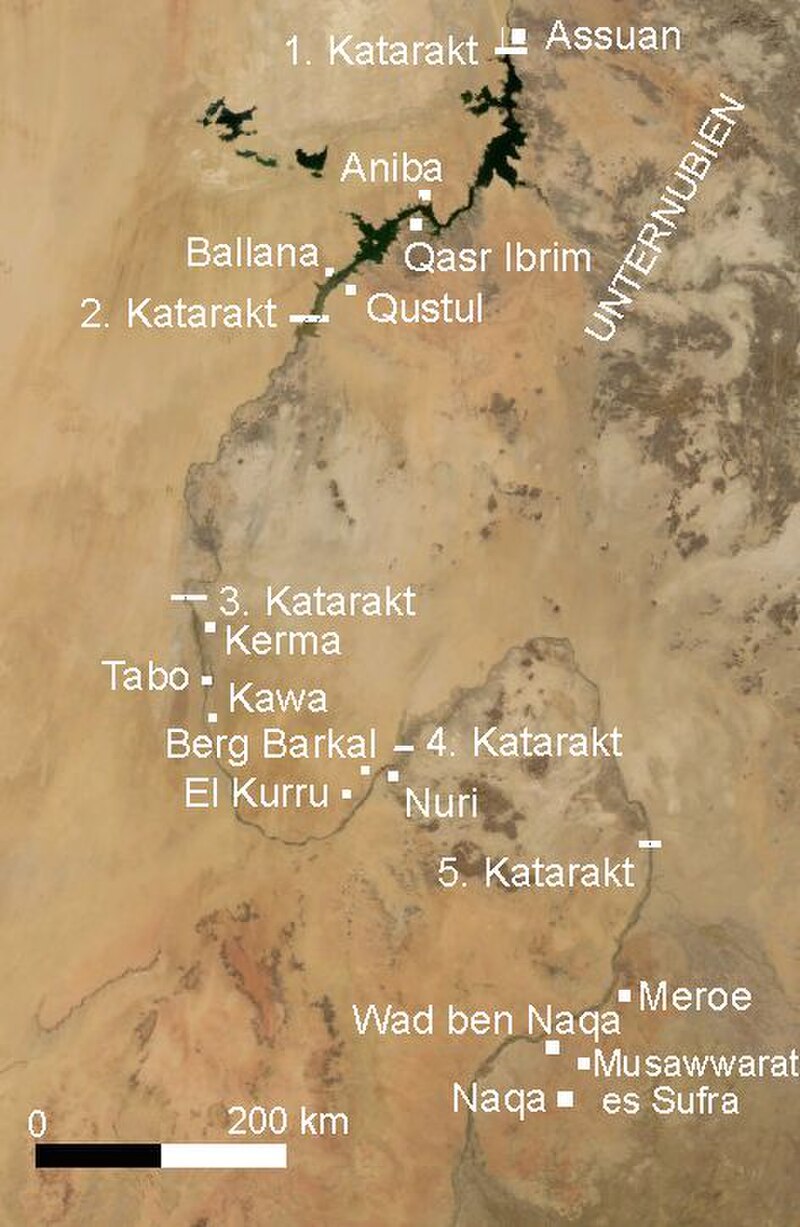
Welcome to Jebel Barkal, a site where the echoes of ancient civilizations have resonated across the desert sands for more than two millennia. Standing here at the orientation viewpoint, you are gazing upon one of the most culturally significant landscapes in the entire Nile Valley. Rising abruptly from the flat desert plain to a height of one hundred and four meters, this striking red sandstone mesa was revered as the spiritual heart of the ancient Kingdom of Kush. UNESCO inscribed this site as a World Heritage Property because it represents an outstanding testimony to the Napato Meroitic civilization, preserving a unique blend of pharaonic traditions and indigenous African culture. To ancient eyes, this isolated mountain was not merely a geographic landmark; it was the Holy Mountain, the primeval residence of the supreme creator god Amun, and the ultimate source of divine kingship. Furthermore, Napata served as a crucial crossroad for ancient trade caravans cutting across the Great Bend of the Nile. As you look toward the sheer sandstone cliff, you can see a towering natural pinnacle standing at its southern corner, an incredible natural monument that ancients interpreted as a divine crown and a giant rearing cobra. Today, our audio tour will lead you on a carefully guided journey through the monumental center of this sacred sanctuary. Our path begins at the Great Temple of Amun, once the grandest religious complex south of Egypt. From there, we will proceed to the rock cut Temple of Mut, carved directly into the living rock beneath the red cliff, where brilliant three thousand year old painted reliefs still glow. Next, we will stand beneath the natural rock pinnacle to explore the shrine of the royal crowns, before moving to the historic temple built by King Senkamanisken, a place where royal legitimacy was ritually proclaimed. Afterward, we will cross the desert terrain to admire the steep angled royal pyramids that rise against the open sky. Finally, our tour will conclude at the panoramic viewpoint, offering a breath-taking view of the mountain and the Nile. Please take a moment to absorb the vastness of this holy landscape as we begin our walk toward the Great Temple of Amun.
02 Section 1
Standing before these monumental ruins, one is struck by the astonishing fact that the largest temple complex outside of Egypt, believed to be the true residence of the primeval creator god Amun, was erected beneath this desolate desert cliff. Please direct your eyes to the long rows of massive stone column bases and eroded hall walls stretching out directly in front of you. You are looking at the Great Temple of Amun at Napata, designated by archaeologists as building B 500. …
03 Section 2
As we stand beneath the towering sheer cliff, we encounter one of the most extraordinary architectural achievements at Jebel Barkal. The most astonishing fact about this sanctuary is that deep inside a rock cut chamber carved directly into the living sandstone mountain, vibrant three thousand year old painted reliefs have survived with remarkable preservation. …
04 Section 3
Looking up at the corner of the cliff, one is confronted with a truly astonishing natural wonder: a seventy five meter high rock spire that was not sculpted by human hands, yet was perceived by ancients as a colossal cobra wearing a royal crown. Please look toward the left edge of the mountain bluff. From this angle, the isolated sandstone pinnacle clearly resembles a giant rearing cobra, known in antiquity as the royal uraeus. …
05 Section 4
As we arrive at this weathered stone platform, we uncover a fascinating historical chapter: this relatively small temple served as the crucial sanctuary where the Kushite dynasty, having been driven out of Egypt by the Assyrians, reaffirmed their divine right to rule. Please direct your sight to the ruined stone doorways and relief panels standing before you, designated by archaeologists as Temple B 700. …
06 Section 5
Approaching this desert cemetery, visitors are invariably awed by an astonishing sight: a collection of steep angled royal pyramids, distinctly different in proportion from their famous Egyptian counterparts, rising dramatically from the barren desert plain. Please focus your attention on the tall, narrow silhouettes of these stone structures and the small funerary chapels attached to their eastern faces. …
07 Closing
Here at the high panoramic viewpoint, our guided audio tour of Jebel Barkal comes to its conclusion. Take a moment to look out over the breathtaking landscape stretching before you: the lush green ribbon of the Nile River, the vast golden sands of the Nubian desert, and the monolithic red sandstone mountain standing majestically between them. …