 Photo Wikimedia Commons
Contents
History & cultureBY TELLBY8 sections · numbered as on the map01 Orientation
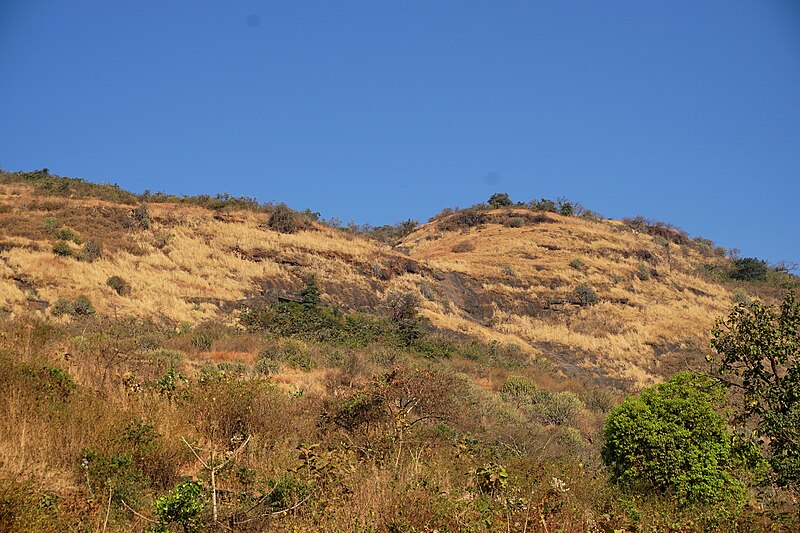
Welcome to Bedse Caves, historically known as Bedsa Caves, an extraordinary ancient rock-cut Buddhist sanctuary nestled quietly into the verdant hillsides of Maval taluka within the Pune district of Maharashtra, India. Bedse Caves forms an essential member of the celebrated trilogy of early Western Ghats Buddhist cave architecture alongside its famous neighbors, Karla Caves and Bhaja Caves. To reach this serene elevated retreat, travelers journey roughly fifty-five kilometers from Pune, one hundred kilometers from Mumbai, or twenty kilometers from Lonavala, navigating via the Kamshet route toward Bedse village. As you stand at the trail head, your ascent begins along four hundred winding stone steps carved through the lush hillside. Climbing this scenic path offers breathtaking panoramic views across the sweeping Maval valley, the shimmering waters of Pawana Dam, and the dramatic ridgelines adorned by historic hill forts including Lohagad, Visapur, Tung, and Tikona. Visiting during the monsoon season reveals a landscape transformed by cascading waterfalls and vibrant foliage, enhancing the natural tranquillity of the mountain retreat. The origins of this sacred rock-cut sanctuary trace back to the first century Before Common Era during the reign of the Satavahana dynasty. This period of artistic expansion drew deep spiritual inspiration from the era of Emperor Ashoka, whose profound remorse following the Kalinga War led him to renounce violence, embrace Buddhism, and encourage the creation of monastic sanctuaries across the subcontinent. Ancient epigraphic inscriptions carved directly onto the cliff surfaces reveal that this mountain monastic complex was originally named Markuda. Recognizing its extraordinary architectural, historical, and artistic heritage, the Archaeological Survey of India officially designated Bedse Caves as a monument of national importance on May twenty-sixth, nineteen hundred and nine. The sanctuary extends across a living basalt cliff face spanning approximately one hundred and fifty meters in length. The complex centers upon two primary fully executed monuments, designated as Cave Seven and Cave Eleven, complemented by two unfinished caves, smaller rock-cut cells, underground water cisterns, and a memorial stupa. Cave Seven serves as the central Chaityagriha, or sacred congregational prayer hall, enshrining a monolithic rock-cut stupa, while Cave Eleven forms a unique Vihara, or monastic residential monastery where resident monks lived, studied, and meditated. As you ascend the remaining stone steps toward the cliff edge, step back into an atmosphere of timeless contemplation, where ancient monks once found refuge and donors left lasting testaments to their faith in stone.
02 Step 1: The Rock-Cut Passage and Stone Entrance Screen
As you reach the upper terrace of the stone staircase and approach the central basalt cliff face, you enter a remarkably dramatic architectural channel: a long, narrow open passage cut directly into the solid rock canyon. This deep rock-cut trench leads visitors through the outer rock face straight toward the front verandah of Cave Seven, creating a profound atmospheric transition from the open secular environment outside into the secluded sacred domain of the monastery. …
03 Step 2: Verandah Columns and Erotic-Solemn Animal Capitals
Step into the monumental front verandah of Cave Seven, an expansive covered portico measuring thirty feet in length and twelve feet in width. Supporting the immense weight of the overhanging rock roof are four colossal stone pillars that rise nearly thirty feet high from the carved floor to the ceiling vault. The structural arrangement comprises two complete octagonal columns positioned in the center flanked by two half-columns, known as pilasters, carved directly into the bedrock side walls. …
04 Step 3: Inside the Horseshoe Chaitya Hall and the Sacred Dagoba
Now, step through the central doorway into the main inner sanctuary of Cave Seven, the magnificent Chaityagriha, or Buddhist congregational prayer hall. This awe-inspiring hall extends forty-five feet in depth and features a soaring barrel-vaulted ceiling rising twenty-eight feet above the polished stone floor. The apsidal inner space is lined with twenty-six plain octagonal stone pillars that divide the central nave from the surrounding circumambulatory aisles. …
05 Step 4: Voices of Ancient Donors in Brahmi Script
As you examine the rock walls, doorway lintels, and cistern surroundings of Bedse Caves, look closely at the weathered stone surfaces to discover several remarkable ancient Brahmi script inscriptions. Carved in the ancient Prakrit language during the Satavahana period, these concise epigraphic records provide invaluable historical documentation regarding the patrons, donors, social hierarchy, and geography of ancient India. …
06 Step 5: The Apsidal Vihara Monastic Quarters
Exit Cave Seven and walk along the rock ledge toward Cave Eleven, the main residential Vihara, or monastic dwelling complex of Bedse Caves. This cave presents a highly unusual and exceptionally rare architectural design among ancient Indian rock-cut monasteries. While standard Buddhist viharas built during the Satavahana era typically featured a square central assembly hall surrounded by small residential cells, Cave Eleven is excavated with a unique rectangular plan that transitions into a…
07 Step 6: Rock-Cut Water Cisterns and the Solitary Meditation Cell
As you explore the outer courtyard and rock platforms surrounding Caves Seven and Eleven, direct your attention to the sophisticated hydrological engineering showcased by the ancient rock-cut water cisterns. Cut deep into the solid basalt bedrock directly beneath the cave structures, these underground reservoirs were designed to capture fresh mountain spring water and rain runoff. …
08 Closing
As our audio guided walking tour comes to its conclusion, step out onto the open scenic overlook near the entrance terrace and gaze across the breathtaking landscape of Maval taluka. From this elevated vantage point, the tranquil green valley, the shimmering waters of Pawana Dam, and the distant silhouettes of ancient hill forts stretch out before you in serene harmony. …