Contents
History & cultureBY TELLBY7 sections · numbered as on the map01 Orientation
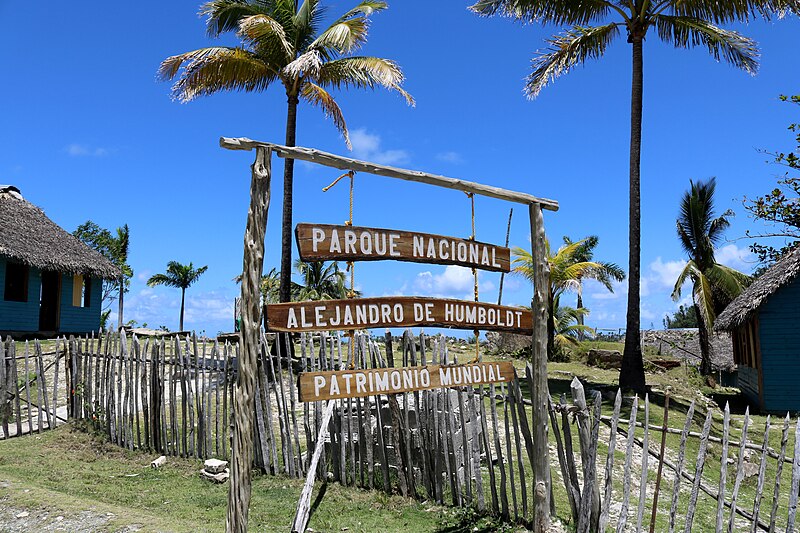
Welcome to Alejandro de Humboldt National Park, embedded within the majestic Nipe-Sagua-Baracoa Mountains of eastern Cuba. Inscribed as a UNESCO World Natural Heritage site, this extraordinary sanctuary represents one of the most ecologically complex and biologically diverse island ecosystems on planet Earth. Spanning a dramatic elevational range from two hundred twenty meters below sea level in its protected marine sector up to one thousand one hundred seventy-five meters above sea level at El Toldo Peak, the park encompasses broadleaf rainforests, crystalline mountain streams, aromatic pine woods, and pristine coastal mangroves. embedded within the vast Cuchillas del Toa Biosphere Reserve, which spans over two hundred thousand hectares, this property protects the largest and best-conserved remnant of an island mountain ecosystem in the entire Caribbean basin. Beneath the surface of this vast sanctuary lies an extraordinary geological foundation of ultramafic rocks containing heavy mineral toxicity that presented immense evolutionary hurdles to ancient flora. Rather than succumbing to these hostile conditions, living organisms responded through rapid speciation and adaptation, giving birth to hundreds of endemic plant and animal species found nowhere else on the globe. Furthermore, during ancient periods of global climate disruption, this mountainous terrain functioned as a critical Pleistocene refugium, shielding countless biological communities from severe cold and drought. Today, we invite you to follow in the footsteps of the legendary German natural scientist Alexander von Humboldt, whose visionary worldview continues to illuminate our understanding of natural harmony. Our immersive audio narrative will guide you step by step through a rich itinerary. We begin at the Visitor Centre before venturing along the botanical trail to observe plants that conquered toxic soils. Next, we explore coastal mangroves protecting endangered West Indian manatees, ascend through fragrant pine forests that once offered refuge to runaway slaves seeking freedom, and conclude at the Toa River Valley viewpoint overlooking Cuba's largest river by discharge. Take a deep breath of fresh mountain air, surround yourself with the vibrant sounds of untamed nature, and step forward into an extraordinary journey through this living laboratory of natural heritage.
02 Alexander von Humboldt Statue at the Visitor Centre
When the great German explorer Alexander von Humboldt visited Cuba, he did not merely observe its natural environment; he took the lead in forcefully criticizing the slavery and inhumane exploitation prevalent in Spanish colonial society. Please take a look at the white statue standing under the shade of palm trees to the right of the Visitor Centre entrance. …
03 Toxic Serpentine Soils and Endemic Botanical Trail
The rocks buried beneath the soil here harbor lethal toxicity for plants from other regions, yet it is precisely thanks to these harsh conditions that hundreds of rare plant species found nowhere else on Earth came into existence. Please take a look at the dark soil under your feet and the uniquely shaped trees extending their branches along both sides of the walking trail. …
04 Coastal Mangroves and Manatee Bay Overlook
This tranquil coastal mangrove forest serves as a vital sanctuary for the gentle West Indian manatee, as well as the only pre-Columbian archaeological site known within the park where ancient inhabitants once lived. Please look beyond the wooden railing to observe the red mangrove roots reaching vertically down into the calm seawater. …
05 Pine Forest and Ojito del Agua Maroon Trail
Surrounded by dense pine trees, this rugged valley served as a secret natural fortress where runaway slaves fled to seek freedom from brutal whips during the eighteenth and nineteenth centuries. Please raise your eyes toward the densely packed pine forest towering high into the sky and gaze through the swaying branches above. This deep mountain realm filled with aromatic pine scent was historically a pristine wilderness largely untouched by human settlement. …
06 Toa River Valley Viewpoint
The Toa River flowing below this viewpoint is the largest river in Cuba by water volume, serving as a vital sanctuary where countless living organisms survived even during ancient ice ages that froze much of the planet. Please hold the wooden handrail on your left, look straight ahead, and take in the magnificent spectacle of rushing river waters winding through deep valleys encased in lush green rainforest. …
07 Closing
We sincerely hope that your journey through Alejandro de Humboldt National Park today leaves a lasting impression and deep appreciation in your heart. Beginning at the Visitor Centre statue of Alexander von Humboldt, walking past unique botanical paths that conquered toxic ultramafic rocks, visiting coastal mangroves where endangered manatees swim, reflecting along pine trails that sheltered maroon runaway slaves seeking human freedom, and admiring the Toa River valley that survived ancient…