 Photo Wikimedia Commons
Contents
History & cultureBY TELLBY7 sections · numbered as on the map01 Orientation
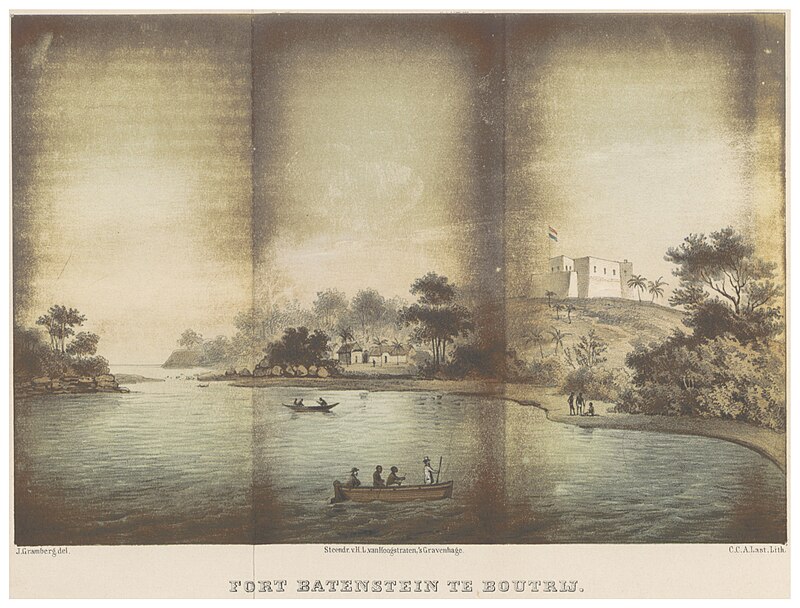
Welcome to Fort Batenstein. You are currently standing at the entrance path and information board located right behind the peaceful and beautiful village of Butre in the Western Region of Ghana. The magnificent coastal scenery unfolding before your eyes where the lush tropical forest gentle hills the Butre River and the blue Atlantic Ocean meet warmly welcomes every visitor. Within this quiet and peaceful natural environment lies a deeply buried history of turbulent trade and painful memories of the colonial era that unfolded along the West African coast centuries ago. Fort Batenstein is one of the significant historical fortification complexes in Ghana which was officially inscribed as a UNESCO World Heritage Site in nineteen seventy nine. UNESCO designated numerous European style forts and castles located across the Volta Greater Accra Central and Western Regions along the coastline as precious cultural heritage for humanity. These structures silently testify to the fierce commercial rivalry and resource exploitation among European powers along the West African coast as well as the tragic history of trade. Unlike other large scale heavily restored tourist destinations Fort Batenstein retains its authentic state preserved as ruins nestled within the tropical forest allowing visitors to feel the atmosphere of history far more deeply. Let us review the walking itinerary that we will explore together today. First as we walk along the forested hill trail leading from Butre village up to the fort we will discover the intense struggle for sovereignty and diplomatic machinations between Sweden and the Netherlands. Next upon reaching the main entrance and outer walls of the fort we will observe the rough stone masonry and learn about the irony of a fragile fort that literally shook whenever its cannons were fired along with the precise restoration work conducted through Italian cooperation. Moving into the open central courtyard inside the fort we will explore its dynamic transformation into a naval timber supply source and an agricultural outpost following the failure of gold trading endeavors. Continuing into the main interior meeting space of the fort we will encounter the historical backstory of the Treaty of Butre signed between the Dutch and the local Ahanta people in sixteen fifty six. As we ascend to the Atlantic Ocean bastion overlooking the sea we will reflect on the dramatic events when local residents protested against the transfer of ownership to Britain by waving Dutch flags which ultimately led to a tragic naval bombardment by the British fleet. Finally at the garden area near the exit we will conclude our journey while reflecting on the dedicated efforts of the local Butre Town Tourism Development Committee and the profound weight of memory remaining within these historic ruins. Please take a deep breath of the ocean breeze and step forward gently along the hill trail.
02 Hill Trail to the Fort
Did you know the surprising fact that this fort was constructed not primarily for commercial trade profits but rather for political motives to thoroughly block the expansion of rival Sweden in West Africa? Please slowly follow with your eyes the lush tree branches crossing overhead and the rough dirt pathway beneath your feet as you ascend the hill. …
03 Main Entrance and Outer Walls
Did you know the ironic historical fact that although this site bore the grand and ostentatious name Batenstein translating to profit fort in Dutch it was actually such a fragile fort that the entire building literally shook whenever its cannons were fired in welcoming salutes? Please slowly shift your eyes to observe the rough stone facade of the main entrance and the corners of the outer walls showing traces of repair work. …
04 Courtyard and Sawmill Site
Did you know the surprising historic twist that although initial gold trading attempts ended in total failure this fort thrived as a vital timber supply hub for ship repairs and a thriving agricultural outpost? Please carefully look down at the stone pillar base foundations and structural remnants visible among the weeds on the courtyard floor. …
05 Treaty Room
Did you know the remarkable historical fact that one of the oldest diplomatic treaties between the Dutch and local African authorities which remained effective for centuries in West Africa was born right in this very room? Please slowly trace with your eyes the old window frame outlines remaining in the walls and the flat stone slabs resting on the surrounding floor. …
06 Atlantic Ocean Bastion
Did you know the surprising historical fact that when the Dutch ceded this fort to Britain the local residents of Butre reacted with fierce indignation marching through the streets while waving Dutch flags and firing guns in protest? Please raise your head to gaze out across the deep blue Atlantic waves and the rooftops of Butre village resting peacefully down below. …
07 Closing
This concludes our walking audio guide tour of Fort Batenstein. How did you feel as you explored the stone ruins of this fort where the commercial avarice of European empires inter imperial rivalries and the lived experiences and resistance of local African populations intertwined centuries ago? Fort Batenstein is not a glamorously restored resort rather it preserves its authentic form as quiet ruins nestled within the tropical forest. …