Contents
History & cultureBY TELLBY7 sections · numbered as on the map01 Orientation
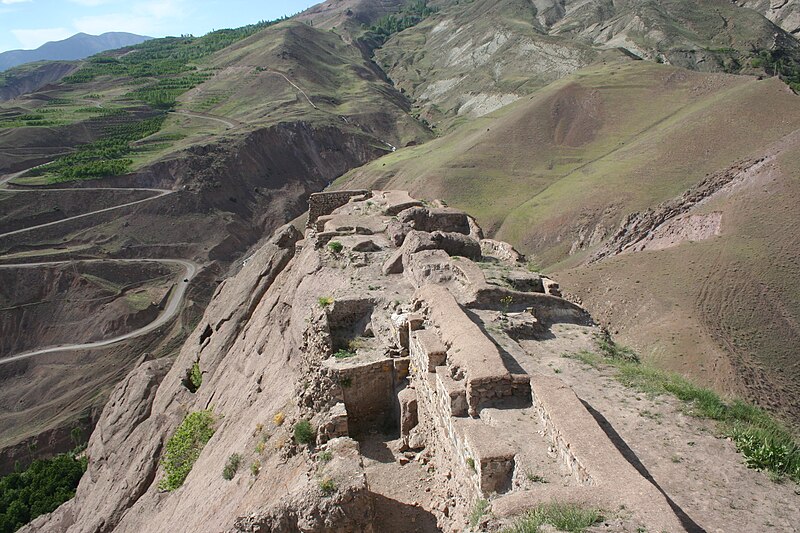
Welcome to Alamut Castle, a magnificent mountain stronghold dramatically perched atop a high rock peak in the central Alborz mountain range of northern Iran. Situated near the village of Gazor Khan in Qazvin province, approximately two hundred kilometers from Tehran, this isolated natural rock fortress rises nearly one hundred and eighty meters directly above the floor of the surrounding valley. Standing here amid the crisp mountain air and rugged cliffs, you can immediately sense the formidable presence of a site that once commanded awe across the medieval Islamic world. The name Alamut derives from a regional Daylami dialect term, Aluh Amukht, which translates to the Eagle's Teaching or the Nest of Punishment. According to ancient local lore, a Ninth Century Justanid ruler named Wahsudan ibn Marzuban was out on a hunting expedition when he saw a majestic eagle perch high upon this sheer rock. Recognizing the exceptional defensive advantages of such a towering precipice, he ordered the construction of a permanent fortification on the summit.
In two thousand twenty-six, Alamut Castle and its network of related fortifications were officially inscribed on the UNESCO World Heritage List. This global recognition honors the castle as a rare and exceptional testimony to the cultural tradition and intellectual refuge created by the Nizari Ismailis during the Middle Ages. Far from being merely an austere military outpost, Alamut served as a flourishing center of learning and sanctuary where theologians, scientists, and philosophers debated in complete intellectual freedom despite the hostile forces surrounding them.
During this guided walking journey, you will step directly into the historic heartland of the Nizari Ismaili state established by the visionary leader Hassan-i Sabbah in ten ninety. For more than one hundred and sixty years, until its surrender and partial destruction during the Mongol invasions of twelve fifty-six, this mountain refuge functioned as the supreme administrative and spiritual headquarters of a vast network of strongholds scattered across Persia and Syria. As you walk along the ancient winding paths carved into the living rock, you will encounter the remains of indestructible fortifications, subterranean supply channels, and the foundations of a world-renowned library. Surrounded by the breathtaking natural backdrop of the Alborz mountains, this tour will separate sensational medieval folklore from the profound historical reality of the fortress. Please watch your step carefully on the uneven ground and proceed slowly toward our first official stop along the trail.
02 The Impregnable Rock Base / 웅장한 바위 절벽과 진입로
Throughout the entire Middle Ages, this formidable mountain fortress was universally regarded as completely impregnable to any direct military assault.
If you look directly up above your head right now, your eyes will meet a towering wall of sheer vertical rock rising ominously above the narrow, winding access trail. …
03 The Lifeline Underground / 암반을 뚫은 물길과 식량 저장고
This isolated mountain fortress was capable of surviving multi-year military sieges because it possessed a remarkably advanced hydraulic network that brought water and fresh milk directly up from distant mountains into the castle walls.
Please direct your immediate physical gaze to the ground lying right before you. …
04 Sanctuary of Knowledge / 지식의 성소 도서관터
Nestled deep within this remote mountain fortress sat one of the medieval world's greatest libraries and astronomical observatories, attracting prominent scientists and scholars of all religious persuasions from across Asia and the Middle East.
Please direct your attention to the open foundation stones and cleared earth resting upon this upper summit plateau. …
05 The Hidden Treasury and the Ancient Vine / 서쪽 절벽의 보물샘과 포도나무
Concealed beneath a subterranean pool along this steep western slope rested the legendary royal treasury of Alamut, which remains completely untouched by human hands to this day.
Please point your immediate physical gaze toward the western cliff edge, where the rocky precipice drops dramatically into the deep valley below and wild grapevines cling to the stone face. This quiet western incline is one of the most secluded and atmospheric areas of the entire fortress complex. …
06 Flaming Bolts and the Final Siege / 동쪽 성벽과 몽골의 공성전
In twelve fifty-six, the invading Mongol army deployed formidable Chinese siege engines known as ox bows that fired flaming pitch bolts across a distance of two thousand five hundred paces to break the fortress defenses.
Please turn your body and look directly down into the steep gorge running along the eastern wall. …
07 Closing
Alamut Castle has transcended its physical ruins to become an enduring symbol of resistance, intellectual freedom, and global legend.
For centuries, Western popular imagination was dominated by the sensational tales popularized by Marco Polo, which depicted Alamut as the secret headquarters of a fanatical sect. …