 Photo Wikimedia Commons
Contents
History & cultureBY TELLBY7 sections · numbered as on the map01 Orientation
Welcome to the Okapi Wildlife Reserve, an extraordinary natural sanctuary located deep within the vast Ituri Forest in the northeastern region of the Democratic Republic of the Congo. Covering approximately one fifth of this ancient forest landscape within the massive Congo River basin, this reserve stands as one of Africa's paramount strongholds for evolutionary history and global ecological stability. The reserve was officially inscribed as a UNESCO World Heritage Site in 1996 in recognition of its exceptional ecological integrity, its role as a critical Pleistocene refugium during past ice ages, and its high concentration of rare endemic species. Most notably, this forest serves as the principal sanctuary for the okapi, a remarkably elusive forest giraffe characterized by its velvety reddish brown coat, large flexible ears, and striking horizontal zebra like stripes on its hind legs. Out of the entire remaining wild population on Earth, approximately 5000 individuals reside safely within the protected boundaries of this forest preserve. Beyond sheltering this iconic mammal, the reserve functions as a crucial global carbon sink, storing vast amounts of atmospheric carbon dioxide within its dense tree cover and playing an indispensable role in regulating the climate balance of our planet. The landscape itself presents a breathtaking mosaic of dense evergreen Mbau forests, winding swampy waterways, and dramatic granite rock formations rising sharply above the verdant forest canopy. However, this magnificent natural heritage faces intense environmental pressures, including illegal semi industrial gold mining, commercial bushmeat poaching, and persistent regional security challenges, which led to its placement on the List of World Heritage in Danger. As you begin your journey through this central orientation corridor, this audio guide will accompany you through the heart of rainforest conservation, unveiling the rich natural wonders, the complex ecological connections, and the heroic field preservation efforts required to protect this world treasure for future generations. Listen closely to the soft rustling leaves and distant river currents as we begin our exploration of this ancient African wilderness.
02 Epulu Conservation and Research Center
You are standing at the historic Epulu Conservation and Research Center, the central operational hub for managing and protecting the entire reserve. Surprisingly, this facility originally began its operations back in 1928 as a wild animal capture station. During those early colonial decades, the station functioned primarily to trap live okapis from the surrounding rainforest and export them across the oceans to major zoological gardens in Europe and America. …
03 Epulu River Banks & Mbau Forest Canopy
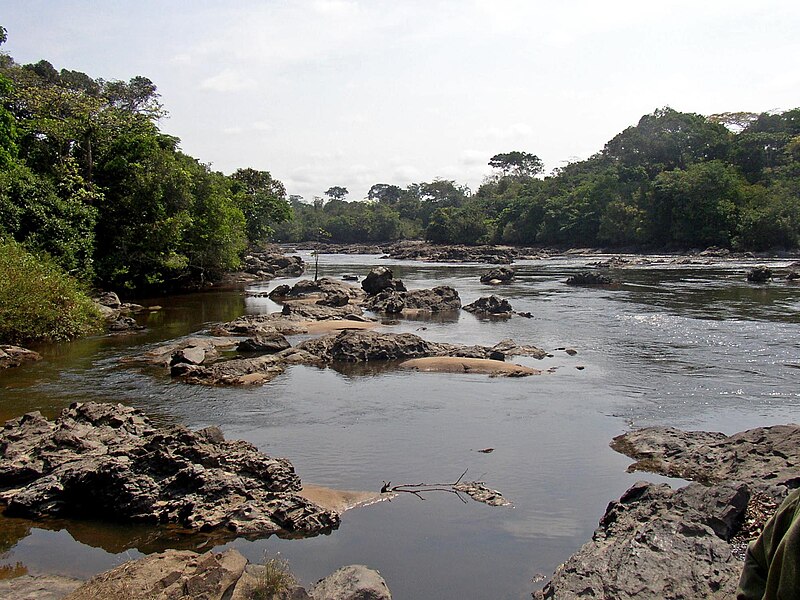
Welcome to the scenic outlook along the banks of the Epulu River. The dense, towering forest surrounding you is predominantly composed of Mbau trees, an ancient evergreen hardwood species that has survived virtually unchanged through multiple global ice age cycles. During past epochal shifts in Earth's climate when vast expanses of African rainforest dried out and transformed into open savannahs, this precise geographic basin retained its high humidity and stable microclimate, acting as a…
04 Mbuti and Efe Indigenous Forest Camp
You have arrived at a traditional forest encampment belonging to the indigenous Mbuti and Efe peoples, who have inhabited the Ituri Forest for thousands of years. Remarkably, these nomadic hunter gatherers were the original people who named the okapi long before the animal was known to the outside world. …
05 Muchacha Mining Boundary Zone
You are now standing near the southern boundary zone of the reserve around the Muchacha mining sector, where environmental conservation directly collides with resource extraction. Surprisingly, despite being designated as a strictly protected UNESCO World Heritage site, semi industrial dredging operations and widespread mining activity occur both along the perimeter and inside the reserve borders day and night. …
06 Northern Granite Inselbergs
Welcome to the northern granite inselberg viewpoint, where towering geological rock formations break through the forest canopy. These isolated granite rock towers, known scientifically as inselbergs, create a remarkable xeric microclimate completely distinct from the surrounding lowland rainforest. Emerging high above the trees, their exposed rock surfaces experience extreme heat, direct equatorial sunlight, and rapid drainage, forming xeric environmental islands in the middle of a humid…
07 Closing
As we return to the central lookout overlooking the vast expanse of the Ituri Forest, our walking tour of the Okapi Wildlife Reserve comes to a conclusion. From the historic headquarters of the Epulu Conservation and Research Center to the ancient Mbau tree canopy along the Epulu River, from the sustainable indigenous encampments of the Mbuti and Efe peoples to the complex conservation boundaries near Muchacha and the towering northern granite inselbergs sheltering the endemic Giant Cycad, we…