 Photo Wikimedia Commons
Contents
History & cultureBY TELLBY7 sections · numbered as on the map01 Orientation
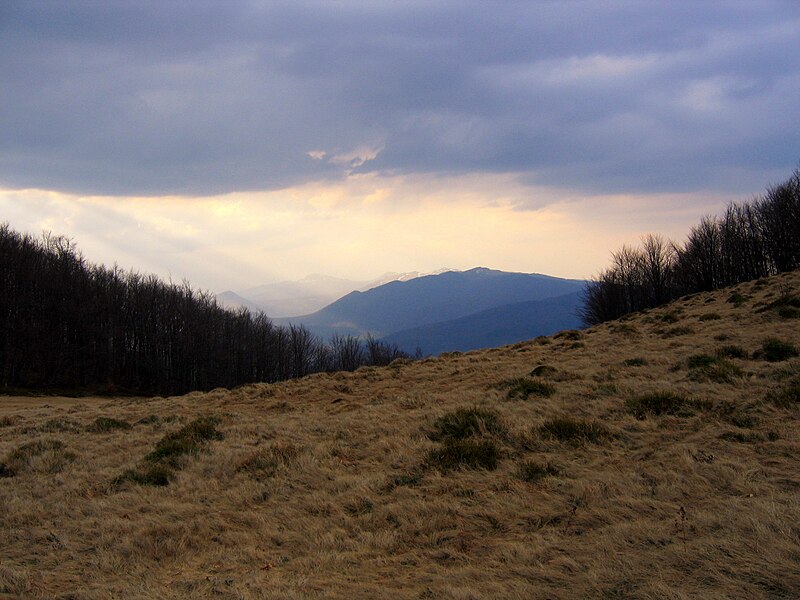
Welcome to Uzh National Nature Park, situated in the Uzhhorod Raion of the Zakarpattia Oblast in western Ukraine. Stretching across an expansive area of thirty nine thousand one hundred fifty nine hectares along the international borders with Poland and Slovakia, this sanctuary represents one of the most remarkable ecological treasures in Eastern Europe. The quiet mountain paths beneath your feet traverse an extraordinary landscape that has maintained its natural evolutionary processes continuously since the end of the last Ice Age.
In two thousand seven, Uzh National Nature Park gained international recognition when its primeval beech forests were inscribed as part of the UNESCO World Heritage property known as Ancient and Primeval Beech Forests of the Carpathians and Other Regions of Europe. Over the past million years, during successive glacial periods, the European beech species Fagus sylvatica survived harsh climatic conditions in isolated refuges across southern Europe. Following the retreat of the glaciers approximately eleven thousand years ago, the beech tree initiated a massive expansion across the continent. Driven by remarkable genetic adaptability and tolerance to diverse environmental gradients, this expansion created complex forest ecosystems spanning from coastal lowlands to high mountain timberlines. The continuous post glacial re colonization of the European beech stands as an exceptional benchmark of terrestrial ecosystem evolution.
Furthermore, this national park constitutes a crucial segment of the East Carpathian Biosphere Reserve. It stands as the only trilateral biosphere reserve in the world, jointly managed across the neighboring boundaries of Ukraine, Poland, and Slovakia. By removing human barriers and fostering cross border environmental governance, this biosphere reserve secures an uninterrupted ecological corridor through which wildlife can freely migrate and native plant communities can flourish across international frontiers.
This walking audio guide will lead you through five distinct highlight locations across the park landscape. You will explore the historic Stuzhychanka River valley where environmental conservation first began under the Austro Hungarian Empire, ascend Yavirnyk Mountain to witness dramatic vertical vegetation belts, reach the subalpine meadows of Kinchyk Bukovskyi Peak, admire the intricate wooden architecture created by the native Lemko culture, and look across the trilateral border where thousands of hectares of untouched virgin forest are strictly preserved. Please follow the marked trails at a comfortable pace and listen closely as we unfold the living natural history of the Carpathian wilderness.
02 Section 1
More than a century ago, while this region was under the governance of the Austro Hungarian Empire, local foresters and environmental visionaries recognized this exact valley as a rare natural sanctuary that human hands should never disturb. During an era when industrial development and aggressive timber extraction were sweeping across Europe, these early conservationists possessed the extraordinary foresight to understand that the untouched beech forests of this hidden valley held an intrinsic…
03 Section 2
As you ascend the slopes of Yavirnyk Mountain, you are entering a living museum that demonstrates a remarkable phenomenon known as vertical vegetation zoning. For every two hundred meters you climb in elevation, the surrounding forest composition and ecological character undergo a dramatic transformation. In the lower foothills below six hundred meters, broad leaved trees such as pedunculate oak, sessile oak, lime, and hornbeam mingle with beech trees. …
04 Section 3
Rising to an elevation of one thousand two hundred fifty one meters above sea level, Kinchyk Bukovskyi Mountain stands as the highest peak in Uzh National Nature Park. This summit represents an exceptional hotspot of subalpine biodiversity, sheltering thirty nine rare plant species out of the one hundred twelve rare species documented across the park. …
05 Section 4
Nestled near the entrance of peaceful mountain villages along the Uzh Valley stand architectural marvels constructed entirely without a single metal nail. Six historic wooden churches built during the seventeenth and eighteenth centuries remain preserved inside the boundaries of Uzh National Nature Park. …
06 Section 5
Deep within the core of this international border zone lies a non intervention wilderness sanctuary encompassing more than three thousand hectares of pure, untouched virgin beech forest. Within this strictly protected core zone, European beech trees live out their natural lifespans of up to five hundred years completely undisturbed by human logging or commercial management. …
07 Closing
We have now reached the conclusion of our walking audio tour through Uzh National Nature Park. Throughout our journey today, we have traversed the historic Stuzhychanka River valley where nature conservation first took root, climbed the forested slopes of Yavirnyk Mountain to observe vertical vegetation zoning, stood atop Kinchyk Bukovskyi Peak amidst rare subalpine flora, admired the nail free wooden architecture of the Lemko heritage, and gazed across the trilateral border zone where three…