Contents
History & cultureBY TELLBY7 sections · numbered as on the map01 Orientation
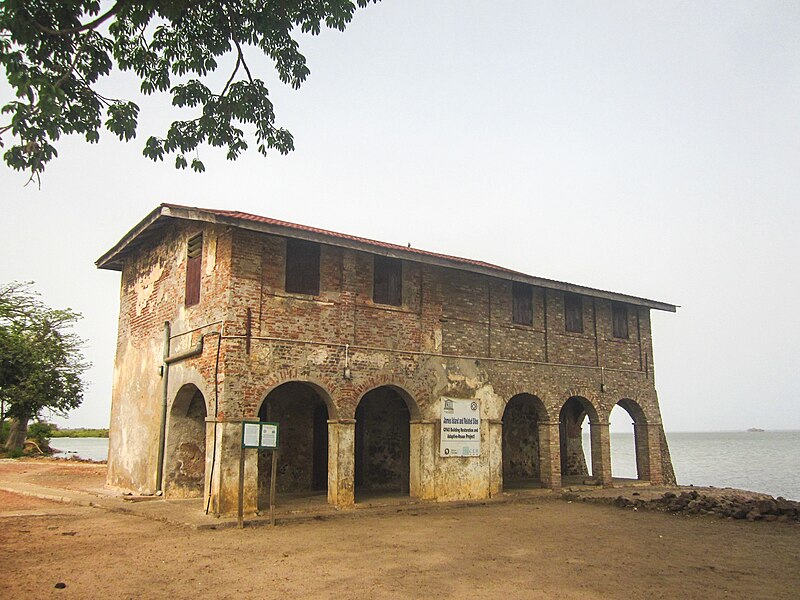
This site stands as a profound testament to the historic encounter between Africa and Europe along the Gambia River, witnessing both the painful inception and the ultimate abolition of the transatlantic slave trade. Situated approximately thirty kilometers upstream from the river mouth where the Gambia River merges with the Atlantic Ocean, this island occupied an indispensable strategic position for controlling the entire waterway. It served as the primary gateway for early European access into the uncharted interior of the African continent. Long before the arrival of European explorers searching for maritime trade routes toward India, the Gambia River basin had already functioned as an ancient zone of contact for Phoenician and Arab traders. The island first entered European written history in May 1456 when a Portuguese expedition led by Alvise Cadamosto and Antoniotto Usodimare anchored off its shores and buried a deceased sailor named Andre, giving the land its initial name of Saint Andrew Island. Today, this property transcends its physical identity as a military ruin, standing as a deeply symbolic site of pilgrimage for descendants of the African diaspora seeking to reconnect with their ancestral heritage. Inscribed as a UNESCO World Heritage site in 2003, the serial property encompasses seven distinct components: the entirety of Kunta Kinteh Island, the ruined Portuguese chapel and CFAO colonial warehouse in Albreda, the Maurel Freres Building in Juffureh, the ancient settlement ruins of San Domingo, as well as Fort Bullen and the Six-Gun Battery positioned at the river mouth.
Covering a modest area of just 0.35 hectares, the island is geographically tiny, yet its historical resonance is immensely vast. As you step ashore, you are greeted by river breezes and weathered stone masonry that has endured centuries of conflict and environmental decay. The recommended walking route guides visitors thoughtfully through the central fort ruins, past the site of the cane church, into the solitary holding cell, and along the severely eroded shoreline. While the terrain is generally flat and accessible, ongoing coastal erosion presents real hazards near the water edge and beneath exposed masonry. Visitors are urged to exercise caution when walking near slippery riverbanks and loose stone debris. Because these fragile historical structures are exceptionally vulnerable to degradation, visitors must refrain from leaning on or climbing upon the ancient walls. Listen closely to the gentle lap of the river as we step into the inner courtyard, reflecting upon the endurance of the human spirit.
02 Central Ruins of Jacob Fort
Standing at the center of the island, one discovers a fascinating historical paradox: despite its vital military function as a formidable stronghold controlling the Gambia River, this fort possessed no internal freshwater source whatsoever, forcing its commanders to rely continuously upon the goodwill and supply lines of a local mainland monarch for basic survival. …
03 Site of the Thached Cane Church
This humble location marks the historical site of an overly ambitious gold-seeking venture that collapsed into total failure due to severe supply shortages and high-level financial embezzlement. European promoters and speculative investors had boasted of vast, untold gold deposits buried deep along the upper Gambia River, yet their mismanaged expeditions disintegrated into disgrace before exploration could even properly begin. …
04 The Single Cell Building
Unlike general holding areas designed for group containment, this confined single cell was built specifically as a severe isolation facility to punish and break the spirit of the single most troublesome or rebellious captive. Its reinforced masonry construction highlights the extreme and calculating measures employed by transatlantic slave traders to maintain absolute control over human beings and suppress any impulse toward resistance. …
05 Eroded Shoreline and Baobab Trees
Comparing the present island to its historic extent during the height of colonial trade reveals a dramatic physical transformation: driven by relentless wave action, tidal currents, and accelerating sea level rise, the island has shrunk to approximately one-sixth of its original landmass since the fort was actively maintained. …
06 Kunta Kinteh Statue Miniature
For well over a century, this island was officially known as James Island, named in honor of King James II of England during the height of British colonial expansion. However, in 2011, a heartfelt proposal put forward by a visiting international artist led to its historic renaming as Kunta Kinteh Island, reclaiming an authentic Gambian identity and shedding its colonial moniker. …
07 Closing
The journey across Kunta Kinteh Island and its related sites offers a profound encounter with human history, bridging the initial peaceful contact between Africa and Europe with the harrowing story and eventual abolition of the transatlantic slave trade. Though time, erosion, and conflict have reduced the fort to ruins and reduced its landmass, the moral weight of this World Heritage site remains completely undiminished. …