 Photo Wikimedia Commons
Contents
History & cultureBY TELLBY7 sections · numbered as on the map01 Orientation
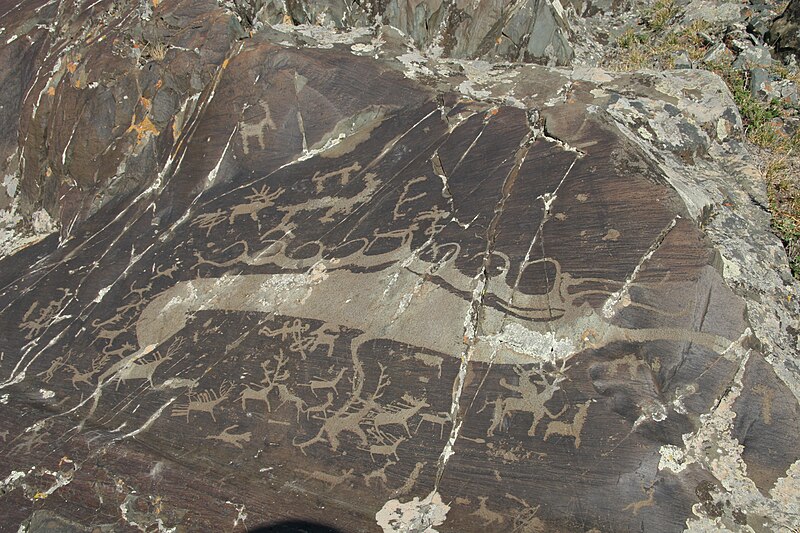
The Petroglyphic Complexes of the Mongolian Altai represent an extraordinary UNESCO World Heritage Site that captures twelve millennia of human cultural evolution within a single, continuous high-mountain landscape. Situated in the remote upland valleys of Bayan-Olgii Province in far western Mongolia, this magnificent property holds a unique distinction as the only UNESCO World Heritage Site in the entire Altai region among Mongolia's six designated national treasures. Inscribed on the World Heritage List in two thousand eleven, this open-air archive encompasses vast concentrations of rock art, burial mounds, and ritual monuments scattered across valleys shaped by Ice Age glaciers. Unlike many archaeological sites around the globe that offer merely a isolated glimpse into a single historic era, the Altai petroglyphs record an unbroken visual sequence of human adaptability and cultural resilience. This continuous journey begins at the end of the Late Pleistocene era, when prehistoric hunters tracked cold-climate megafauna across frozen tundra, progresses through the post-glacial warming that brought forested steppes and animal domestication, and culminates in the rise of horse-dependent nomadic pastoralism whose living traditions endure in these very valleys today. As you embark on this orientation through a sublime natural sanctuary, you are invited to explore how successive generations of hunters, herders, and horseback warriors utilized the polished granite rock faces as an enduring canvas to document their economic survival, social organization, and spiritual beliefs. Because these fragile carvings exist in an open alpine environment without protective glass cases or traditional museum enclosures, safeguarding them requires dedicated respect and conscious care from every visitor. The dark patina on these rock surfaces has developed over thousands of years, and human contact causes irreversible deterioration. Please observe strict preservation guidelines throughout your journey. Never touch the carved surfaces, as natural skin oils accelerate erosion. Never apply water, chalk, lime, or any chemical substance to enhance imagery for photography, as this permanently destroys irreplaceable heritage. Refrain from making rubbings or casts, avoid climbing on carved rock faces, and remain strictly on designated walking paths. By viewing these ancient masterpieces under the natural raking light of early morning or late afternoon sun, you will appreciate their magnificent three-dimensional depth while protecting a precious global legacy for future generations. Prepare to step into a timeless story written on stone.
02 Ice Age Fauna and the First Hunters
Roughly thirteen thousand years ago, during the Late Pleistocene era around eleven thousand BCE, the high mountain valleys of the Mongolian Altai experienced a drastically different climate characterized by an intensely cold and dry steppe-tundra environment. Across what is now Bayan-Olgii Province, the landscape was dominated by expansive glaciers, rough grasses, forbs, and scattered alpine scrub that sustained massive cold-climate megafauna, including mammoths, woolly rhinoceroses, and giant…
03 Wildlife of the Steppe and the Sacred Deer
As the colossal Pleistocene ice sheets gradually melted away and lush forest steppes expanded across the high mountain valleys during the Early Holocene epoch, the ancient artists of the Altai began carving leaping snow leopards with long, artfully twisted tails as sacred symbols representing concentrated physical energy and spiritual power. Please raise your eyes toward the smooth, elevated rock face situated directly below the soaring mountain crag on your right side. …
04 The Dawn of Pastoralism and Cattle Herders
The monumental shift from relying entirely on hunting wild game to domesticating cattle and harnessing oxen to heavy wheeled transport carts represents one of the most transformative economic breakthroughs in human prehistory, and this monumental achievement is etched directly onto this horizontal stone surface. Please cast your eyes down toward the flat granite slab lying horizontally near your feet. …
05 Horsemen and Chariots of the Nomadic Empires
The dynamic images of mounted nomads carved into stone over three thousand years ago depict a horse-dependent lifestyle that remains strikingly identical to the seasonal pastoral migrations practiced by Kazakh and Mongol herders in these exact same Altai valleys today. Please direct your attention to the vertical side of the massive stone pillar standing on your left here at the iconic Shiveet Khairkhan complex. …
06 Standing Stones and Ritual Monuments
The ancient inhabitants of the Altai Mountains did not restrict their artistic and spiritual expressions to carving rock faces; they also erected massive stone statues, burial mounds, slab graves, and ritual altars across high valleys to honor deceased ancestors and sacred mountain peaks. Please look toward the human-shaped standing stone statue situated on the open hill ahead of you here at the revered Aral Tolgoi complex. …
07 Closing
Today we have journeyed through an extraordinary open-air archive in the high mountain valleys of the Mongolian Altai, where an unbroken record of human culture has survived intact for more than twelve millennia. From Ice Age hunters tracking mammoths across cold tundra to Stone Age artists engraving sacred stags, and from early cattle herders to mounted horsemen who built steppe empires, this landscape offers an exceptional testament to human resilience and cultural continuity. …