Contents
History & cultureBY TELLBY7 sections · numbered as on the map01 Orientation
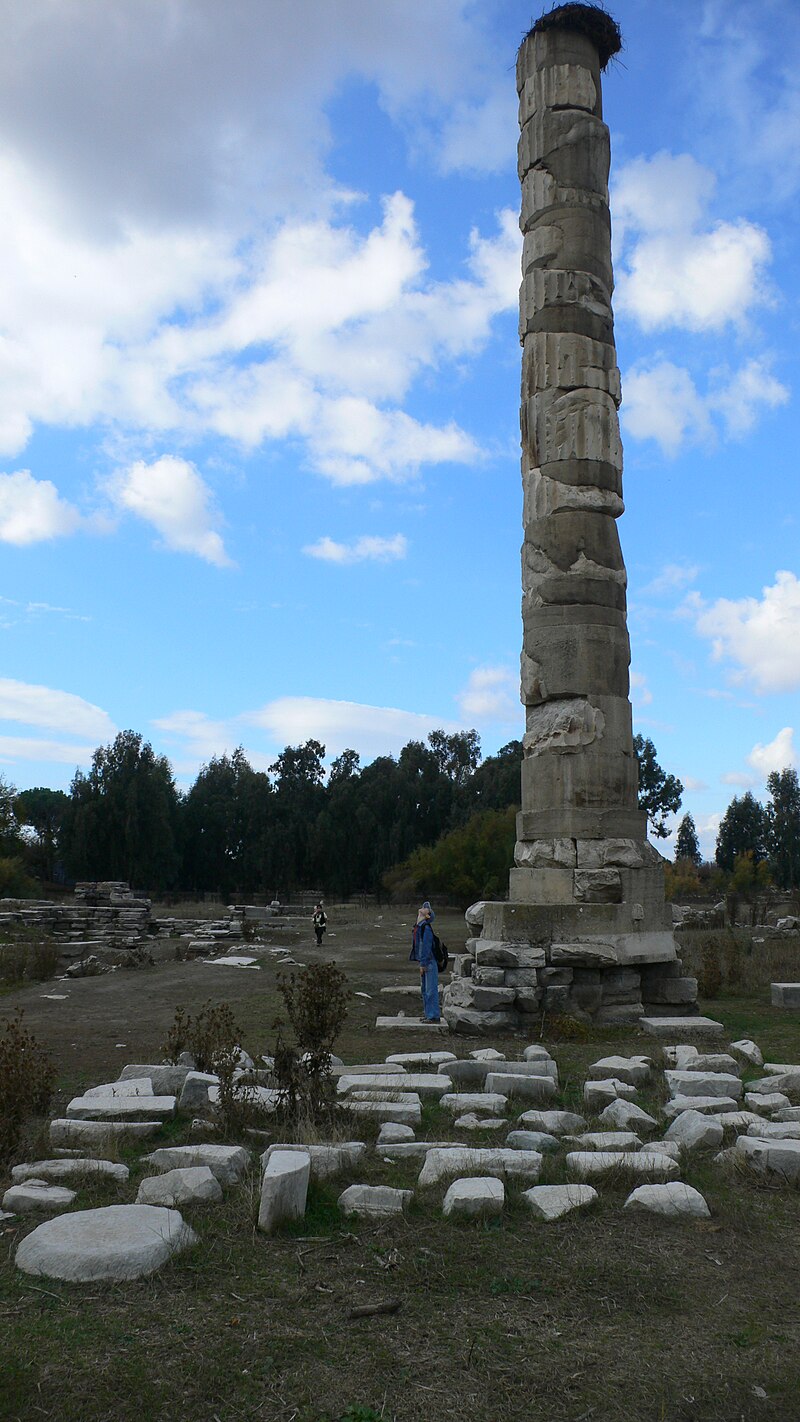
Welcome to the serene marshy plain of Selcuk, a landscape steeped in ancient memory where the legendary Temple of Ephesian Artemis once stood in unmatched magnificence. Today, as you look across this tranquil field defined by a solitary standing marble column and weathered stone fragments against the silhouette of Ayasuluk Hill, it may be challenging to realize that you are standing at the heart of one of the Seven Wonders of the Ancient World. Thousands of years ago, this very ground vibrated with the devout energy of countless pilgrims, royal envoys, merchants, and scholars who traveled across the Mediterranean basin to render homage to the great Anatolian goddess.
This legendary sanctuary forms a cornerstone of the Ancient City of Ephesus, designated as a UNESCO World Heritage site in recognition of its extraordinary cultural value and continuous history spanning several millennia. Rather than a mere archaeological ruin, this site represents a monumental nexus where early eastern mother-goddess traditions seamlessly blended with classical Greek spiritual life. Nestled within what was historically the fertile estuary of the Kaystros River, the sanctuary maintained its sacred geographic identity despite continuous environmental shifts, as river siltation pushed the Aegean coastline progressively westward. Through centuries of dramatic environmental changes and catastrophic events, the sanctuary stood as an enduring testament to human resilience, spiritual devotion, and bold architectural audacity.
As you step onto the historic pathway traversing these humble remains, allow your imagination to reconstruct the architectural marvel that once dominated this horizon. Beneath the surface soil lie the massive subterranean foundations of a temple celebrated by ancient writers as the grandest monument ever erected by human hands. Imagine two concentric rows of soaring marble pillars rising eighteen meters into the sky, creating a vast outer colonnade that enclosed an opulent central cella filled with precious sculptures, gold, and silver. As you walk along these ancient stone paths, listen closely to the quiet echoes of the past and visualize the vibrant religious processions, the fragrant clouds of burning incense, and the solemn chants of the temple clergy.
Throughout this walking audio tour, we will guide you across key locations of the excavated precinct to reveal the sanctuary's multilayered history. At each designated spot, we will explore pivotal chapters in its story: the early geometric shrine submerged beneath river silt in the seventh century BC, the revolutionary all-marble temple financed by King Croesus of Lydia, the tragic arson that destroyed its wooden roof, the legendary visit of Alexander the Great, and its eventual place in the annals of world heritage. Please walk at an unhurried pace, absorb the quiet dignity of this sacred landscape, and prepare to immerse yourself in an unforgettable journey through ancient history.
02 Sacred Altar Trench & Early Geometric Remains
In the seventh century BC, a catastrophic flood swept through this river valley, depositing more than half a meter of dense silt, sand, and flotsam over the original clay-floored geometric temple, yet the devoted priesthood steadfastly refused to relocate their holy sanctuary even a few meters away from its designated geography. Now, please pause your walk and lower your gaze down toward the rectangular excavated foundation trench situated near the ancient altar area. …
03 Reconstructed Marble Column & Relief Base
Financed around 550 BC by the legendary King Croesus of Lydia, whose immense wealth became proverbial throughout antiquity, this sanctuary was celebrated across the Mediterranean as the very first monumental Greek temple constructed entirely of pure white marble. Now, please raise your eyes to gaze upon the towering marble column standing proudly in the open field before you. …
04 Inner Cella Sanctum & The Night of 356 BC
On a dark night in July 356 BC, a notorious arsonist set fire to the wooden roof framing of this great sanctuary, destroying one of the ancient world's most magnificent structures purely to make his own name immortal across human history. Now, please direct your gaze across the expansive stone platform of the central cella before you. …
05 High Altar Naiskos & Image of Ephesian Artemis
The Ephesian Artemis worshipped at this sanctuary was not the chaste virgin huntress of Classical Greek mythology who roamed the dark forests with bow and quiver, but a far more ancient Anatolian mother deity directly descended from Cybele, the primordial earth mother of the Asia Minor highlands. Now, please come forward and stand directly before the massive stone foundation blocks of the high altar located at the innermost section of the elevated central cella platform. …
06 Western Courtyard & Processional Pathway
When the Hellenistic poet Antipater of Sidon compiled his famous ancient canon of the Seven Wonders of the World, he wrote that after gazing upon the dizzying splendor of the Temple of Ephesian Artemis mounting to the clouds, even the Sun god Helios had never looked upon anything so grand outside of Mount Olympus. Now, please turn your body to face the wide open courtyard and processional pathway stretching across the western side of the sanctuary field. …
07 Closing
As we stand before the single reconstructed marble column rising silently against the serene backdrop of Ayasuluk Hill, our reflective journey across the sanctuary of Ephesian Artemis comes to a gentle conclusion. Take a quiet moment to pause and absorb the peaceful atmosphere of this historic valley. …