 Photo Wikimedia Commons
Contents
History & cultureBY TELLBY8 sections · numbered as on the map01 Orientation
Welcome to Likir Monastery, one of the most revered and historically significant Buddhist sanctuaries nestled in the breathtaking landscape of Ladakh, Northern India. Located approximately fifty two kilometers west of the capital city of Leh, this sacred site rests gracefully at an elevation of three thousand seven hundred meters above sea level, overlooking the tranquil Sham Valley near the Indus River. The traditional local name of this gompa is Klud-kyil or Lu-Khyil, which poetically translates to the place encircled by water spirits or Nagas. According to ancient Himalayan legends, two great dragon spirits named Nanda and Taksako encircled this very hill with their sacred serpent bodies, forever sanctifying the ground upon which the monastery was erected.
The origins of Likir Monastery trace back to the mid eleventh century, a period of profound spiritual revival throughout Tibet and the Western Himalayas. In the year one thousand sixty five, King Lhachen Gyalpo, the fifth ruler of Ladakh, commanded the great meditation master Duwang Chosje to build a monastery here. Recognizing the extraordinary spiritual energy of the hill, Duwang Chosje established the initial monastic structure, which originally adhered to the early Kadampa tradition of Tibetan Buddhism. Historically, Likir occupied a strategic position along the major ancient trade route that connected Tingmosgang, Hemis, and Likir directly to Leh, serving as a vital sanctuary for traveling merchants, scholars, and pilgrims alike.
A major transformation occurred in the fifteenth century when Lama Lhawang Chosje, a celebrated disciple of the renowned philosopher Je Tsongkhapa, arrived at Likir. He converted the resident lamas to the reformed Gelugpa order, also known as the Yellow Hat sect, establishing Likir as a major Gelugpa fortress. During the eighteenth century, under the reign of King Tsewang Namgyal the Second, a devastating fire destroyed much of the eleventh century complex. The king promptly initiated a comprehensive reconstruction project, rebuilding the monastery into the magnificent whitewashed complex with dark timber window frames that stands proudly on the hill today.
Today, Likir Monastery serves as the official seat of Ngari Rinpoche, the present emanation of the younger brother of the Fourteenth Dalai Lama. Although the Rinpoche does not reside here permanently, he regularly visits to preside over important religious ceremonies and major pujas. As you begin your journey through this sanctuary, take a moment to absorb the breathtaking natural surroundings, the gentle mountain breezes, and the profound historical legacy that permeates every stone of this ancient hill.
02 The Great Lower Chorten and Historical Frescoes
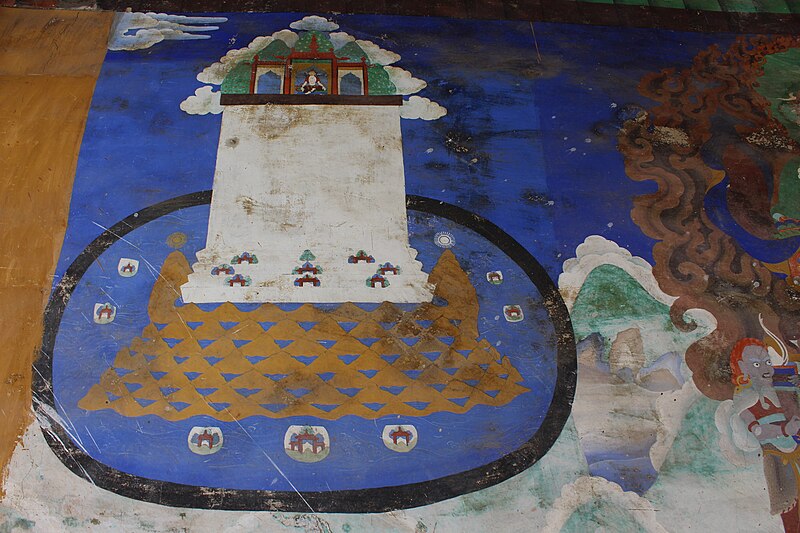
As you walk down the gently sloping pathway beneath the main monastery complex, you will arrive at a remarkably historic monument known as the Ancient Lower Chorten. In Tibetan Buddhism, a chorten or stupa is a sacred structure designed to represent the enlightened mind of the Buddha and to store holy relics. …
03 The Central Courtyard and Sacred Jupiter Tree
Leaving the ancient lower chorten behind and ascending the stone steps toward the upper level of the gompa, you step directly into the Central Courtyard of Likir Monastery. Surrounded by the principal assembly halls and monastic living quarters, this open air courtyard serves as the physical and communal heart of the entire monastic complex. …
04 The Old Dukhang: Lamas' Throne and Sacred Statues
Stepping inside the Old Dukhang, located on the right side of the central courtyard, you are immediately embraced by the quiet solemnity and fragrant incense smoke of Likir's oldest assembly hall. For centuries, this hall has served as the primary gathering space where resident lamas sit in meditation, chant sacred texts, and execute complex tantric rituals. …
05 The New Dukhang: Thousand-Armed Avalokitesvara and Confessional Buddhas
Crossing the central courtyard from the Old Dukhang, you enter the impressive New Dukhang and its adjoining sacred chapel known as Nyenes Khang. Built in more recent times to accommodate the expanding needs of the monastic community and visiting pilgrims, the New Dukhang stands as a masterpiece of contemporary Himalayan religious craftsmanship, blending traditional Tibetan art styles with grand structural proportions. …
06 The Gonkhang Guardian Temple and the Zinchun Chamber
Moving beyond the main prayer halls along the upper corridors, you approach one of the most intense and spiritually potent areas of Likir Monastery: the Gonkhang, or the Guardian Temple. The present Gonkhang structure was commissioned in nineteen eighty three during a comprehensive monastery renovation and was successfully completed a year later in nineteen eighty four. …
07 The 75-Foot Gilded Maitreya Buddha and Valley View
Ascending the upper staircases out onto the spacious open air rooftop terrace, visitors are brought face to face with the defining iconic landmark of Likir Monastery: the magnificent seventy five foot gilded Maitreya Buddha statue. Reaching a total height of twenty three meters, or seventy five feet, this monumental seated image of the Future Buddha was completed in the year nineteen hundred ninety nine and stands as a masterpiece of modern Himalayan Buddhist sculpture. …
08 Closing
As your tour of Likir Monastery comes to a gentle conclusion, we hope this audio guide has enriched your understanding of this extraordinary Himalayan sanctuary. From its founding in the eleventh century under King Lhachen Gyalpo to its vibrant presence today, Likir stands as a living testament to the enduring power of Tibetan Buddhist faith, art, and philosophy. …