Contents
History & cultureBY TELLBY8 sections · numbered as on the map01 Orientation
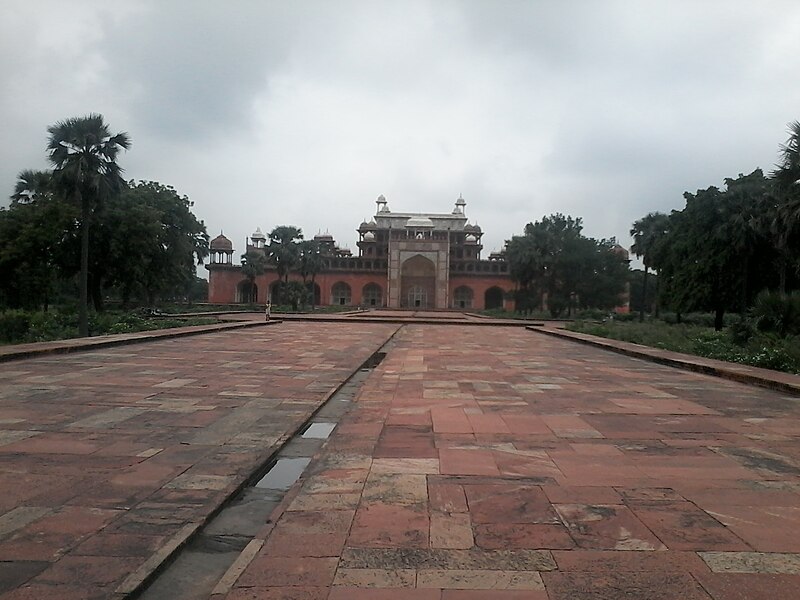
Welcome to Sikandara, the serene and eternal resting place of Emperor Akbar the Great, the third ruler of the historic Mughal Empire. This expansive heritage site is situated at Sikandara in the suburban reach of Agra, Uttar Pradesh, India, positioned approximately eight kilometers west northwest from the bustling city center along the main Agra to Mathura road, designated as Old National Highway 2 and National Highway 19, and roughly fourteen kilometers away from the Taj Mahal. As you travel along this historic national highway, a handsome and lofty gateway crafted from finely carved red stones invites you into a sprawling estate that spans an impressive 119 acres. The regional name Sikandara originates from Sikander Lodi, the prominent ruler of the Delhi Sultanate who previously governed this territory. Emperor Akbar himself personally selected this peaceful location and commenced the initial planning and design of his future mausoleum during his lifetime, seeking to construct a monument that would reflect his imperial vision and spiritual philosophy. However, in October 1605, Akbar fell gravely ill from a severe attack of dysentery and subsequently passed away later that month, leaving the ambitious complex unfinished. Following his death, his son and successor, Emperor Jahangir, took charge of the monumental project and carried out its completion during his reign between the years 1605 and 1613. The actual construction work lasted about three to four years, requiring a massive financial investment of approximately one million five hundred thousand rupees. Historical accounts suggest that when Jahangir first inspected the initial foundations planned by his father, he was thoroughly unsatisfied with the structural aesthetics, leading him to order the dismantling of certain preliminary elements and rebuilding the present multi tiered pyramid style monument to align with his own refined artistic taste. Centuries later, under the British administration, Lord George Curzon directed extensive repair and restoration work on Akbar mausoleum in connection with the passage of the Ancient Monuments Preservation Act of 1904, completing the restoration in 1905 as an offering of reverence to the past. Today, as a visitor, you will enter the complex through the imposing South Gateway located just two hundred meters from the national highway. Standing before this grand portal, look straight ahead through its lofty archway to admire the vast paved causeway leading directly toward the central mausoleum amidst lush paradise gardens. Please stroll forward along the stone pathway and prepare to experience the quiet grandeur and fascinating history of this imperial sanctuary.
02 The Imposing South Gateway
You are currently standing directly before the majestic South Gateway, the magnificent principal entry to the grand tomb complex of Emperor Akbar at Sikandara. Positioned just two hundred meters from the primary national highway, this gateway is by far the grandest and most impressive among the four massive portals located at the center of each outer wall enclosing the mausoleum grounds in a 105 meter square perimeter. …
03 Char Bagh Gardens and Peaceful Paths
As you step through the dark archway of the South Gateway and emerge into the brilliant sunlight, a breathtaking and vast green expanse opens up dramatically before you. This layout is meticulously designed according to the traditional Mughal Char Bagh concept, which translates directly to a four quarter garden representing paradise on earth. …
04 Four-Tiered Pyramid Sandstone Structure
Reaching the center of the estate along the wide paved causeway brings you face to face with the exterior of the main mausoleum that houses the cenotaph of Emperor Akbar. The main building features an extraordinary four tiered pyramid design rising across five total storeys to reach a maximum height of one hundred feet. …
05 Ornate Stucco Vault and Calligraphy
Stepping inside the main mausoleum building from the open outer cloisters brings you directly into the magnificently decorated central entrance vestibule. Positioned immediately prior to the quiet descent into the dimly lit burial chamber below, this monumental entrance hallway represents one of the most artistically opulent and visually impressive interiors within the entire complex. …
06 The Deep Vault and Akbar's Cenotaph
Leaving the brightly colored stucco vestibule behind, you approach a simple, whitewashed gallery that slopes gently downward into the earth. This inclined passage strongly evokes the feeling of entering an ancient Egyptian pyramid, leading visitors gradually away from the sunlit outer world into the silent heart of the monument. Walking down this narrow, quiet corridor, the ambient sounds of the outside complex fade away completely until you arrive at the dimly lighted central burial chamber. …
07 Side Chambers and Arcaded Walkways
After exploring the central burial vault, stepping into the adjacent secondary chambers reveals smaller side rooms that surround the main hall. These side chambers contain the tombstones and graves of several prominent members of the Mughal royal family. Among those buried here are Emperor Akbar two beloved daughters, Princess Shakr un Nissa Begum and Princess Aram Banu Begum, whose tombstones lie preserved within the first floor side galleries. …
08 Closing
It is now time to conclude our audio tour of Emperor Akbar eternal sanctuary at Sikandara. The magnificent monument we have explored today stands as a powerful testament to the extraordinary life and legacy of Akbar the Great, a visionary ruler who, despite being unable to read or write, possessed profound wisdom, artistic inspiration, and an unmatched pluralistic vision. …