 Photo Wikimedia Commons
Contents
History & cultureBY TELLBY8 sections · numbered as on the map01 Orientation
Welcome to the entrance of the Tomb of Adham Khan, situated in the ancient heart of Mehrauli near the iconic Qutub Minar. As you stand at the base of the wide stone steps, take a moment to look up at the imposing octagonal mausoleum rising from its massive three meter high elevated platform. Observe the building materials and structural finishes carefully. Up to a height of four meters, the base of the tomb is constructed from solid, pale brown stone masonry. Above this level, the structure transitions to brick masonry covered with plaster, which was originally painted in brilliant white and deep red to artfully imitate the luxurious red sandstone and white marble construction of major Delhi Sultanate monuments, such as the fourteenth century tomb of Ghiyath al Din Tughluq. This structure is far more than a resting place for the dead. It stands as a profound architectural statement commemorating one of the most turbulent episodes in early Mughal history, where foster brotherhood, rampant ambition, and unyielding imperial justice collided. You are standing before the final burial place of Adham Khan, a high ranking general who commanded five thousand troops, and his mother Maham Anga, who served as the chief wet nurse and supervisory foster mother to Emperor Akbar. Having nurtured Akbar during his childhood, Maham Anga exerted immense influence over the young monarch, elevating her son to the highest echelons of military command. However, this position of unearned privilege bred arrogance and moral corruption. Following his military victory over the Afghan ruler Baz Bahadur during the Malwa campaign of fifteen sixty one, Adham Khan kept the rich treasury and royal women for himself, sending only a meager tribute back to Agra. To conceal her son's crimes from the emperor, Maham Anga secretly executed two stolen dancing girls. This systemic plunder and deceit ignited bitter hostility between Adham Khan and Ataga Khan, Akbar's respected prime minister and foster father. Following a shocking act of violence in May fifteen sixty two, Emperor Akbar commissioned this massive monument on the defensive ramparts of ancient Lal Kot. Notice how the tomb sits isolated from the sacred Sufi shrines of Mehrauli, serving as a permanent warning carved into stone that neither foster ties nor royal favor can ever shield a traitor from imperial justice. As we ascend the steps, prepare to explore the complex history of power and betrayal.
02 The Octagonal Terrace Platform and Lal Kot Walls
Please ascend the wide stone steps to reach the expansive, three meter high octagonal platform. As you walk across this spacious stone terrace, examine the low octagonal perimeter wall reinforced with sturdy, low built towers at each of its eight corners. Notice how the entire mausoleum complex is constructed directly upon the ancient defensive masonry walls of Lal Kot, the historic pre Islamic red fort of Delhi. …
03 The Arched Verandah and Exterior Finishes
Step closer to the central structure and begin walking around the six meter high octagonal ambulatory verandah. Each of the eight sides of the tomb features three arched openings, creating a continuous gallery that encircles the inner core chamber. Examine the architectural materials and construction techniques carefully. …
04 The Labyrinthine Passages — Bhool Bhulaiya
Step inside the verandah and observe the exceptionally thick masonry walls enclosing the tomb structure. Hidden within these massive walls lies a complex network of narrow, intersecting internal corridors and winding stone staircases. Because these segmented passages fold back upon themselves in puzzling ways, visitors frequently lose their sense of direction, earning the mausoleum its famous local nickname, Bhool Bhulaiya, which translates to the Labyrinth or the Maze. …
05 The Central Chamber — Betrayal and Imperial Justice
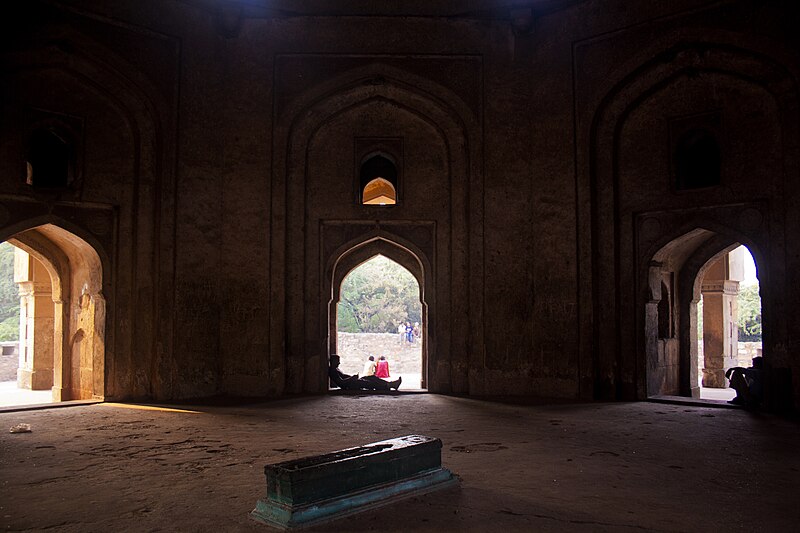
Walk into the central domed chamber, which measures ten meters across directly beneath the lofty single dome. The interior is filled with soft natural light streaming down from eight large clerestory windows and spacious entrance doorways. Look down at the solitary restored marble cenotaph resting in the middle of the floor. Here lies the historical center of a dramatic imperial tragedy that permanently altered the course of Mughal governance. …
06 Architectural Politics — Lodhi Octagon vs. Mughal Grandeur
Step back into the verandah and observe the overall structural layout of the mausoleum. Consider the deliberate political statement Emperor Akbar carved into this structure through architectural typology. While Akbar commemorated his father Humayun in Delhi with a grand, square Timurid mausoleum surrounded by fine marble inlays and lush quadripartite gardens to signal a new era of dynastic order, Adham Khan's monument was constructed in the octagonal style of the defeated Lodhi and Sur…
07 Colonial Adaptations and Curzon's Restoration
Walk out onto the wide terrace platform and reflect upon the unusual post Mughal history of this monument. During the nineteenth century, British colonial administrators repurposed this historical mausoleum to suit their practical residential and administrative needs. In the eighteen thirties, a British officer named Blake from the Bengal Civil Service transformed the tomb into his private residential apartment. …
08 Closing
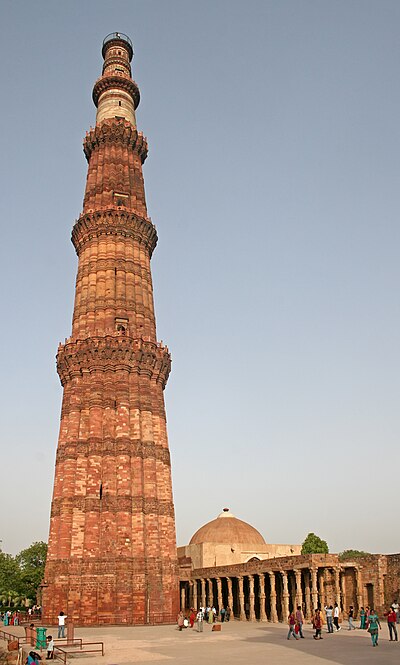
As our audio tour comes to a graceful conclusion, stand near the edge of the elevated outer terrace platform and look out toward the bustling streets of modern Mehrauli, with the distant spire of the Qutub Minar rising majestic against the Delhi skyline. Here, where ancient defensive masonry walls meet the vibrant pulse of contemporary urban life, the Tomb of Adham Khan offers timeless lessons regarding power, justice, and human accountability. …