 Photo Wikimedia Commons
Contents
History & cultureBY TELLBY7 sections · numbered as on the map01 Orientation
Welcome to Jawatha Mosque, a sanctuary of profound historical reverence and serene spiritual tranquility nestled within the eastern realm of the Arabian Peninsula. I am honored to serve as your audio docent and voice director as we step together through the centuries into this extraordinary sacred site. You are currently standing within the heart of the magnificent Al-Ahsa Oasis, recognized globally as the largest continuous oasis in the world and designated as a UNESCO World Heritage cultural landscape in two thousand eighteen. Stretching across the desert expanse, Al-Ahsa encompasses more than two point five million date palm trees, thriving agricultural gardens, natural freshwater springs, traditional wells, and an intricate historical drainage network. This unique geocultural landscape offers an exceptional testament to continuous human settlement and sustainable environmental interaction in the Gulf region from the Neolithic era straight through to the modern age. Within this vast green sanctuary, Jawatha Mosque occupies a place of unparalleled historic and religious prestige, standing as the earliest known mosque constructed in eastern Arabia. Its earthen mud-brick silhouette, humble architectural scale, and tranquil central courtyard reflect the very first dawns of the Islamic faith in this coastal hinterland. The mosque served not only as a spiritual refuge for early local believers, but also as a community anchor for desert travelers and merchant caravans traversing ancient trade routes. As we begin our exploration today, you will discover how this modest earthen sanctuary captures the living rhythm of the oasis, uniting natural hydrology with centuries of devotion, architectural ingenuity, and cultural resilience. Let us now move forward with measured, reverent steps into the quiet ambient air of this ancient sanctuary, where fourteen centuries of desert history wait to unfold before you.
02 The Approach and Mud-Brick Exterior
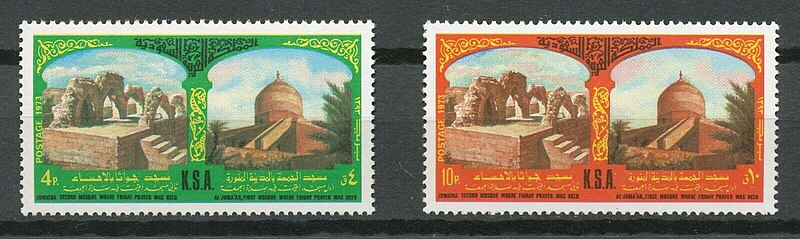
Jawatha Mosque holds the remarkable historical distinction of being the precise location where the second Friday congregational prayer in Islamic history was performed, following only the iconic Prophet's Mosque in Medina. This singular milestone underscores the incredible significance of this sanctuary during the formative years of early Islamic civilization, demonstrating how rapidly the faith took root in the eastern province of the Arabian Peninsula. …
03 The Open Courtyard and the Legacy of the Black Stone
Enclosed within this peaceful, modest courtyard slumbers an astonishing historical legacy that once sent shockwaves across the entire Islamic world. According to long-standing historical accounts, when the sacred Black Stone, known as Hajr Al-Aswad, was forcibly removed from the Holy Kaaba in Mecca during a period of intense regional conflict, it was brought to the Al-Ahsa region and secretly preserved inside this very sanctuary for nearly twenty-two years. …
04 The Arcade and Surviving Keel Arches
Through centuries of natural weathering, abandonment, and structural decay, during which almost the entire surrounding sanctuary crumbled into dust, two pointed keel arches miraculously remained standing without collapsing. Standing isolated amid the desert ruins, these two surviving architectural elements served as the sole authentic bridge connecting modern heritage scholars to the original form of the ancient house of worship. …
05 The Qibla Wall and the Niche of the Mihrab
The central mihrab along this qibla wall possesses an exceptionally rare architectural characteristic: rather than being merely carved as a shallow recess into the interior mud wall, its semi-circular vaulted niche projects visibly outward beyond the exterior plane of the building. This outward-projecting mihrab design represents an authentic and remarkably rare spatial feature of early Islamic mosque architecture in Eastern Arabia. …
06 Outer Wall and Modern Restoration Debates
During the extensive heritage restoration project executed in two thousand seven, conservation teams faced the monumental challenge of rebuilding outer perimeter walls that had largely disintegrated over centuries. To recreate a traditional architectural form, the restoration team drew design inspiration from the iconic Masmak Fort in Riyadh, shaping the new exterior with thick mud buttresses and crenelated parapets. …
07 Closing
Thank you for joining this audio guide tour of Jawatha Mosque, one of the most venerable and historically significant architectural landmarks in the eastern region of the Arabian Peninsula. As we conclude our journey, take a quiet final moment to reflect upon the sacred atmosphere of this ancient sanctuary. …