Contents
History & cultureBY TELLBY7 sections · numbered as on the map01 Orientation
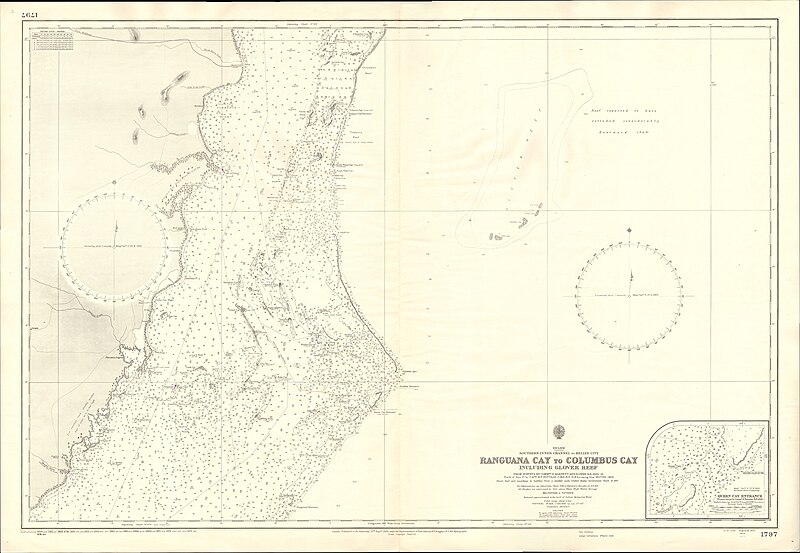
Welcome to Glover's Reef Atoll, a breathtaking marine sanctuary tucked away off the southern coast of Belize, roughly forty-five kilometers or twenty-eight miles from the mainland. As an integral component of the Belize Barrier Reef Reserve System, this magnificent site was inscribed as a UNESCO World Heritage Site in 1996, celebrating its outstanding universal value and extraordinary ecological purity. Glover's Reef stands as one of only four true coral atolls in the entire Western Hemisphere, and among the three found along Belize's barrier reef, it is by far the most remote. Accessible primarily via a scenic boat ride from mainland ports such as Dangriga or Sittee River Marina near Hopkins, its geographic isolation ensures an untouched environment characterized by tranquil turquoise waters, minimal crowds, and an unprecedented richness of marine life.
Spanning thirty-two kilometers in length and twelve kilometers in width, this oval-shaped atoll traces its geological origins back millions of years to a subsiding volcanic seamount. As the underlying land slowly sank beneath the warm ocean surface, generations of coral organisms built continuously upward toward the sunlight, ultimately forging a protective outer reef rim around a calm central lagoon. Sitting atop this coral rim are five picturesque sand and mangrove cays: Northeast Caye, Long Caye, Middle Caye, Southwest Caye—which today is split into two distinct islets—and Amounme Point Caye. Together, these cays and their surrounding marine territory form the Glover's Reef Marine Reserve, established under the national Fisheries Act in 1993 to safeguard over thirty-five thousand hectares of vital oceanic habitat.
The human history of Glover's Reef is as captivating as its natural formation. Long before European arrival, ancient Maya and Miskito maritime traders navigated these open waters, leaving behind ceramic pottery fragments on the cays as evidence of their oceanic trading routes. Centuries later, in the 1750s, the atoll acquired its present name from the notorious English pirate John Glover. Alongside his brother Rodger, John Glover utilized the remote, sheltered lagoon as a strategic hideout and staging ground to launch surprise raids against Spanish merchant ships transporting riches across the Caribbean Sea. Local legends of buried pirate treasure still linger among the cays, adding a sense of mystery to the idyllic tropical paradise.
Today, the legacy of Glover's Reef has transformed from a pirate stronghold into a world-class sanctuary for biodiversity. Celebrated by legendary naturalist Charles Darwin as the most remarkable reef system in the West Indies, it provides a crucial haven for threatened marine species. The atoll shelters green, hawksbill, and loggerhead sea turtles, eight species of sharks and rays, over sixty-five species of stony corals, and more than five hundred species of vibrant reef fish. Furthermore, its littoral vegetation supports major colonies of seabirds such as the red-footed booby and common noddy. Over the course of this tour, we will explore the unique highlights of this living world heritage site.
02 Northeast Caye and the Nassau Grouper Sanctuary
At the northeastern tip of Glover's Reef Atoll lies one of the most astonishing biological phenomena in the entire Atlantic Ocean: the endangered Nassau grouper gathers right here off Northeast Caye to form massive, synchronized spawning aggregations that are essential for the survival of the species. …
03 Middle Caye and the Wildlife Research Station
Standing on the serene shores of Middle Caye, one immediately senses the remarkable scientific legacy flourishing within this remote oceanic sanctuary. The modest Glover's Reef Research Station, nestled quietly among the swaying coconut palms of this small island, has hosted more than two hundred scientific and research expeditions since its establishment. …
04 Long Caye and the Long Caye Wall
Positioned on the outer eastern rim of Long Caye, the legendary Long Caye Wall is celebrated by scuba divers and marine scientists worldwide as one of the most breathtaking underwater precipices in the entire Caribbean Sea. Here, the shallow, turquoise reef crest gives way with startling suddenness, plunging almost vertically into deep oceanic waters that exceed eight hundred meters, or over twenty-six hundred feet, in depth. …
05 The Central Lagoon and Patch Reefs
The central lagoon of Glover's Reef Atoll is a mesmerizing underwater garden of unbelievable marine diversity. Sheltered from the open ocean by the continuous outer reef rim, this shallow, turquoise body of water contains an extraordinary array of approximately eight hundred and fifty individual patch reefs and coral pinnacles scattered across the sandy lagoon floor like sunken jewels. …
06 Southwest Caye and the Outer Surf Break
Located at the southwestern extremity of the atoll, Southwest Caye holds a truly unique distinction in Belizean geography: the outer reef flat right off this island creates the nation's only accessible surf break. While the interior lagoon remains exceptionally calm and sheltered, the exposed reef edge at Southwest Caye receives powerful ocean swells rolling in from the open Caribbean Sea, creating crisp, rideable wave breaks for experienced surfers. …
07 Closing
Through this comprehensive audio narrative, you have journeyed across the breathtaking waters and rich heritage of Glover's Reef Atoll. From the critical Nassau grouper spawning sanctuary at Northeast Caye to the pioneering scientific research conducted at Middle Caye, the sheer vertical depths of the Long Caye Wall, the serene inner lagoon adorned with eight hundred and fifty patch reefs, and the dynamic outer break of Southwest Caye, we have explored a marine wilderness of unmatched beauty…