 Photo Wikimedia Commons
Contents
History & cultureBY TELLBY8 sections · numbered as on the map01 Orientation
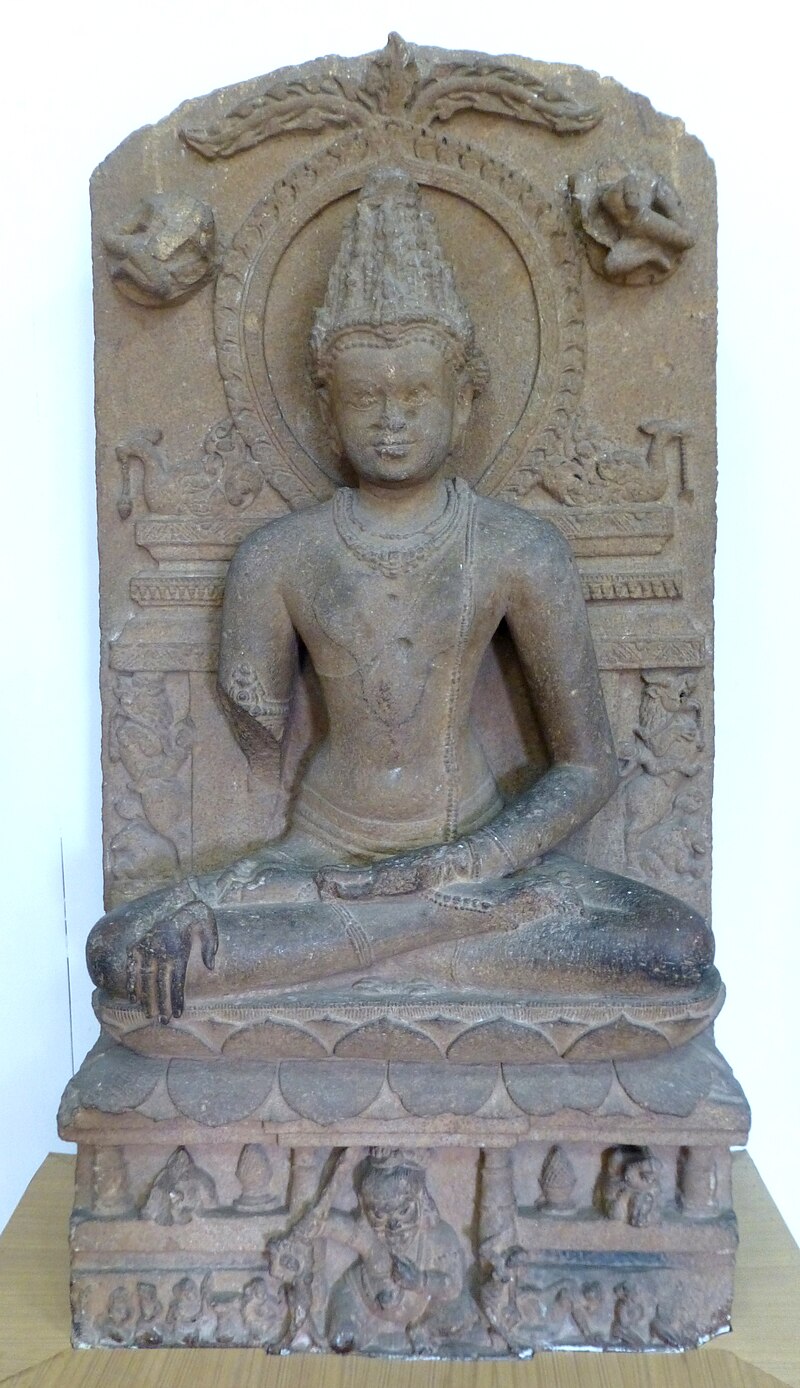
Welcome to Ratnagiri, a remarkable ancient monastic complex situated in the Jajpur district of Odisha in eastern India. In the regional Odia language, the name Ratnagiri translates to Hill of Jewels, a designation that perfectly reflects the extraordinary cultural and artistic treasures preserved across this serene landscape. Nestled gracefully on a hill between the Brahmani and Birupa rivers, Ratnagiri serves as one of the most significant sanctuaries of Odishan Buddhist heritage. Together with the nearby monastic settlements of Lalitgiri and Udayagiri, it forms the famous Diamond Triangle, an interconnected network of ancient centers of higher learning and spiritual devotion. Geographically, the site is located approximately one hundred kilometers from the state capital of Bhubaneswar and around seventy kilometers from the historic city of Cuttack, positioning it near ancient riverine and maritime trade routes that connected regional monastic communities with distant overseas lands across South-East Asia. The history of Ratnagiri Mahavihara spans over a millennium of continuous intellectual and spiritual development. Archaeological evidence indicates that the monastery was originally established no later than the reign of the Gupta king Narasimha Baladitya in the first half of the sixth century. The complex experienced its most brilliant golden age between the seventh and tenth centuries under the generous patronage of the Bhauma-Kara dynasty, whose royal capital was situated at nearby Jajpur. During this vibrant era, Ratnagiri developed into a bustling center of monastic education and philosophical exchange, attracting scholars and pilgrims from across the Buddhist world. Structural construction and artistic production continued through the thirteenth century before entering a period of gradual decline. Even as major new additions ceased, modest maintenance and restoration efforts, particularly on the main stupa, persisted until around the sixteenth century. Following its ultimate abandonment, nature gradually reclaimed the stone structures, and knowledge of the site faded from regional memory. For generations, local inhabitants referred to the overgrown earthen mounds as Ranipukhuri, meaning the queen mound, believing the ruins belonged to the legendary palace of a mythical king. The true identity of this magnificent Mahavihara was finally restored between nineteen fifty-eight and nineteen sixty-one, when the Archaeological Survey of India conducted extensive excavations under the direction of the distinguished archaeologist Debala Mitra. These systematic excavations uncovered a breathtaking architectural complex comprising vast quadrangle monasteries, monumental stupas, and thousands of exquisitely detailed stone sculptures. Today, Ratnagiri is celebrated as possessing some of the finest carved stone decorations in all of India. As you walk through these tranquil ruins today, you are treading upon sacred ground where centuries of monastic life, artistic mastery, and spiritual contemplation unfolded.
02 Monastery 1: The Elaborately Carved Chlorite Doorway
Monastery One represents the largest and most architecturally magnificent quadrangle structure within the entire Ratnagiri complex. Measuring an impressive fifty-five meters on each side, this grand monastery was constructed around a vast central courtyard that served as the focal point of monastic community life. The primary entrance to Monastery One features a world-renowned chlorite doorway that stands as an unsurpassed masterpiece of ancient Indian sculptural art. …
03 Monastery 1 Courtyard: Monastic Life and Living Cells
Passing through the monumental chlorite doorway brings visitors directly into the spacious central courtyard of Monastery One, a paved open-air square measuring twenty-one meters on each side. Originally, this courtyard was bordered by an extensive covered verandah or colonnaded walkway that functioned similarly to the cloisters of medieval European monasteries, providing shade and sheltered passage for monks engaging in daily study, sacred chants, and ritual circumambulation. …
04 Main Shrine of Monastery 1: Colossal Seated Buddha
Located directly across the paved central courtyard from the entrance porch is the main shrine of Monastery One, the spiritual heart of the entire Mahavihara complex. Enshrined within this spacious sanctuary is a colossal seated Buddha image that stands as one of the most awe-inspiring achievements of ancient Indian stone architecture and sculpture. Including its sculpted pedestal base, the monumental Buddha reaches a commanding height of twelve feet, equivalent to three point seven meters. …
05 Monasteries 2 and 3: Smaller Monastic Enclaves
Adjacent to the expansive layout of Monastery One stand two additional monastic complexes known as Monastery Two and Monastery Three, each offering valuable insights into the structural diversity of monastic architecture and living arrangements at Ratnagiri. Located immediately to the north of Monastery One, Monastery Two is a single-storey complex that possesses exceptional historical significance. …
06 Main Stupa and the Votive Stupa Field
Ascending to the highest point of the Ratnagiri hill brings visitors to the sacred precinct of the Main Stupa, designated as Stupa One, surrounded by an extraordinary field of hundreds of smaller votive stupas. Constructed during the ninth century over the foundations of an earlier Gupta-era structure, the Main Stupa features a massive square base measuring forty-seven feet, or fourteen meters, on each side. …
07 Ratnagiri Museum and the Converted Temples
A comprehensive tour of Ratnagiri concludes at the purpose-built on-site Ratnagiri Archaeological Museum and the neighboring Dharma Mahakala Temple. The modern three-storey museum houses four spacious display galleries that preserve the priceless artifacts recovered during systematic site excavations. …
08 Closing
As our journey through Ratnagiri comes to a close, we reflect upon the extraordinary historical and spiritual evolution preserved within this sacred Hill of Jewels. Established in the fifth century during the era of the Gupta dynasty under King Narasimha Baladitya, Ratnagiri evolved over more than a millennium from a peaceful classical monastery celebrating post-Gupta artistic harmony into a vibrant international center for Tantric Vajrayana Buddhism. …