 Photo Wikimedia Commons
Contents
History & cultureBY TELLBY7 sections · numbered as on the map01 Orientation
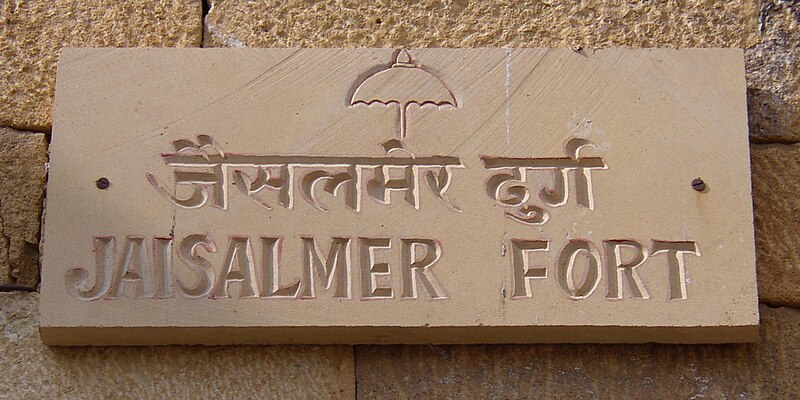
Welcome to the breathtaking Jaisalmer Fort, standing majestically atop the golden heights of Trikuta Hill in the very heart of the formidable Thar Desert. As you gaze upon this towering citadel rising dramatically against the horizon, you are stepping into a magnificent monument recognized globally by the UNESCO World Heritage Committee as an irreplaceable cultural treasure of humanity. The reason for its celebrated heritage status is genuinely extraordinary. Built entirely from radiant yellow sandstone, this colossal stronghold is one of the world's very few living forts, where nearly one-fourth of the city's population continues to reside inside its ancient ramparts, maintaining an unbroken human settlement that has endured for over eight centuries. The origins of this legendary stronghold date back to eleven fifty-six AD, when the ruler Rawal Jaisal, a proud Bhati Rajput monarch, recognized the strategic vulnerabilities of his former capital at Lodhruva. Seeking an invincible vantage point, he selected the elevated rocky outcrop of Trikuta Hill to establish a fortified capital, bestowing his own name upon the newly founded city of Jaisalmer. Strategically positioned along major overland commerce corridors, including the ancient Silk Road, the citadel rapidly flourished into a dominant trading center. Massive merchant caravans laden with precious silks, exotic spices, refined textiles, and rare gems traversed through these defensive gateways, bringing vast fortunes that funded the construction of exquisite royal palaces, elaborate temples, and grand mansions. The massive yellow sandstone masonry possesses a remarkable optical quality. Under the intense glare of the midday desert sun, the fortress displays a fierce, tawny lion color, but as evening approaches and the sun descends toward the horizon, the walls magically transform into a soft, glowing honey-gold. It is this enchanting visual spectacle that earned the fortress its beloved historical names, Swarn Durg and Sonar Quila, meaning the Golden Fort. Today, our immersive walking tour will take you through the towering defensive entry gateways, into the grand courtyard of the royal palace, through the sanctuary of delicately carved Jain temples, along narrow stone lanes lined with merchant havelis, and ultimately to the elevated outer ramparts where the sweeping desert winds blow. Please move at your own unhurried pace, soaking in the living history, enduring architecture, and timeless magic of Jaisalmer Fort.
02 The Unyielding Fortified Gates
We begin our detailed exploration of the fortress defenses with a startling architectural fact: the foundational pitching wall surrounding the base of this desert stronghold stands four point six meters high as part of an extraordinary triple-ringed defensive system that incorporates ninety-nine massive bastions along its perimeter. …
03 The Royal Seat of Maharawal
Welcome to the Raj Mahal, the grand Fort Palace at the core of the citadel, defined by a surprising history of resilience having survived severe seismic activity and structural collapses, including the tragic historical collapse of portions of the Queen's Palace due to the fragile sedimentary rock foundation beneath Trikuta Hill. …
04 Sacred Yellow Sandstone Carvings
Step into the tranquil sanctuary of the Jain Temple complex, a sacred precinct harboring a truly astounding architectural fact: nested inside this medieval desert fortress are seven interconnected Jain temples constructed between the twelfth and sixteenth centuries that house more than six hundred sacred statues, Tirthankara idols, and divine sculptures. …
05 Masterpieces of Desert Merchants
As we stand before Nathmal Haveli, consider this mind-boggling architectural fact: this magnificent merchant mansion was constructed simultaneously by two brother architects working independently on the left and right halves without ever checking each other's blueprints or progress, resulting in a uniquely asymmetrical masterpiece. …
06 The Citadel Bastions and Ancient Drainage
Standing here on the windswept outer ramparts, we are greeted by an extraordinary medieval engineering fact: over eight hundred years ago, the fort builders designed a masterly drainage system called Ghut Nali that swiftly channels rainwater out of the citadel in all four cardinal directions to prevent structural water damage. Step up to the stone balcony lookouts and gaze out over the golden sandstone city stretching below, toward the vast, unbroken horizons of the Thar Desert. …
07 Closing
As our comprehensive audio tour comes to a close, we invite you to reflect upon the fragile future and ongoing preservation challenges of this living monument. Today, over four thousand permanent residents and nearly four hundred commercial establishments operate inside Jaisalmer Fort, creating immense structural strains on its historic infrastructure. …