 Photo Wikimedia Commons
Contents
History & cultureBY TELLBY8 sections · numbered as on the map01 Orientation
Welcome to the historic medieval citadel of Pandua, located in the Malda district within the Northern Plains of West Bengal, India. Pandua served as the glorious first capital city of the Bengal Sultanate for a remarkable period of one hundred and fourteen years, spanning from thirteen thirty-nine until fourteen fifty-three. During the fourteenth century, Pandua flourished as a thriving, cosmopolitan trading hub situated fifteen kilometers north of modern Malda along the ancient regional trade corridors. The rulers of Bengal maintained total independence from the Sultans of Delhi, fostering a golden age during which the Bengali language, culture, and regional identity were formally shaped under royal patronage. Today we stand before the most monumental surviving treasure of this medieval metropolis, the Adina Mosque, an architectural masterpiece that embodies the supreme imperial vision of the Ilyas Shahi dynasty. To understand the site's significance, we must first consider its name. The term Adina is generally understood to mean Friday, directly linking this grand sanctuary to the weekly congregational prayers that brought the community together. Similar names appear in other historic Islamic sites across the region, including the Adina Mosque in Patan, Gujarat, the Satgachia Mosque in Jhenaidah, and the site of Bara Azina in Bagerhat. The construction of this colossal congregational mosque was commissioned by Sultan Sikandar Shah, the second sovereign of the Ilyas Shahi dynasty. The early Bengal Sultanate harbored immense imperial ambitions after successfully repelling the aggressive invasions of the Delhi Sultanate twice during the historic Ekdala Wars of thirteen fifty-three and thirteen fifty-nine. Following these decisive military triumphs, Sultan Sikandar Shah sought to assert his sovereign independence and display his realm's elevated status to the entire medieval world. Commissioned in thirteen seventy-three and completed in thirteen seventy-five, the Adina Mosque became the single largest mosque structure ever constructed in the entire Indian subcontinent at that time. Its monumental outer footprint covers a colossal rectangular area measuring one hundred and seventy-two meters by ninety-seven meters, equivalent to five hundred and twenty-four feet by three hundred and twenty-two feet. Recognizing its extraordinary artistic and historical importance, the complex is designated and preserved as an official Monument of National Importance under the Archaeological Survey of India, cataloged under reference number N-WB-81. As you prepare to explore these historic grounds, please take a moment to adjust your posture and observe a few essential visitor guidelines. Because this site remains a sacred cultural treasure, all visitors are kindly requested to maintain modest attire, move thoughtfully, and preserve absolute silence throughout the tour. Look ahead toward the sprawling brick and stone structure as we step back into the fourteenth century to discover the imperial grand narrative of medieval Pandua.
02 The Exterior Façade and the Imperial Inscription of Sultan Sikandar
Please position yourself directly outside, facing the majestic western exterior wall and façade of the Adina Mosque. As you stand before this towering elevation, take a moment to appreciate the sheer physical mass and artistic fusion that defines this medieval monument. The construction of this immense wall relies on a core of heavy rubble masonry, meticulously encased in layers of brick, carefully laid stone, and layered coatings of stucco, lime plaster, concrete, glazing, and polished lime…
03 The Open Courtyard and Multi-Aisled Cloisters
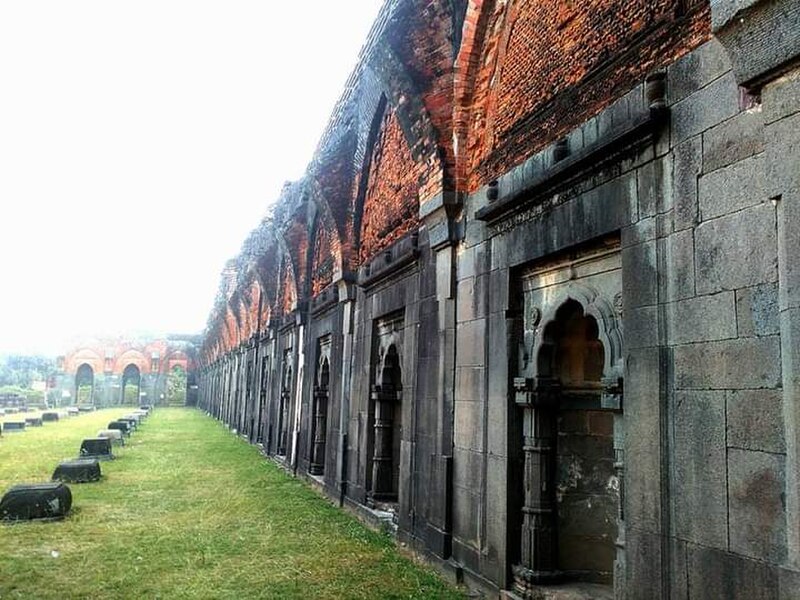
Step through the pointed portal and move into the expansive open rectangular courtyard that forms the heart of the Adina Mosque complex. As you enter this vast quadrangle, pause for a moment to absorb the overwhelming horizontal scale surrounding you. This monumental inner courtyard measures an extraordinary one hundred and fifty-four point seven meters in length by eighty-seven point zero meters in width, corresponding to five hundred and seven point five feet by two hundred and eighty-five…
04 The Central Prayer Hall and Vaulted Nave
Please step forward now into the shaded sanctuary of the central prayer hall, located along the western side of the vast open courtyard. As you transition into this five-aisle deep sanctuary, you are enveloped by a solemn atmosphere defined by massive stone architecture and quiet contemplation. Focus your attention upward toward the soaring central nave that forms the main axis of this holy hall. The most defining architectural triumph of this space is its monumental ribbed barrel vault. …
05 The Central Mihrab and Terracotta Artistry
Please step directly in front of the central mihrab, the main prayer niche embedded in the western wall of the sanctuary. As you stand before this holy focal point, you are looking at the finest surviving masterwork of terracotta artistry from the Bengal Sultanate. Executed between thirteen sixty-four and thirteen seventy-four Common Era using baked clay bricks set in mortar mixed with lime and brick dust, the Adina Mosque is celebrated as the very first Islamic monument in Bengal to…
06 The Royal Gallery and Elevated Sultan's Platform
Please guide your steps now toward the northern wing of the main prayer sanctuary, where you will observe an extraordinary elevated stone platform raised high above the main floor level. Known historically as the Badshah-ka-Takht, translating to the Sultan's Throne, this majestic structure served as the exclusive royal gallery for the monarch and his royal household. …
07 The Tomb Chamber of Sultan Sikandar Shah
Please walk around to the western exterior structure attached directly to the outer sanctuary wall, where the tomb chamber of Sultan Sikandar Shah is located. Before you stands the quiet resting place of the visionary sovereign who commissioned the construction of this colossal mosque. This small, square burial chamber was constructed directly against the main western exterior wall facing Mecca, aligning the Sultan's eternal rest with the sacred direction of Islamic prayer. …
08 Closing
As we conclude our audio tour, please pause near the central exit and look back across the majestic expanse of the Adina Mosque ruins. Once the crowning architectural jewel of the Bengal Sultanate, this monumental complex weathered profound historical shifts and natural disasters over the centuries. During the nineteenth century, powerful earthquakes struck the region, causing the dramatic collapse of its hundreds of domed bays and leaving the vast interior open to the elements. …