Contents
History & cultureBY TELLBY8 sections · numbered as on the map01 Orientation
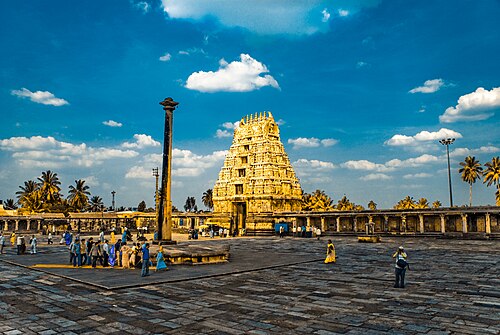
Welcome to the Chennakeshava Temple in Belur, a sublime sanctuary where the brilliant aesthetic mastery and profound spiritual devotion of the twelfth century Hoysala Empire remain vividly alive today. You are currently standing in the entrance plaza of this sacred complex, situated near the tranquil banks of the Yagachi River, which is reverently documented as the Badari River in medieval epigraphs and historic texts. In ancient inscriptions, this historic royal town was celebrated under the names Belahur, Velur, or Velapura. It served as the brilliant first capital of the Hoysala Dynasty, which dominated the vast Southern Deccan Plateau between the eleventh and fourteenth centuries.
The sovereigns and citizens of the Hoysala Empire held this city in extraordinary veneration, so much so that medieval court inscriptions repeatedly glorified Belur as earthly Vaikuntha, the divine celestial abode of the Hindu deity Lord Vishnu. The origins of this magnificent architectural wonder trace back to the formidable Hoysala monarch, King Vishnuvardhana, who ascended the royal throne in 1110 Common Era.
Following his momentous military victory over the rival Chola Dynasty at the landmark Battle of Talakad in 1116 Common Era, King Vishnuvardhana sought to commemorate his historic triumph and express his deep religious dedication to Vishnu. Under the profound spiritual influence of the revered philosopher Ramanujacharya, who revitalized Sri Vaishnavism across South India, the king commissioned this monumental complex. On March 10, 1117 Common Era, the primary shrine was officially consecrated under the grand name Vijaya Narayana. It was hailed as the absolute crown jewel among the five foundational monuments of his royal legacy and stands to this day as his supreme magnum opus.
This grand complex was not constructed in a single brief moment. Its artistic development spanned three successive generations of royal patrons and master sculptors, taking one hundred and three years to achieve its fully realized architectural form. Over the course of centuries, despite enduring periodic regional warfare and destructive invasions, the temple was repeatedly restored and meticulously maintained by subsequent rulers, preserving its unbroken status as an active, living Vaishnava pilgrimage site where daily worship continues without interruption.
In formal recognition of its extraordinary artistic brilliance and cultural significance, the Chennakeshava Temple at Belur, alongside its sister sanctuaries at Halebidu and Somanathapura, was officially inscribed as a UNESCO World Heritage Site in 2023 under the Sacred Ensembles of the Hoysalas. The title Chennakeshava translates literally to handsome Kesava, referring to the wonderfully graceful form of Lord Vishnu. As you step forward across this threshold, prepare to immerse yourself in an unforgettable journey through carved stone, timeless philosophy, and medieval engineering. Please begin walking slowly toward the vast paved main courtyard directly ahead.
02 Eastern Gopuram & Temple Courtyard
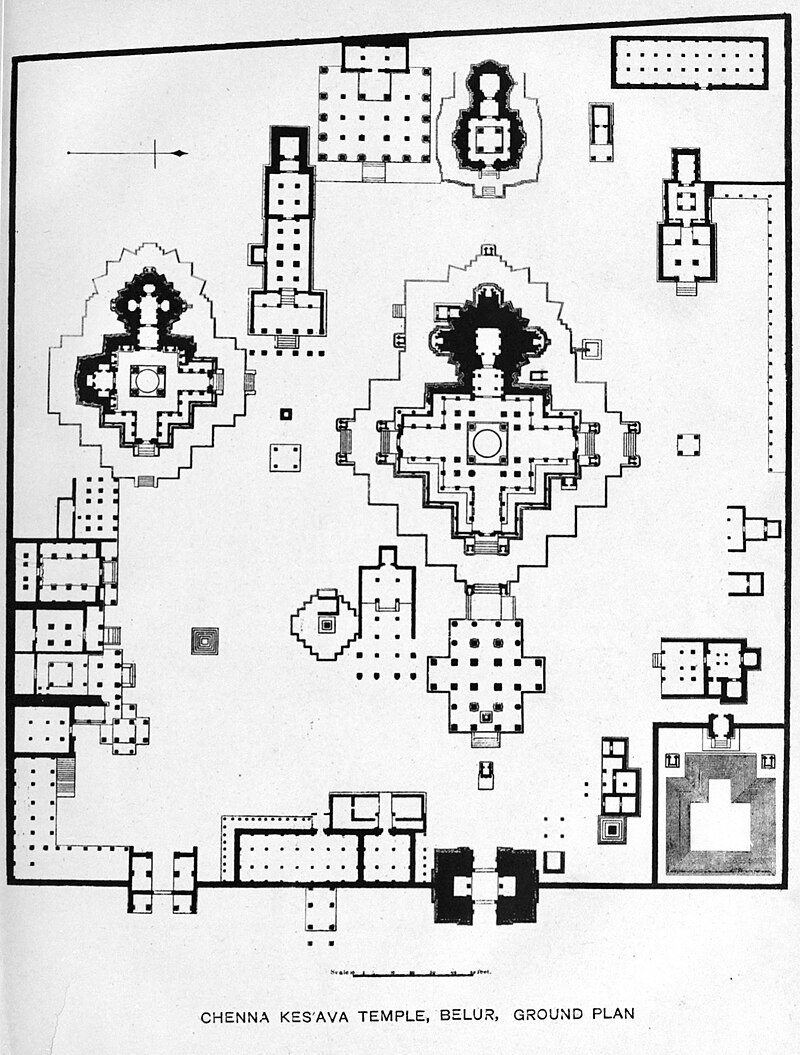
As you pass under the towering entrance gateway and step into the sunlit paved main courtyard, you are immediately embraced by the vastness and serenity of this sacred enclosure. The entire temple compound spans an impressive area measuring approximately one hundred and thirty five meters by one hundred and twenty meters, fully enclosed on all four sides by a massive stone perimeter wall known in traditional South Indian temple architecture as the prakara. …
03 Kappe Chennigaraya Shrine & Southern Enclosure
You are now standing before the elegant southern shrine situated directly beside the main Chennakeshava Temple. This is the Kappe Chennigaraya Shrine, measuring approximately thirty eight meters by thirty two meters in its refined architectural floor plan. Constructed in 1117 Common Era simultaneously with the principal sanctuary, this shrine was personally sponsored by Queen Santala Devi, the deeply accomplished, highly educated, and revered dance patron consort of King Vishnuvardhana. …
04 Exterior Walls & Madanika Sculptures
Please step up carefully onto the elevated stone terrace known as the jagati, which stands about one meter high around the perimeter of the main Kesava Temple. This wide walking platform precisely mirrors the complex, star like staggered square contour of the building, serving as the pradakshina patha, or the sacred circumambulatory pathway. …
05 Navaranga Central Hall & Lathe-Turned Pillars
You have now stepped into the cool, atmospheric interior of the temple central hall, known as the Navaranga. Characterized by its complex diamond shaped triratha architectural layout, this spacious hall is divided into sixty distinct compartments or bays. It represents the largest and most intricately decorated interior hall of any Hoysala temple in existence. Originally, when consecrated in 1117 Common Era, the hall was completely open on its sides, illuminated by brilliant natural sunlight. …
06 Garbha Griha Sanctum Sanctorum & Kesava Icon
You have now arrived at the eastern doorway threshold of the innermost and most sacred sanctuary of the complex, the Garbha Griha, or sanctum sanctorum. Translating literally to womb chamber, this darkened, windowless square room serves as the divine spiritual core where the supreme presiding deity resides. Framing the ornate doorway leading into this holy space stand two imposing guardian statues, Jaya and Vijaya, who act as eternal celestial doorkeepers warding off profane energies. …
07 Auxiliary Shrines & Vasudeva Sarovara Tank
Stepping away from the main sanctuary into the wider inner courtyard, we now explore the wonderful cluster of auxiliary shrines and the sacred water tank. Directly to the west of the Kesava Temple stands the Viranarayana Temple, measuring approximately twenty one meters by seventeen meters. Built in the twelfth century, this complete standalone temple features its own Navaranga hall and garbha griha sanctum. …
08 Closing
Our journey through time, architectural genius, and sacred art at the Chennakeshava Temple in Belur now draws to a gentle close. As you walk slowly across the sunlit paved courtyard toward the main exit, take a quiet moment to reflect upon the extraordinary artistic legacy and devotion of the twelfth century master sculptors who brought this stone masterpiece into existence. …