 Photo Wikimedia Commons
Contents
History & cultureBY TELLBY8 sections · numbered as on the map01 Orientation
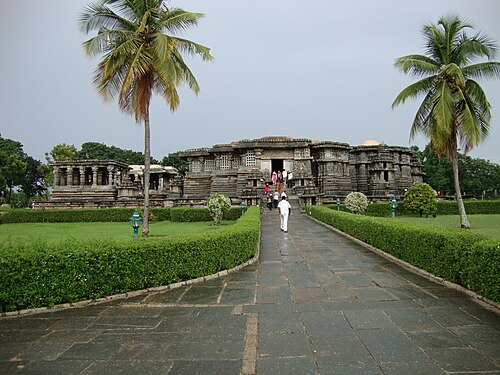
Welcome to the Hoysaleswara Temple, the most magnificent monument in Halebidu and one of South India's greatest sanctuaries dedicated to Lord Shiva. As you step into this sacred courtyard, you are standing at the historical heart of the Hoysala Empire. In the twelfth century, this city was known as Dwarasamudra, a Sanskrit name derived from Dvara, meaning gateway, and Samudra, meaning ocean or large body of water. This name referred to the vast man-made lake constructed nearby, beside which King Vishnuvardhana established his imperial capital, launching a golden age of art and culture that lasted for nearly three centuries.
The historical origins of the Hoysaleswara Temple trace back to 1121 CE, corresponding to the Saka year 1043. Unlike many monuments constructed solely by royal decree, this grand temple was initiated and funded by wealthy Shaiva merchants of the capital, most notably Ketamalla and Kesarasetti. Under the master direction of chief architect Kedaroja, skilled artisans worked continuously for nearly four decades to complete the structure around 1160 CE. During this construction period, an intense spirit of creative rivalry flourished between the artisans of Dwarasamudra and those working on the Chennakesava Temple in nearby Belur.
However, the golden era of Dwarasamudra came to a catastrophic end in the early fourteenth century. Armies from the Delhi Sultanate, led by Alauddin Khilji and later in 1326 CE by Sultan Muhammad bin Tughlaq, plundered the city, leaving its magnificent structures in ruins. The capital was abandoned, and the fallen metropolis became known as Halebidu, which translates literally to Old Capital or Destroyed Capital. Despite the loss of its soaring superstructure towers, the main temple body and its incredible stone relief carvings survived through the centuries.
In 2023, the global historical significance of this monument was recognized when UNESCO inscribed the Sacred Ensembles of the Hoysalas, encompassing this temple along with Belur and Somanathapura, as a World Heritage Site. As you prepare to explore this star-shaped sanctuary, allow yourself to step back nine hundred years and witness a timeless masterpiece of South Indian devotion and stone craftsmanship.
02 Outer Wall Friezes and Architectural Mastery
Please step up onto the raised star-shaped platform known as the jagati and begin walking clockwise around the temple facade. This broad pathway, called the pradakshina-patha, was created specifically for pilgrims to complete a sacred circumambulation while observing the continuous narrative reliefs carved along the exterior walls.
The remarkable artistic detail visible here was made possible by the choice of building material: chloritic schist, commonly known as soapstone or greenschist. …
03 The Sacred Entrances and Guardian Dvarapalas
Now, please direct your steps toward the grand entryways of the temple complex. The Hoysaleswara Temple features four main porch entrances: one on the south side, two on the east side facing the open courtyards, and one on the north side, which serves as the primary entrance for modern visitors. During the reign of King Narasimha I in the mid-twelfth century, these open porches were enclosed with carved doorways and perforated stone screens, designed to regulate light and offer protection to…
04 Interior Navaranga Hall and Lathe-Turned Pillars
Step inside the cool sanctuary of the inner assembly hall, known as the Navaranga. The term Navaranga refers to a nine-bay hall structured by rows of aligned stone columns. In striking contrast to the exterior walls, which are covered with continuous relief panels, the interior walls here are kept unadorned, focusing all visual attention toward the magnificent central columns and the elevated ceilings.
Examine the massive dark pillars supporting the hall. …
05 The Twin Sanctums: Hoysaleswara and Shantaleswara
You are now standing before the spiritual core of the temple, the twin sanctums known as Garbha Griha. Architecturally, this structure is classified as a dvikuta vimana, meaning a dual-shrine design where two identical sanctums share a single unified platform and connected assembly hall. Both sanctums face east, aligned to receive the first rays of the rising morning sun. …
06 Nandi Pavilions and the Surya Shrine
Step out of the central assembly hall onto the eastern courtyard of the temple platform. Positioned directly in front of each twin shrine are two large, open pavilion halls, each housing a colossal monolithic statue of Nandi, the sacred bull who serves as the vahana or mount of Lord Shiva.
Walk over to the southern Nandi pavilion first. Here sits an extraordinary monolithic Nandi bull carved from a single block of soapstone. …
07 Garuda Stambha and the Archaeological Museum
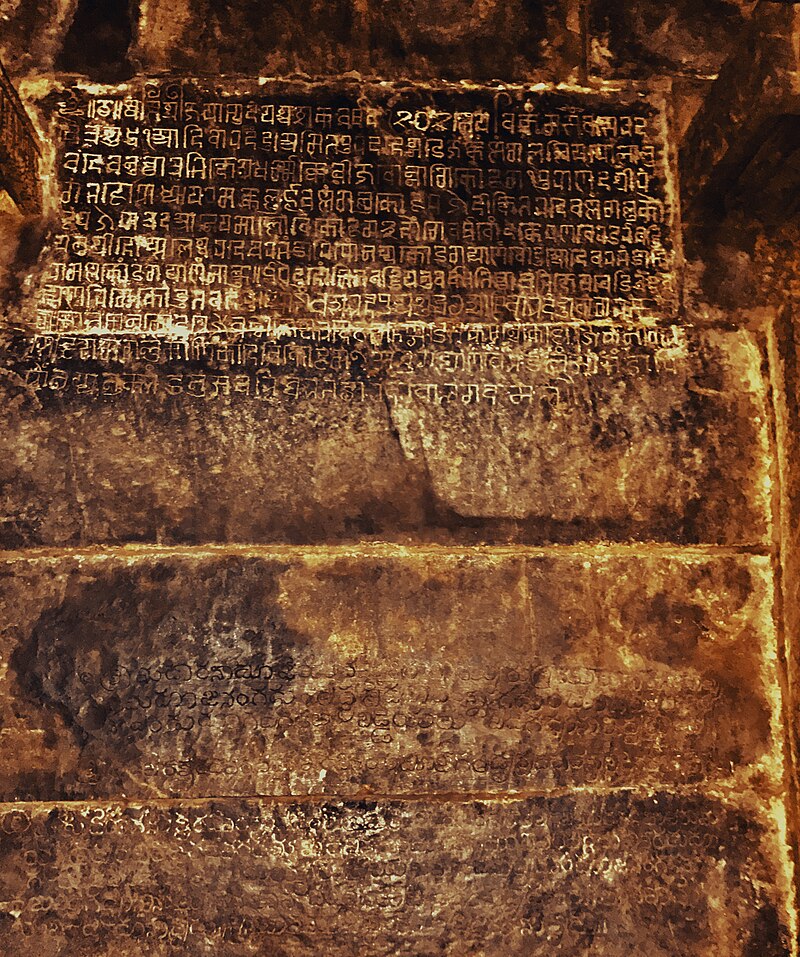
Now, please walk into the southern courtyard of the temple grounds toward a distinctive freestanding stone column known as the Garuda Stambha, or Garuda Pillar. Although its upper section was lost over time, this pillar holds immense historical significance through its detailed relief carvings and ancient inscriptions.
In the Hoysala Empire, Garudas were elite bodyguards sworn by sacred oath to protect the king and royal family. …
08 Closing
As our audio guide tour comes to a close, take a final moment to stand in the quiet courtyard and absorb the atmosphere of the Hoysaleswara Temple. For nearly nine hundred years, these soapstone walls have witnessed the rise and fall of dynasties, medieval invasions, and the quiet reverence of generations of visitors.
Art historians across the centuries have reflected on the extraordinary craftsmanship displayed here. …