Contents
History & cultureBY TELLBY8 sections · numbered as on the map01 Orientation
Welcome to the ancient site of Rakhigarhi, one of the most remarkable and expansive cradles of early human civilization. Located in the Hansi tehsil of Hisar district within the northern Indian state of Haryana, approximately one hundred fifty kilometers northwest of Delhi, this historic landscape rests within the fertile Ghaggar Hakra river plain and the prehistoric valley of the Drishadvati River. As you stand here at the entrance facing these immense sweeping mounds, take a slow deep breath and prepare to step back five thousand years in time. You are entering a sprawling urban metropolis that served as a central pillar of the Indus Valley Civilisation. Alongside the famous settlements of Harappa, Mohenjodaro, and Ganweriwala in modern day Pakistan, as well as Dholavira in Gujarat, Rakhigarhi stands proud as one of the five grandest townships of the ancient Harappan world.
For decades, archaeological knowledge of this site evolved through dedicated research. Pioneering surveys began in nineteen sixty three, followed by systematically documented studies in nineteen sixty nine under Dr. Suraj Bhan of Kurukshetra University. Later, extensive excavations conducted between nineteen ninety seven and two thousand by Director Amarendra Nath of the Archaeological Survey of India, and subsequent multi year research campaigns led by Professor Vasant Shinde of Deccan College, radically remapped our global understanding of the Indus Valley Civilisation. While early scholars estimated the town to cover eighty to one hundred hectares, the pivotal discovery in two thousand fourteen of additional outlying mounds expanded the documented archaeological footprint to an astonishing three hundred to three hundred fifty hectares. This monumental scale officially established Rakhigarhi as the single largest known site of the Harappan civilization, surpassing Mohenjodaro by fifty hectares.
Look closely around you. The sprawling archaeological expanse encompasses eleven designated mounds, officially identified from RGR one to RGR eleven. These mounds surround and underlay the twin modern villages of Rakhi Shahpur and Rakhi Khas. While Mound RGR five remains thickly populated by the village of Rakhi Shahpur, the surrounding mounds offer an open window into millennia of unbroken human occupation. Archaeologists have identified three distinct cultural phases buried within these layers, beginning with the pre formative or pre Harappan Sothi Siswal culture dating as far back as six thousand to thirty three hundred years before Christ, progressing into the early Harappan phase, and culminating in the mature Harappan urban civilization between twenty six hundred and eighteen hundred years before Christ.
As you begin your physical tour today, guided pathways will lead you directly across these ancient sectors. You will walk above paved brick streets, inspect sophisticated municipal drainage networks, explore monumental public granaries, observe sacred fire altars, visit craft workshops, and pause at the ancient necropolis of Mound RGR seven. Let your mind visualize the vibrant life that once pulsed through these avenues as we begin our immersive journey through five thousand years of living history.
02 The Planned City and Brick Drainage System
As you follow the footpaths from the orientation area, please stop and stand directly before the structural foundations of Mound RGR one and Mound RGR two. Look down at your feet and trace the clean rectilinear lines of ancient walls stretching out before you. You are looking at the heart of the central urban residential quarters of mature Harappan Rakhigarhi, constructed over four thousand five hundred years ago. …
03 The Great Granary and Aristocratic Settlement
Please continue walking north along the paved path as it gently inclines toward the elevated ground of Mound RGR three. Pause here at the crest of the mound and survey the monumental foundations set before you. You are now entering the elite administrative and aristocratic core of ancient Rakhigarhi. Unlike the standard residential quarters seen earlier, Mound RGR three features remarkably expansive residential structures constructed with exceptionally thick walls built entirely of high quality…
04 Sacred Fire Altars and Ritual Sacrificial Pits
Now, please walk down the southern slope toward Mound RGR three's ceremonial edge. As you step into this quieter, dedicated precinct, notice how the urban layout changes. Away from the noisy market streets and residential blocks, the ancient citizens constructed a solemn space dedicated entirely to spiritual communion, sacred fire rituals, and ceremonial offerings to cosmic forces.
Look closely at the excavated rammed clay floors set within this ritual precinct. …
05 Craft Workshops, Gold Foundry, and Seals
Please follow the path west toward the active industrial and artisan precinct of Mound RGR four. As you enter this workshop quarter, imagine the heat of ancient furnaces, the ringing of copper hammers, and the steady scraping of stone lapidaries. During the height of mature Harappan civilization, Rakhigarhi was far more than an administrative capital, it was a thriving manufacturing hub and international trade powerhouse that processed raw luxury materials into exquisite finished goods for…
06 The Mound 7 Cemetery and Ancient Burials
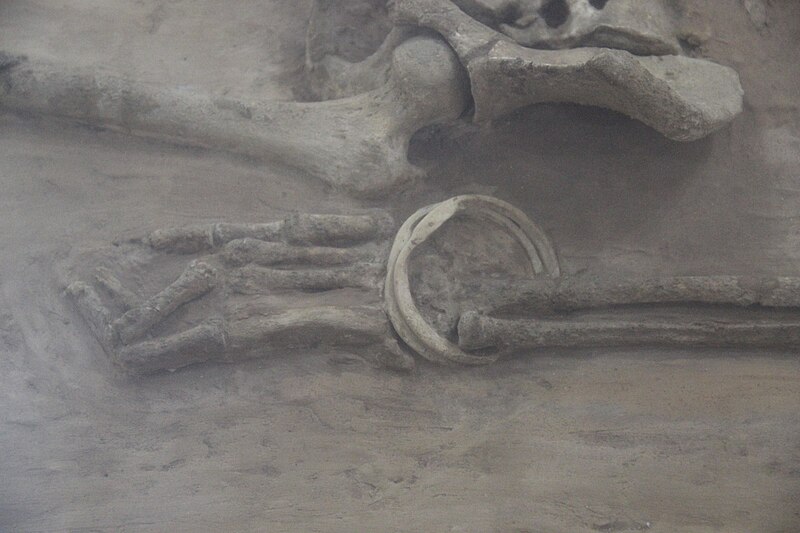
Please take a quiet, respectful walk northward toward the solemn necropolis of Mound RGR seven. Situated slightly apart from the bustling urban quarters, this peaceful cemetery mound served as the primary burial ground for mature Harappan Rakhigarhi. Archaeologists have excavated more than fifty three individual burial pits containing forty six remarkably preserved human skeletons. …
07 Rakhigarhi Museum and The Heritage Lake
Please follow the main pathway south toward the modern cultural zone of Rakhigarhi. Here, ancient archaeology merges with world class heritage preservation. Following the formal declaration of Rakhigarhi as an iconic site in the Indian Union Budget of twenty twenty, a landmark MoU was signed between the Archaeological Survey of India, the central government, and the state government of Haryana. …
08 Closing
As our walking tour reaches its conclusion, please take a final moment to stand quietly and gaze out over the sweeping, ancient mounds of Rakhigarhi. For many decades, this irreplaceable cradle of civilization faced grave threats from soil erosion, agricultural encroachment, illegal sand mining, and the looting of antiquities. In two thousand twelve, the Global Heritage Fund officially listed Rakhigarhi as one of the ten most endangered heritage sites in Asia. …