 Photo Wikimedia Commons
Contents
History & cultureBY TELLBY8 sections · numbered as on the map01 Orientation
Welcome to the orientation terrace of the Palace of the Shirvanshahs, situated at one of the highest strategic points inside Icherisheher, the historic walled inner city of Baku. From this elevated vantage point, visitors can enjoy a breathtaking panoramic view that encompasses the golden limestone walls of the medieval Old City, its labyrinthine cobblestone alleys, and the vast, shimmering expanse of Baku Bay along the Caspian Sea. In the year two thousand, this magnificent royal complex was inscribed on the UNESCO World Heritage List alongside the Maiden Tower and the surrounding Walled City, serving as an outstanding benchmark of medieval Islamic architecture and urban design in the Caucasus. The historical origins of this royal ensemble are closely tied to the strategic relocation of the Shirvanshah dynasty's capital from Shamakhi to Baku. During the twelfth century, following devastating earthquakes and shifting geopolitical dynamics in Shamakhi, the rulers recognized the coastal prominence, natural defensive features, and thriving maritime trade advantages of Baku. Under the ambitious reign of Shirvanshah Khalilullah I in the fifteenth century, the site was expanded into a monumental citadel that integrated state administration, royal residential quarters, judicial forums, spiritual sanctuaries, and family memorials into a single cohesive urban anchor. One of the most fascinating engineering achievements of the palace complex is how its master builders adapted the layout to the steep natural topography of the hill, which features an elevation difference of five to six meters. Rather than artificially flattening the hillside, the architects cleverly organized the ensemble across distinct, tiered inner courtyards that cascade down the slope. The upper courtyard was dedicated to governance and royal audience, housing the main palace building and the official council hall known as the Divankhana. The middle courtyard focused on intellectual research and spiritual reflection, centered on the mausoleum of the revered court scholar Seyid Yahya Bakuvi. The lower courtyard served funerary, religious, and domestic functions, containing the royal family mausoleum, the palace mosque, the subterranean bathhouse, and the underground water reservoir. This tiered spatial organization not only demonstrated brilliant medieval hydraulic engineering and environmental control in an arid climate, but also embodied the profound Islamic architectural philosophy of dividing space according to functional sanctity and privacy. As you feel the cool Caspian breeze and admire the golden textures of the limestone masonry, prepare to step inside a complex where medieval stone craftsmanship, political authority, and spiritual devotion intersect seamlessly.
02 Main Palace Building
We begin our detailed examination of the main palace building with a surprising architectural reality: rather than relying on overwhelming gold leaf, marble ostentation, or aggressive monumental scale typical of many imperial seats, this central royal residence achieved supreme authority through geometric restraint, spatial balance, and a dynamic layout strictly adapted to the sloping terrain. …
03 Divankhana
We begin our study of the Divankhana with a fascinating historical enigma: despite being universally celebrated as one of the most breathtaking masterpieces of medieval stone carving in the Islamic world, scholars remain intensely divided over whether this octagonal pavilion was constructed as a royal court of justice and state council hall, or as an unfinished imperial mausoleum. …
04 Seyid Yahya Bakuvi Mausoleum and Key-Kubad Mosque Site
We begin our tour of this serene courtyard with a surprising historical paradox: at the very center of a royal palace complex dedicated to dynastic power and political administration, the most reverently placed monument belongs not to a king or military conqueror, but to a humble scholar and Sufi mystic. …
05 Royal Family Mausoleum and Palace Mosque
We begin our exploration of the royal funerary courtyard with a deeply moving historical revelation: the grand, sculpted inscription placed above the main portal of this royal mausoleum does not celebrate the military triumphs, territorial conquests, or political power of the king, but is instead a poignant hymn dedicated to his beloved mother. …
06 Palace Bathhouse and Ovdan Reservoir
We begin our exploration of the palace bathhouse with a surprising engineering fact: unlike modern luxury spas or European royal palaces where bathhouses were constructed as grand above-ground pavilions, this entire medieval hammam was built completely subterranean, embedded deep into the earth. Facing Baku's arid climate, seasonal water scarcity, and intense coastal winds, fifteenth-century master builders realized that burying the structure subterranean provided natural thermal insulation,…
07 Middle Courtyard, Bayil Castle Relics and Murad Gate
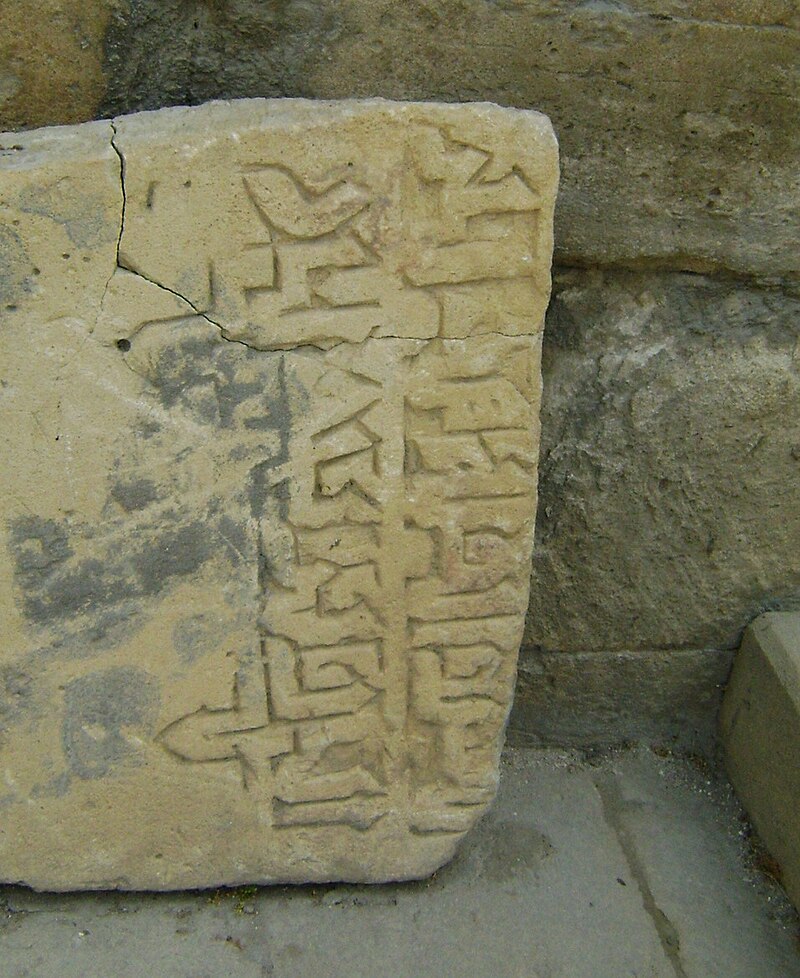
We begin our exploration of the middle courtyard with a surprising archaeological fact: the carved stone slabs displayed along the courtyard walls were actually submerged underwater at the bottom of the Caspian Sea for several centuries, belonging to a sunken medieval fortress known as Bayil Castle, or Sabayil Fortress—often referred to as the Atlantis of Azerbaijan. …
08 Closing
Thank you for completing this comprehensive audio guide tour of the Palace of the Shirvanshahs, the undisputed jewel of medieval Islamic architecture in Azerbaijan. Throughout our journey across these historic courtyards, we have explored how local golden limestone, precise geometric masonry, and an ingenious tiered courtyard plan transformed a steep hillside into a noble royal citadel. …