 Photo Wikimedia Commons
Contents
History & cultureBY TELLBY7 sections · numbered as on the map01 Orientation
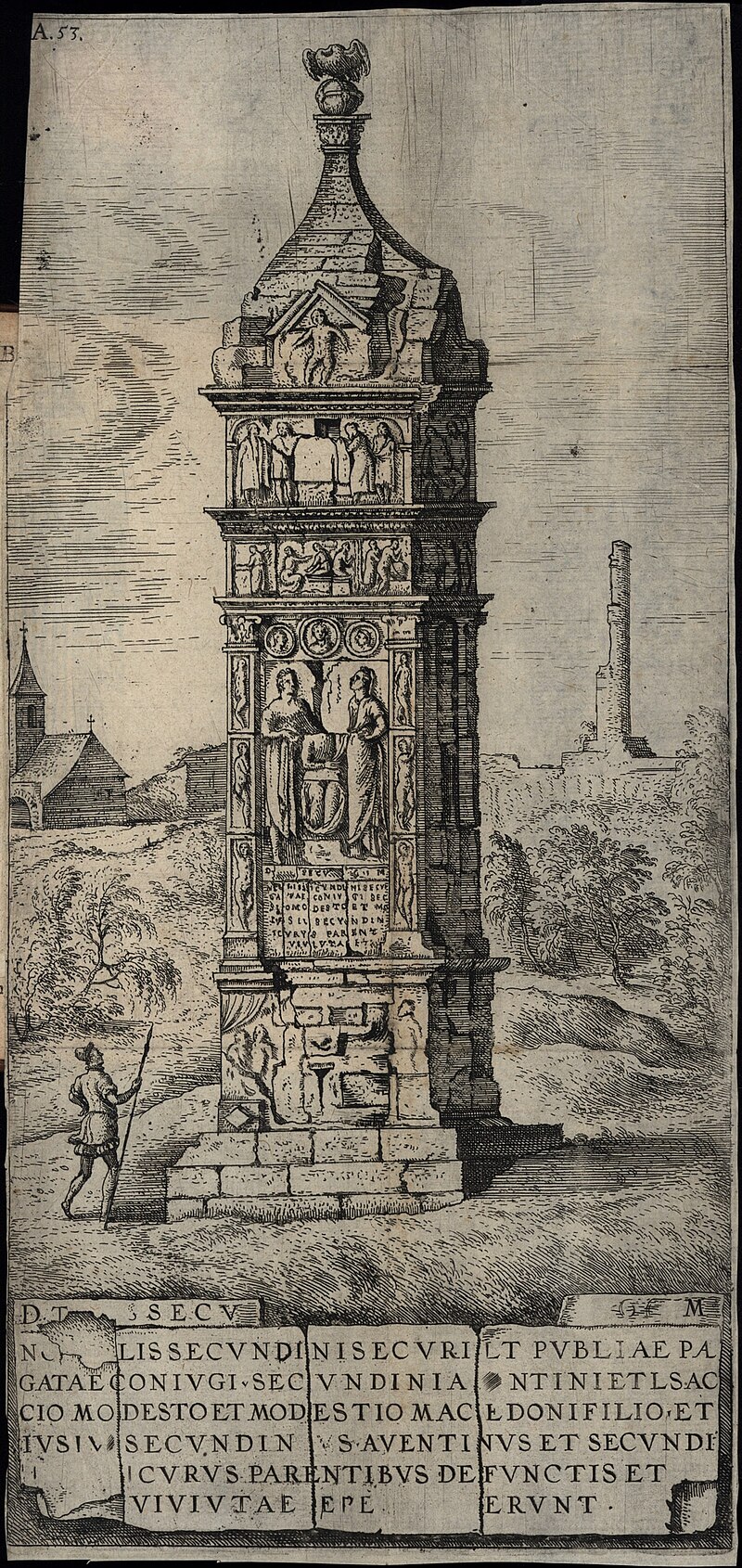
Welcome to the Igel Column, situated in the picturesque village of Igel on the left bank of the Moselle River, approximately eight kilometers south of the ancient city of Trier in Rhineland-Palatinate, Germany. Rising to a commanding height of twenty-three meters, this monumental tower constructed from red and red-grey sandstone is one of the most remarkable multi-storeyed funerary monuments from the ancient Roman world. Across the vast territories north of the Alps, this impressive structure holds exceptional historical and architectural importance as the only Roman mausoleum that remains standing intact in its original location, preserved in situ for over seventeen hundred years. Because detailed archaeological excavations around its foundations revealed no trace of human burials or cremated remains, leading scholars suggest that this monument operated primarily as an elaborate ceremonial cenotaph erected to honor the family name, while the actual private family tombs were situated elsewhere on their surrounding country estate. In recognition of its extraordinary state of preservation and profound cultural significance, the Igel Column was inscribed on the UNESCO World Heritage list in 1986 as an integral part of the Roman Monuments, Cathedral of Saint Peter, and Church of Our Lady in Trier. This monumental column was commissioned around 250 AD by two affluent brothers of Celtic descent, Lucius Secundinius Aventinus and Lucius Secundinius Securus, who amassed great wealth through their extensive operations in the textile trade. They built this funerary monument to commemorate their deceased relatives and to celebrate their commercial empire. In nearby Augusta Treverorum, known today as Trier, which served as a major political capital and economic center of the northern Roman Empire, prominent standing in the cloth industry was directly connected to elevated social status. Rather than erecting a modest grave marker, the Secundinii brothers designed this towering structure to serve as a high-visibility commercial advertisement for their textile firm, positioned strategically along the busy highway and river trade routes to capture the attention of every traveller and merchant. Studies by archaeologists Hans Dragendorff and Emil Krueger dated the column to the mid-third century, praising it as a masterwork combining Gallo-Roman art and commerce. Famous literary figures including Johann Wolfgang von Goethe and Victor Hugo marveled at the monument. Goethe visited the site twice in August and October 1792, producing detailed drawings and essays admiring its majestic harmony with the surrounding landscape near the confluence of the Moselle and Saar rivers. Please step closer to the front facade of the monument. Notice how the four-stepped base, podium, sculptured friezes, Corinthian pilasters, and cornices build up to the apex. As you tilt your head upward, let your eyes settle first on the broad pedestal at the very bottom, where our exploration of the Secundinii family business begins.
02 The Pedestal and Waterways of Commerce
It is fascinating to discover that this magnificent Roman funerary monument functioned not merely as a grave marker for the deceased, but as an imposing, high-profile commercial billboard designed to advertise a family textile empire to the ancient world. The Igel Column offers a vivid demonstration of Roman ambition, worldly success, and civic pride. …
03 The Cloth Merchants and Local Tenants
A surprising revelation hidden within the lower storey reliefs is that local tenant farmers, known as coloni, brought live animals and fresh regional farm produce as rent payments and tributes to their cloth merchant masters. Rather than depicting solemn religious offerings to pagan deities, these vivid carvings document the real-world economic relationships of the Secundinii family, who functioned simultaneously as elite merchant magnates and major rural landowners. …
04 Family Farewell and the Legend of Survival
A surprising historical irony saved this pagan monument: a complete medieval misunderstanding of its central relief protected it from destruction. Following the collapse of the Western Roman Empire, vast numbers of ancient pagan monuments across Europe were systematically dismantled for building materials or shattered into rubble. …
05 Mythological Reliefs and Hope for Immortality
The classical myths carved into the upper storey were selected not merely as superficial decoration, but as sophisticated philosophical symbols depicting the soul's journey to immortality. By arranging mythic narratives across the upper levels of the column, the Secundinii family expressed their fervent desire that the souls of their deceased relatives would overcome mortal suffering and enter the divine realm. …
06 The Crowning Eagle and Jupiter's Realm
An intriguing linguistic fact connects the crowning sculpture to the surrounding community: the modern village name Igel derives directly from the eagle sculpture perched atop this monument. For centuries, the eagle crowning this twenty-three-meter sandstone pillar served as the defining landmark of the settlement along the Moselle River. …
07 Closing
The Igel Column stands as an enduring masterwork of Gallo-Roman art, uniquely blending commercial prosperity with classical craftsmanship. Carved across its sandstone faces are scenes of the textile trade operated by the Secundinii family, tenant farmer tributes, and classical myths reflecting profound hopes for immortality. As the only Roman mausoleum north of the Alps standing in its original location, this monument has inspired travellers, scholars, and artists for centuries. …