Contents
History & cultureBY TELLBY8 sections · numbered as on the map01 Orientation
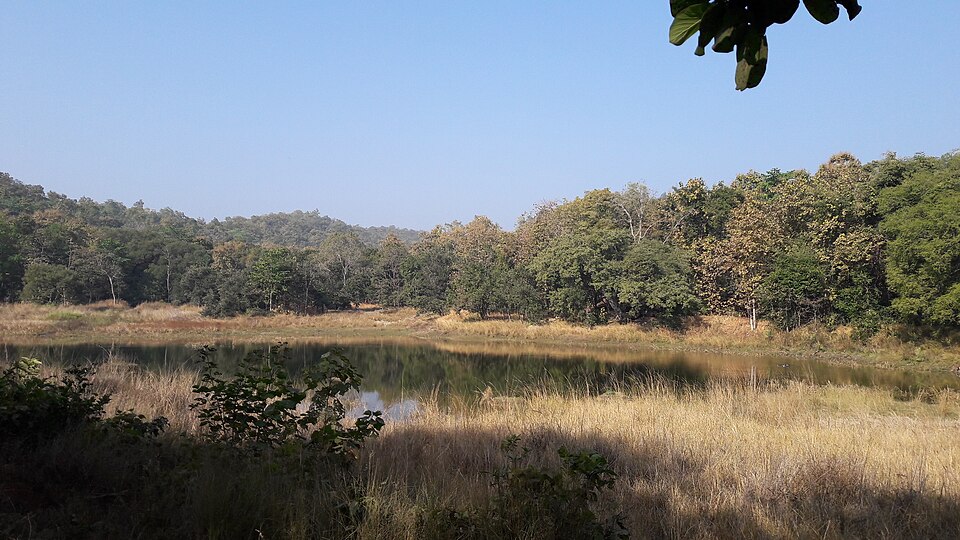
Welcome to Pench Tiger Reserve, an extraordinary natural sanctuary nesting gracefully on the southern lower reaches of the Satpura Range of hills in the heart of Central India. As your audio guide, I invite you to step into a landscape where ancient deciduous forests, sprawling river meadows, and undulating rocky ridges merge to form one of Asia's premier tiger conservation strongholds. Geographically, this sprawling ecological complex straddles two major Indian states, encompassing the Seoni and Chhindwara districts of Madhya Pradesh as well as the Nagpur district of Maharashtra. The core critical tiger habitat situated within Madhya Pradesh covers precisely four hundred eleven point three three square kilometers, supported and surrounded by a vast peripheral buffer zone spanning seven hundred sixty-eight point three zero square kilometers. Together, these two administrative units form a contiguous protected landscape within Madhya Pradesh measuring one thousand one hundred seventy-nine point six three square kilometers. On the adjoining southern border, the Maharashtra portion of Pench Tiger Reserve contributes an additional core habitat area of two hundred fifty-seven point three zero square kilometers alongside a dedicated buffer zone of four hundred eighty-three point nine six square kilometers, yielding a total protected footprint of seven hundred forty-one point two zero square kilometers in Maharashtra. When you combine both state sanctuaries, encompassing Indira Priyadarshini Pench National Park, the Pench Mowgli Sanctuary, and their associated multi-use buffer lands, the entire contiguous Pench landscape extends across more than one thousand nine hundred twenty square kilometers of unfragmented Central Indian wilderness.
The official history of formal protection in this region began in September nineteen seventy-seven, when the original Pench Sanctuary was formally established across four hundred forty-nine point three nine square kilometers. Recognizing the exceptional ecological value and dense wildlife populations harbored within these forests, state authorities established Pench National Park in nineteen eighty-three, carving it directly out of the original sanctuary boundaries. This core national park was subsequently re-named Indira Priyadarshini Pench National Park in honor of India's former Prime Minister. By November nineteen ninety-two, the reserve achieved international prominence when it was officially integrated into the national Project Tiger network, becoming the nineteenth tiger reserve designated in India. Topographically, the reserve is bounded between twenty-one degrees thirty-eight minutes fifty-five seconds to twenty-one degrees fifty-three minutes fifty-two seconds North latitude, and seventy-nine degrees eight minutes fifty-one seconds to seventy-nine degrees thirty-one minutes fifty-five seconds East longitude, positioning it at the very heart of the Central Indian Highland biogeographic zone.
Visitors planning an excursion through Pench must align their journeys with the distinct seasonal rhythms that govern Central Indian ecosystems. The core safari zones of the reserve operate officially each year from October fifteenth through June thirtieth, closing completely to visitors during the intense monsoon months of July, August, and September to facilitate natural ecosystem rejuvenation and uninhibited wildlife breeding. The winter period, extending from November through February, delivers exceptionally pleasant weather characterized by crisp morning breezes, lingering ground mist, and daytime temperatures dropping to around ten degrees Celsius. During winter, the canopy retains a vibrant green hue following the annual rains, creating ideal conditions for observing migratory birds arriving from Siberia. Tigers during these cool winter months are frequently encountered sunbathing on open forest trails or rocky outcrops to absorb the morning warmth. Conversely, the summer season from April to June presents the absolute peak period for predator tracking and wildlife photography. As ambient temperatures rise to between forty-two and forty-five degrees Celsius, small forest streams and ephemeral waterholes dry up completely, forcing dense concentrations of herbivores and apex carnivores to congregate near permanent water sources such as Chhui, Kalapahar, and the main banks of the Pench River. This seasonal concentration elevates the tiger tracking probability index to over ninety percent around permanent water features. For wildlife photographers, the transition months of March and April offer crystal-clear visibility as deciduous trees drop their foliage, permitting unobstructed views of wildlife behavior without the extreme heat and thick dust of late summer. Even during the core monsoon closure from July to September, specialized eco-tourism drives operate within the Rukhad and Teliya Buffer Zones, offering scenic night safaris and lush rainy landscape excursions. As we begin our detailed audio journey through these historic hills and river valleys, prepare to immerse yourself in the natural heritage of the Satpura Range.
02 The Lifeline River: Pench Waterway and Core Forest Typology
As we journey deeper into Pench Tiger Reserve, we encounter the central geographical element that defines the reserve's topography, hydrology, and name: the majestic Pench River. Emerging high in the rugged Mahadeo Hills of the Satpura Range, this vital watercourse flows seventy-four kilometers from north to south directly through the core sanctuary before continuing southward to join the Kanhan River. …
03 Meghdoot Dam at Totladoh: Waters of Life and Herbivore Haven
Located in the heart of Pench Tiger Reserve at Totladoh is one of the most ecologically significant hydrological features in Central India: the Meghdoot Dam built across the Pench River. This major hydroelectric engineering project impounds the Pench River, creating an enormous reservoir covering seventy-two square kilometers at full capacity. …
04 The Legend of Mowgli: Historical Origins of The Jungle Book
The forests of Pench Tiger Reserve hold a renowned place in natural history and classic literature, celebrated across centuries of official records and naturalists' chronicles. An early historical reference documenting the extraordinary natural wealth and ecological vitality of this region appears in the Ain-i-akbari, the official sixteenth-century administrative report of the Mughal Empire under Emperor Akbar. …
05 Summer Waterholes: Predator Tracking at Chhui and Kalapahar
During the dry summer months from April through June, Pench Tiger Reserve undergoes a dramatic ecological transformation driven by intense heat. As ambient temperatures reach forty-two to forty-five degrees Celsius, surface moisture evaporates rapidly, drying up minor forest nullahs and causing deciduous trees to drop their leaves. …
06 Legacy of the Queen: Collarwali and the Royal Tiger Dynasties
Pench Tiger Reserve is globally celebrated for hosting some of the most remarkable wild tiger dynasties ever documented by wildlife biologists. At the foundation of this legacy was Badi Mada, also known as Barimada or Big Mother, an exceptional matriarch who birthed twenty-nine cubs over seventeen years in the core area of Pench. Her iconic status was passed to her world-famous daughter, Collarwali, designated by researchers as T fifteen. …
07 Buffer Zones & Local Eco-Development Committees (Rukhad & Teliya)
The long-term survival of Pench Tiger Reserve depends heavily upon the integration of its core sanctuary with surrounding multi-use buffer zones. Peripheral forest lands encompassing one hundred seven local villages are managed across the South Seoni, East Chhindwara, and South Chhindwara forest divisions. To mitigate human-wildlife conflict and protect boundary ecosystems, park authorities instituted community eco-development programs. …
08 Closing
As our audio guide tour of Pench Tiger Reserve draws to a close, we reflect upon the strategic importance of this natural sanctuary within the broader Central Indian landscape. Pench occupies a central anchor position in these ancient highlands, maintaining vital ecological corridors that connect northeastward to Kanha Tiger Reserve through the continuous forest tracts of Seoni, Balaghat, and Mandla districts. …