Contents
History & cultureBY TELLBY8 sections · numbered as on the map01 Orientation
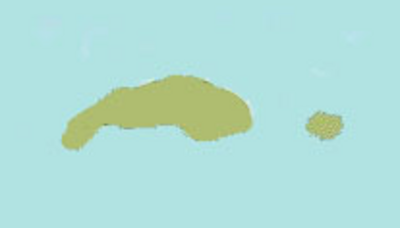
Welcome to North Button Island National Park, a hidden gem and a pristine sanctuary of nature nestled in the Andaman Islands. This audio guide is meticulously crafted to accompany you as you walk along the coast, venture near the lush tropical forest, and gaze upon the surrounding azure waters, offering deep insight into the rich history and ecological significance of this remarkable island. North Button Island National Park is located in the Andaman District of the Andaman and Nicobar Islands in India and was officially established as a national park in nineteen seventy-nine. The land area of the island spans approximately forty-eight acres, which equals nineteen point five hectares or zero point forty-four square kilometers, representing a compact yet densely biodiverse tropical sanctuary. Belonging to the Button Islands group, this pristine islet is surrounded by the crystal-clear waters of the Bay of Bengal and remains one of the most untouched natural environments in the region.
To truly appreciate the value of this sanctuary, one must understand the broader ecological landscape of the Andaman and Nicobar archipelago. The entire island chain comprises three hundred and six islands and two hundred and twenty-six rocks, forming an extraordinary haven protected by a network of one hundred and six protected areas. This network includes ninety-six wildlife sanctuaries, nine national parks, and one biosphere reserve. Across these protected territories, scientists have documented approximately six thousand five hundred and forty species of fauna and two thousand five hundred species of flora, with nearly four percent of marine species being entirely endemic to these waters.
Your journey to reach this remote paradise typically begins at Veer Savarkar International Airport in Port Blair. After landing in Port Blair, travelers journey towards the Middle Andaman region using either coastal roadways or marine ferries, usually passing through coastal points such as Rangat or Mayabunder. From these points, visitors board local passenger ferries, private chartered vessels, or forest department boats to complete the final leg across the sea to North Button Island. The park is situated approximately sixteen kilometers away from the nearest island settlement at Long Island and about ninety kilometers from Port Blair. Official visiting hours are from six AM to five PM daily, though the park may close temporarily during the monsoon season between May and September due to rough sea conditions. The absolute best time to explore is during the calm winter months from December to March when wildlife viewing is at its peak. Entry requires official permits, with an entry fee of fifty rupees for Indian nationals and one hundred and fifty rupees for foreign nationals. We invite you to take your first steps into this pristine realm.
02 Coastal Jetty: First Impressions of the National Park on the Bay of Bengal
You have now stepped off the boat and arrived at the coastal landing jetty of North Button Island National Park. This jetty serves as the primary entrance and the initial starting point for all exploration on the island, marking the exact moment where visitors traveling across the sea make their very first contact with this pristine sanctuary. As you look around, the shimmering azure waters of the Bay of Bengal stretch out before you, catching the sunlight and glowing with astonishing clarity. …
03 Tropical Deciduous Forest Trail: Dense Vegetation and Rare Birdlife
Moving inland away from the coastal jetty, you immediately step into a shaded forest pathway surrounded by dense foliage. You are now exploring the Tropical Deciduous Forest Trail, which forms the core terrestrial ecosystem of North Button Island National Park. The vast majority of the park's total land area is covered by lush deciduous forest, thriving within one of India's warm and humid wet tropical climate zones. …
04 Sandy Shoreline: Habitat of Water Monitor Lizards and Sea Turtles
As you emerge from the shade of the forest trail, you arrive at a shoreline area where the tropical trees meet a stretch of soft sandy beach. This coastal transition zone, where the terrestrial woodland borders the Andaman Sea, serves as a vital natural habitat for both land reptiles and marine reptiles within North Button Island National Park. The sandy shoreline and coastal brush provide the primary habitat for the impressive water monitor lizard. …
05 Coral Reef Zone: Vibrant Underwater World and Reef Ecosystems
Approaching the water's edge along the beach, you arrive at the viewing area for the coral reef zone, where crystal-clear blue waters reveal a vibrant underwater ecosystem. This point represents one of the most remarkable features of North Button Island National Park, serving as an exceptional site for snorkeling and scuba diving activities. …
06 Marine Mammal Sanctuary: Waters of Dugongs, Dolphins, and Whales
Standing at this open coastal viewpoint overlooking the sea, you are presented with a panoramic vista of the marine mammal sanctuary of North Button Island National Park. This location provides an ideal vantage point for observing the park's most iconic protected marine species, including the endangered dugong and various dolphin populations. …
07 Mangrove & Quiet Coves: Kayaking Experiences and Reef Conservation
Arriving at the coastal area where quiet coves meet mangrove shoreline formations, visitors can participate in kayaking and boating activities to explore the island's aquatic perimeter. Paddling a kayak through the gentle waves allows you to navigate quiet coves and observe coastal mangroves from a unique water-level perspective. …
08 Closing
Our audio guide exploration along the pristine pathways of North Button Island National Park has now come to its official conclusion. Throughout today's journey, we hope you gained a deep appreciation for this extraordinary sanctuary established in nineteen seventy-nine, from its dense tropical deciduous forests and rare birdlife to its shoreline habitats of water monitor lizards, sea turtles, vibrant coral reefs, dugongs, and dolphins. …