Contents
History & cultureBY TELLBY8 sections · numbered as on the map01 Orientation
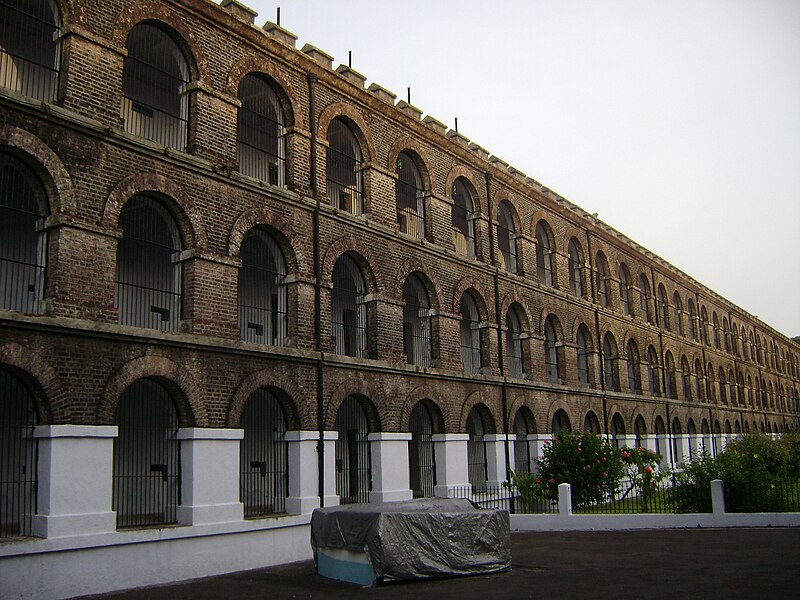
Welcome, esteemed visitors. You are currently standing at the central entrance square of the Cellular Jail National Memorial, located in Port Blair, the capital of the Andaman and Nicobar Islands in the Bay of Bengal. This historical complex, upon which we tread today, represents one of the most tragic yet noble sites in modern Indian history, universally remembered by the solemn designation Kala Pani. In the ancient Sanskrit language, Kala Pani translates to black water or the waters of death. Within traditional Indian society, crossing the vast open ocean was regarded not merely as a physical journey, but as an irreversible loss of caste status and a permanent social exile, equivalent to living death. The British colonial administration meticulously weaponized this profound cultural and religious fear of ocean transit as a tool of psychological subjugation. By banishing freedom fighters, revolutionaries, and political insurgents across the seas to this remote archipelago, the colonial state sought to sever all ties between the activists, their families, their native communities, and the mainland liberation movement. The history of the Andaman Islands as an imperial penal colony commenced in the immediate aftermath of the Indian Rebellion of eighteen fifty-seven, also honored as the First War of Independence. Following the ruthless suppression of the uprising, captured rebels were put on trial, executed, or transported in chains to these distant islands to perform grueling forced labor, clearing dense virgin jungles and erecting early administrative outposts. As the Indian national struggle gathered irresistible momentum toward the close of the nineteenth century, the influx of incarcerated political prisoners expanded dramatically. Recognizing the imperative for a centralized high-security facility designed for total surveillance and absolute isolation, the colonial government commissioned the construction of a permanent carceral fortress. Construction began in eighteen ninety-six and reached completion in nineteen hundred and six, utilizing over three million red bricks shipped across the Bay of Bengal from Burma. Surrounded by the inescapable ocean, political prisoners endured unrelenting tropical heat, suffocating humidity, deadly malarial infections, gross medical neglect, and systemic physical abuse. Yet, despite such unbearable adversity, the freedom fighters maintained their unyielding resolve, converting a place of horrific exile into a cradle of national martyrdom. Today, this complex stands as a national memorial monument, honoring the extraordinary endurance and patriotism of those who defied imperial domination. As we begin our solemn journey through these historic grounds, we invite you to reflect deeply upon the profound legacy of human resilience that defines Kala Pani.
02 Administrative Block and Main Gate
As you pass through the main entrance, the formidable two-storey structure before you is the Administrative Block of the Cellular Jail. This building served as the official gateway and operational nerve center for the British colonial penal administration. Within these walls were housed the executive offices of the prison superintendent, archival record rooms, and the punishment registers where every detail of an inmate's identity, labor assignment, and disciplinary infractions was…
03 Central Watchtower
Standing in the central courtyard of the prison complex, your gaze is naturally drawn to the prominent Central Watchtower. This watchtower represents the geometric and structural heart of the Cellular Jail, serving as the central hub from which seven long wings radiated outward like the spokes of a giant bicycle wheel. Upon completion in nineteen hundred and six, each of these seven wings rose three storeys high, forming a massive radial star that commanded the entire surrounding landscape. …
04 Solitary Cells and Remaining Wings
Let us now step into the internal corridors of the prison wings and examine the solitary cells where India's freedom fighters were incarcerated. The very name Cellular Jail is directly derived from this defining architectural characteristic: the prison contained no communal dormitories or shared wards, but was composed entirely of six hundred and ninety-six individual solitary cells. …
05 Work Courtyard and Oil Mills
Entering the inner work courtyard, visitors are confronted with the Oil Mill Pavilion, a site that bears tragic witness to the forced labor and physical torture inflicted upon political prisoners. Every morning, inmates were led from their solitary cells into this courtyard to perform grueling physical tasks designed to shatter their health and resolve. The most infamous and physically devastating of these assignments was operating the manual oil mills. …
06 Execution Cell and Hunger Strike Memorial
We are now standing at the Execution Cell and Hunger Strike Memorial, one of the most somber sections of the Cellular Jail complex. The execution cell features a wooden gallows platform equipped with a trapdoor mechanism designed to hang three prisoners simultaneously. Adjacent to the gallows were special condemned cells where death row inmates were held in solitary isolation during their final hours, enduring immense psychological strain before their execution. …
07 WWII Japanese Occupation and INA History
This section is dedicated to the complex history of the Second World War, the Japanese occupation of the Andaman Islands, and the momentous visit of Netaji Subhas Chandra Bose. On March twenty-third, nineteen forty-two, the Japanese Imperial Army invaded and seized the Andaman Islands, capturing the Cellular Jail and ousting the British colonial administration. The Japanese repurposed the penal complex as a detention, interrogation, and torture facility. …
08 Closing
We have now reached the final stop of our tour at the Central Memorial Courtyard. Following India's independence in nineteen forty-seven, the Cellular Jail entered a new chapter in its historical journey. During the nineteen fifties, administrative proposals were raised to demolish the remaining wings of the jail complex in order to erase the painful physical reminders of colonial oppression and human suffering. …