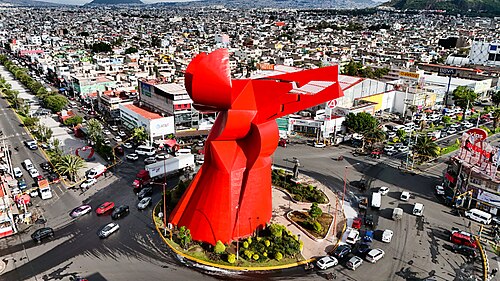
 Photo Wikimedia Commons
Contents
History & cultureBY TELLBY1 sections · numbered as on the map01 Nezahualcóyotl: Salt Dust, Grid Lines, and Fasting Coyotes
If you complain about dust on your shoes, try living through a 1970 alkaline dust storm in Nezahualcóyotl. Welcome to 'Ciudad Neza,' sitting on the dry bed of Lake Texcoco. Named after the 15th-century poet-king Nezahualcóyotl—which translates to 'Fasting Coyote'—this territory exploded in the 1960s into a massive urban grid. In 1971, while my husband Antonio squeezed his Ford Galaxy down our driveway in Roma, hundreds of thousands of working families were laying cinderblocks in salt mud here. Whenever spring winds, the tolvaneras, swept Texcoco, they blew blinding white dust into every pot and window! I used to laugh at the irony of naming a dusty salt desert after a poet who wrote about how fleeting human life is on earth. But look around today. Neza transformed from a chaotic grid of dirt tracks into a vibrant city powered by sheer willpower. While politicians made speeches in downtown Mexico City, the ordinary mothers and workers of Neza rolled up their sleeves and turned a dry lake into a sprawling empire. It turns out the 'fasting coyotes' knew how to build a lasting home better than any of us.