Contents
History & cultureBY TELLBY7 sections · numbered as on the map01 Orientation
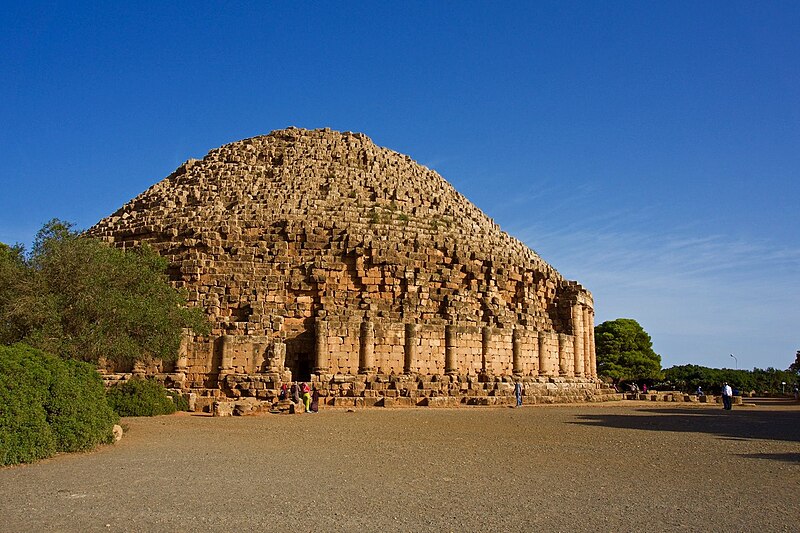
Welcome to the Royal Mausoleum of Mauretania, a magnificent circular stone monument standing proudly on a hilltop plateau two hundred and fifty meters above sea level in Tipaza Province, Algeria. Overlooking the azure expanse of the Mediterranean Sea and the fertile Mitidja plains, this hilltop position served as a vital navigation landmark for ancient mariners sailing along the North African coastline. Visible from great distances across both land and sea, this immense funerary structure constitutes the crowning jewel of the Tipaza archaeological area, inscribed as a UNESCO World Heritage Site in 1982. The monument represents an extraordinary architectural synthesis, blending the indigenous stepped tumulus tradition of ancient Numidian kings with Hellenistic design principles from across the Mediterranean basin.
Your visiting route begins at the outer base, where you will examine the massive square foundation and engaged stone pillars surrounding the main drum. Moving eastward, you will encounter the enigmatic false doors and learn about the captivating legends associated with the monument's names. Next, your attention will be directed toward the hidden entrance beneath the eastern base, leading into vaulted internal passageways and portcullis door mechanisms. Deep within the gallery, the Lion Chamber unveils the poignant royal legacy of King Juba II and Queen Cleopatra Selene II. Returning outside, you will examine the stepped cone, reflect on centuries of military destruction, and hear the tale of swarming black wasps before concluding at a scenic viewpoint.
This royal sepulchre was recognized by the first-century Roman geographer Pomponius Mela as the communal mausoleum of the royal family. Located near Sidi Rached along the road between Cherchell and Algiers, the tomb stands as a timeless testament to the ancient Amazigh kingdom of Mauretania. As you walk around this enduring masterpiece, take a moment to absorb the tranquil atmosphere and sweeping coastal panorama. The cool sea breezes passing over these ancient stones carry whispers of an era when local monarchs shaped North African history. Allow yourself to be transported back two thousand years to discover one of the Mediterranean region's most breathtaking architectural treasures. Enjoy your exploration of this sacred sanctuary.
02 The Outer Base and Ionic Columns
We begin our detailed examination of this extraordinary monument with a remarkable architectural fact: this massive stone structure has a sweeping outer circumference measuring one hundred and eighty-five meters and rests upon a giant square stone foundation that rivals the dimensions of a modern sports stadium. …
03 The False Doors and the Legend of the Name
We continue our exploration with a remarkable architectural revelation: all four grand portals installed on the cardinal sides of this monument are completely unopenable false doors. Positioned precisely toward the north, south, east, and west, these stone doors were never designed by ancient masons to function as physical entrances. …
04 The Hidden Entrance and Vaulted Passageway
We enter the interior of this monumental tomb with a fascinating historical fact: this actual entrance remained completely hidden beneath stone rubble for thousands of years until it was finally excavated in 1865. Seamlessly concealed below the eastern false door at the base of the monument, this secret doorway was designed by ancient architects to protect the royal burial chambers from discovery and desecration, successfully preserving its interior secrets well into the modern era. …
05 The Lion Chamber and the Royal Couple
We enter the central burial vault, known as the Lion Chamber, with an extraordinary historical enigma: despite being the focal point of this monumental tomb, no human remains or royal mummies have ever been discovered within this room. Extensive archaeological excavations conducted over the past century have failed to yield any skeletal traces of King Juba II or Queen Cleopatra Selene II. …
06 The Stepped Cone and Stories of Destruction
We examine the upper structure of this monumental tomb with a legendary historical tale: in 1555, when Salah Rais, the Ottoman Pasha of Algiers, ordered his workers to completely demolish the mausoleum, the destruction was abruptly halted when giant swarms of black wasps suddenly burst from the stonework and stung several workers to death. …
07 Closing
Today, standing atop this windswept plateau in Tipaza Province, we have journeyed together around the monumental Royal Mausoleum of Mauretania, a structure that has quietly endured two thousand years of history. Confronted by ongoing threats of urban encroachment, unregulated tourism, and environmental degradation, the broader Tipaza archaeological area was placed on UNESCO's List of World Heritage in Danger in 2002. …